Garden speedwell Care (Veronica longifolia)

Also known as: long-leaved speedwell, long-leaf speedwell
Garden speedwell

About Garden speedwell

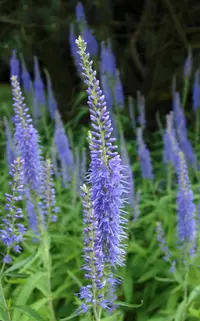
Garden speedwell (Veronica longifolia) is a hardy, herbaceous perennial grown mainly for its tall flower spikes and neat, upright habit. It belongs in sunny borders, cottage gardens, and pollinator-friendly plantings. Plants typically form clumps of narrow, lance-shaped leaves with vertical spikes of blue, pink, or white flowers in summer. This shape gives good structure and contrast among lower, bushier plants. Veronica longifolia is native to parts of Europe and Asia, where it grows in meadows, stream banks, and open woodland edges. It is generally easy to care for Garden speedwell if given sun, moderately moist but well-drained soil, and protection from waterlogged conditions.

Main Plant Requirements

Care Difficulty

Easy Care

Light Preference

Full Sun

Water Requirements

Regular Water

Temperature Preference

Cold Hardy

Hardiness Zone

4–8

Soil Texture

Loamy, Sandy, Organic-rich

Soil pH

Acidic (5.5–6.5), Slightly acidic (6.5–7.0)

Soil Drainage

Moist but well-drained

Fertilization

Minimal (feed rarely)

Get Personalized Care Plan

Scan your plant to receive care tips personalized for your specific plant

Available on iOS and Android

How to Care for the Garden speedwell

This perennial thrives in bright conditions and flowers best with strong sun exposure.

  • Provide 6–8 hours of direct sun daily; morning sun plus light afternoon shade suits most climates and supports tall, sturdy spikes.
  • Garden speedwell tolerates light or dappled shade, but in less than 4–5 hours of sun stems may stretch, and flowering becomes sparse.
  • In hot summers, protect from intense late-afternoon sun to reduce leaf scorch; in cooler regions, full sun all day maximizes bloom quality.

This species prefers consistently moist but not waterlogged soil during active growth.

  • Water when the top 3–5 cm of soil feels dry; aim for evenly moist soil, especially in the first growing season to establish deep roots.
  • In summer heat, increase monitoring, as Veronica longifolia may wilt slightly when too dry; in cool or rainy periods, extend intervals to prevent soggy conditions.
  • Yellowing lower leaves and soft stems suggest overwatering or poor drainage, while crisp leaf edges and drooping that do not recover by evening indicate underwatering.

This hardy perennial tolerates a broad temperature range in typical outdoor beds and borders.

  • Optimal growth occurs around 65–80°F (18–27°C), supporting strong vegetative growth and abundant flower spikes.
  • Plants handle winter dormancy to about -20°F (-29°C) in the ground when crowns are mulched; foliage naturally dies back and regrows in spring.
  • During heat waves above 90°F (32°C), flowering can slow and leaves may scorch, so provide extra mulch and soil moisture to buffer root temperatures.

Humidity is rarely limiting for Veronica longifolia in typical outdoor conditions.

Veronica longifolia prefers moist, well-structured ground that drains freely yet does not dry out quickly.

  • Use a loamy soil with moderate organic matter, such as a mix of native garden soil and compost at about 2:1.
  • Ensure drainage is reliable; avoid compacted or heavy clay that stays waterlogged after rain.
  • Aim for slightly acidic to neutral pH, roughly 6.0–7.5, which supports nutrient uptake and steady growth.
  • Improve aeration and drainage by incorporating coarse sand or fine grit into dense sites before planting.

This species can grow successfully in containers outdoors when the pot is chosen and managed for its tall, clumping habit.

  • Select a deep, heavy container that resists tipping as the tall flower spikes develop in windy conditions.
  • Choose a potting mix that drains freely but retains some moisture, then elevate the pot so drainage holes never sit in standing water.
  • Use light-colored or thick-walled pots in hot climates to reduce root-zone overheating and uneven moisture loss.

Veronica longifolia benefits from moderate feeding to support flowering but does not need heavy fertilization.

  • Use a balanced, slow-release fertilizer (around 10-10-10) or a light layer of compost in early spring for Garden speedwell.
  • Apply fertilizer every 6–8 weeks during the active growing season if soil is poor or plants bloom weakly.
  • Dilute liquid feed to half strength and apply to moist soil to avoid root burn.
  • Stop feeding in late summer so growth can harden off before winter dormancy.

Pruning Veronica longifolia helps maintain a tidy clump and encourages repeat or stronger flowering.

  • In mid to late summer, shear back spent flower spikes to just above healthy foliage to promote new blooms.
  • Remove dead, damaged, or diseased stems at the base whenever noticed using clean, sharp pruners.
  • In late fall or very early spring, cut old stems down to 5–10 cm to refresh the plant’s shape.
  • Thin out crowded shoots in dense clumps to improve air flow and reduce fungal problems.

This perennial is more often transplanted in the garden than grown long term in containers.

  • Transplant Veronica longifolia in early spring or early fall when temperatures are mild and soil is workable.
  • Look for signs such as congested crowns, reduced flowering, or roots circling a container as cues to move or divide plants every 3–4 years.
  • Water deeply a day before lifting, then dig widely around the root system to keep a solid root ball intact.
  • Replant at the same soil level, firm gently, water thoroughly, and shade briefly if needed to limit transplant shock.

Veronica longifolia is commonly propagated by division, cuttings, and sometimes seed.

  • Divide mature clumps in early spring or early fall, replanting vigorous sections with healthy buds and roots.
  • Take softwood or semi-ripe stem cuttings in late spring to summer, rooting them in moist, free-draining mix under bright, indirect light.
  • Sow fresh seed in trays with light, well-drained medium; maintain consistent moisture and cool to mild temperatures for germination.
  • Label new plants and space them well so they develop full, upright flowering spikes.

This hardy perennial usually needs only minimal winter care in most temperate climates.

  • Veronica longifolia tolerates typical frosts in USDA zones 4–8 once established.
  • After hard frost, cut back dead stems to a few cm above ground or leave them until early spring for structure and wildlife shelter.
  • Apply a 5–7 cm layer of mulch around, but not touching, the crowns to buffer freeze–thaw cycles.
  • For container plants in cold regions, move pots to a sheltered, unheated area such as a garage or against a protected wall.

Care Tips

Staking tall stems

Install discreet stakes or a low plant ring in early summer and loosely tie the flower spikes so heavy rain or wind does not flatten the clump and break stems at the base.

Pinch for bushiness

In late spring, pinch or lightly shear the top 2–3 in of new growth on young plants to encourage branching, which produces sturdier stems and more evenly distributed flower spikes.

Deadhead in stages

As flower spikes fade, cut them back just above a strong leaf joint rather than shearing the whole plant, which can trigger a lighter repeat bloom while preserving enough foliage for strong root growth.

Divide on schedule

Every 3–5 years, lift and divide crowded clumps in early spring or early fall to prevent center die-out, maintain flowering performance, and produce uniform new plants for additional planting areas.

Plan for airflow

When growing Garden speedwell, leave 30–45 cm between clumps and avoid solid hedging in front of them so air can move through the foliage, which reduces leaf diseases such as powdery mildew and leaf spots.

Common Pests and Diseases

Powdery mildew

This disease causes a white, powdery coating on leaves and stems, often starting on lower or crowded foliage. Symptoms include distorted new growth and gradual yellowing if conditions stay humid and airflow is poor.

Solution

Remove heavily affected leaves and thin crowded stems to improve airflow around the clump. Avoid overhead watering, water at soil level in the morning, and use a sulfur or potassium bicarbonate fungicide labeled for ornamentals if the problem persists.

Leaf spot

This disease produces small brown, tan, or purple spots that can merge into larger patches, sometimes with a yellow halo. Symptoms include premature leaf drop during warm, wet periods or in dense plantings.

Solution

Cut off and discard affected foliage and fallen leaves to reduce spore spread, and water at soil level to keep foliage dry. Improve spacing and air movement; in recurrent cases, apply a copper-based fungicide early in the season according to label directions as part of Veronica longifolia care.

Spider mites

These pests cause fine yellow stippling on leaves, loss of vigor, and delicate webbing between stems in hot, dry weather. This pest is most common during extended dry spells or when plants are grown near heat-reflective surfaces.

Solution

Rinse stems and leaf undersides thoroughly with a strong but gentle stream of water every few days to knock mites off. Increase humidity around plants, avoid water stress, and if needed use insecticidal soap or a horticultural oil, making sure to cover leaf undersides where mites live.

Aphids

These insects cluster on soft shoot tips and flower stems, sucking sap and causing curling, distortion, and sticky honeydew that can attract sooty mold. Symptoms include misshapen buds and reduced flowering on vigorous Veronica shoots.

Solution

Pinch or wash off infested shoot tips and spray plants with a firm stream of water to dislodge colonies. Encourage natural predators such as lady beetles, and if populations remain high, apply insecticidal soap or neem oil, repeating as needed according to the label.

Slugs and snails

These pests chew irregular holes in lower leaves and young shoots, often leaving slimy trails on or around the plant. Symptoms include ragged foliage, especially in damp, shaded beds or after prolonged rain.

Solution

Hand-pick slugs and snails in the evening or early morning and remove hiding spots such as dense debris around the crown. Use iron phosphate slug baits labeled for ornamental beds and maintain slightly drier surface soil by watering in the morning rather than at night.

Interesting Facts

European riverbank specialist

This species naturally occurs along rivers, streams, and wet meadows in much of Europe and parts of Asia, where it is adapted to seasonally moist but not permanently waterlogged soils.

Vertical nectar columns

The tall, narrow flower spikes provide staggered blooming from bottom to top, offering nectar and pollen over an extended period to bees, hoverflies, and other pollinating insects.

Cold-hardy perennial habit

It survives winter as underground roots and crowns in cold temperate climates, resprouting each spring to produce new leafy stems and flower spikes.

Botan icon

Did you know?

In some European regions, long-flowering stands of this species have been used as indicator plants to suggest relatively undisturbed, traditionally managed wet meadows, since stable populations often persist where mowing or grazing regimes have remained unchanged for long periods.

FAQs about Garden speedwell

Lack of flowers often comes from too much shade, depleted soil, or old stems. Ensure at least moderate light, feed lightly in spring, and cut back faded stalks to encourage new flowering shoots next year.

Grow Healthy Plants with Botan Care

Keep your plants happy and healthy with plant identification, disease detection, and easy care guidance.

Botan plant care app — identify plants on mobile

Explore More Plants