Early framework training
In the first 3–5 years, select 1–3 strong shoots as permanent leaders and tie them loosely but firmly to a pergola or wire support, removing competing stems so the plant develops a clear framework instead of a tangled mass.

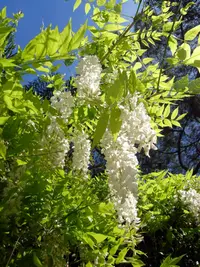
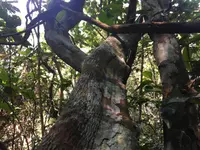
Chinese wisteria, Wisteria sinensis, is a vigorous deciduous climbing vine valued for its long, hanging clusters of fragrant purple or white flowers. It develops woody, twining stems that can become thick and heavy over time.
This species is native to China but is widely planted in gardens and landscapes in temperate regions. It can be long-lived and, with good structural support, forms dramatic floral displays in spring.
Strong growth and pruning needs make it better suited to gardeners ready to manage its size and direction. It prefers sun, moderately moist, well-drained soil, and a stable structure, and understanding how to care for Chinese wisteria helps keep it both attractive and controlled.

Care Difficulty
Moderate Care

Light Preference
Full Sun

Water Requirements
Moderate Water

Temperature Preference
Cold Hardy

Hardiness Zone
5–9

Soil Texture
Loamy, Sandy, Clay

Soil pH
Acidic (5.5–6.5), Slightly acidic (6.5–7.0)

Soil Drainage
Moist but well-drained

Fertilization
Minimal (feed rarely)
Scan your plant to receive care tips personalized for your specific plant
Available on iOS and Android
This vigorous climber needs abundant direct sun to flower well outdoors.
This hardy vine prefers evenly moist but not saturated soil once established.
This deciduous climber is cold hardy yet grows best in moderate seasonal temperatures.
Humidity is rarely a limiting factor for Wisteria sinensis grown outdoors.
Soil preparation for Wisteria sinensis focuses on strong drainage, deep rooting, and stable nutrient availability.
This vigorous climber can be grown in containers, but only with careful attention to stability and root space.
This vigorous climber needs modest feeding to support flowering rather than lush leafy growth.
Pruning is essential for managing size and promoting abundant flowering in Wisteria sinensis.
This vine is usually grown in the ground, so focus on careful site planting and minimal disturbance later.
New plants are commonly raised from layering or cuttings, since seed-grown vines bloom later and less predictably.
Established plants are generally cold hardy in much of the US and need only modest winter care outdoors.

Plant Health Check
Not sure what's wrong with your plant? Check your plant's health inside the app.
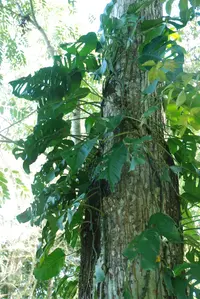
Chinese wisteria vines consistently twine counterclockwise around supports, which reliably distinguishes them from Japanese wisteria (Wisteria floribunda), whose stems twist clockwise.
This species typically flowers on bare or nearly leafless stems in spring, so the racemes are highly visible before the new foliage fully emerges.
As a legume, Chinese wisteria forms symbioses with root-dwelling bacteria that can fix atmospheric nitrogen, allowing it to thrive even in relatively low-fertility soils.

In many parts of the eastern United States, Wisteria sinensis has escaped cultivation and is classified as an invasive vine, capable of girdling and toppling trees by its heavy woody stems and dense canopy, which can drastically alter native forest structure over time.
Lack of flowers often comes from insufficient maturity, excessive nitrogen fertilizer, heavy pruning at the wrong time, or too much shade. Late frosts can also damage flower buds. Patience is essential, as some plants need several years to bloom well.
Keep your plants happy and healthy with plant identification, disease detection, and easy care guidance.