Bulb lifting schedule
In colder climates below USDA zone 8, dig and lift bulbs after foliage dies back, dry them for 5–7 days in a shaded, airy place, then store in a paper bag with dry peat or vermiculite at 45–55°F until replanting in spring.

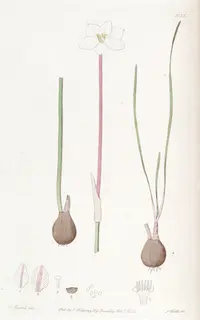
Brazos rain-lily (Zephyranthes chlorosolen) is a small bulb-forming perennial in the amaryllis family, known for its star-shaped white flowers that appear after rain. It grows in clumps of narrow, grass-like leaves and short flowering stems, giving a neat, low-profile look in beds or naturalized lawns.
This species is native to prairies and open grounds of Texas and nearby regions, where it experiences alternating dry and wet periods. It is generally easy to grow if given sun, well-drained soil, and occasional moisture, and many gardeners find it straightforward to care for Brazos rain-lily in mild climates.

Care Difficulty
Easy Care

Light Preference
Full Sun

Water Requirements
Moderate Water

Temperature Preference
Warm Climate

Hardiness Zone
7–10

Soil Texture
Sandy, Loamy, Organic-rich

Soil pH
Acidic (5.5–6.5), Slightly acidic (6.5–7.0)

Soil Drainage
Well-drained

Fertilization
Minimal (feed rarely)
Scan your plant to receive care tips personalized for your specific plant
Available on iOS and Android
Zephyranthes chlorosolen thrives in bright conditions that mimic open prairies and sunny meadows.
Zephyranthes chlorosolen prefers a wet-dry cycle that follows natural rainfall patterns.
This species prefers warm growing conditions but needs protection from hard frost.
Humidity is a minor factor for Zephyranthes chlorosolen compared with light and watering.
Zephyranthes chlorosolen grows best in loose, fast-draining soil that still holds moderate moisture around the bulbs.
This species is well suited to container growing for better control of moisture and drainage.
Zephyranthes chlorosolen benefits from light, targeted feeding but often flowers well even in lean soils.
Zephyranthes chlorosolen needs minimal pruning, mainly to keep clumps tidy and support repeat flowering.
Container-grown or crowded clumps of Zephyranthes chlorosolen benefit from occasional lifting and replanting to maintain vigor.
Zephyranthes chlorosolen is most commonly propagated by dividing mature bulb clumps, with seed used mainly for breeding or naturalizing.
Zephyranthes chlorosolen is fairly cold tolerant in mild climates but benefits from simple winter precautions in colder regions.

Plant Health Check
Not sure what's wrong with your plant? Check your plant's health inside the app.
The flowers typically open in late afternoon or early evening and may stay open into the night, an adaptation that aligns with cooler temperatures and likely evening pollinators such as moths.
In its native range of Texas and northern Mexico, this species often flowers in response to late spring and summer rains, producing short-lived but repeated flushes of blooms after moisture pulses.
This rain-lily naturally occurs in calcareous prairies and open grassy sites with alkaline or neutral soils, showing a strong association with limestone-derived substrates in its native habitats.

Unlike many ornamental bulbs that originate from Eurasia, this rain-lily is one of the few bulb-forming Amaryllidaceae species native to the south-central United States, making it an important component of regional prairie and grassland flora.
Lack of blooms usually comes from insufficient light, bulbs planted too deep, or nutrient imbalance from heavy nitrogen. Allow a dry rest after foliage dies back, then resume watering; this seasonal cycle often restores flowering when caring for Brazos rain-lily.
Keep your plants happy and healthy with plant identification, disease detection, and easy care guidance.