Banks Peninsula Hebe Care (Veronica strictissima)

About Banks Peninsula Hebe

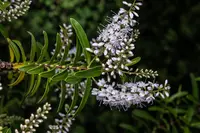
Banks Peninsula hebe, Veronica strictissima, is an evergreen shrub native to coastal areas of Banks Peninsula in New Zealand. It naturally forms a dense, bushy shape with upright stems and small, narrow leaves. The plant usually carries clusters of white to pale lilac flowers that attract pollinators and give a clean, tidy look in mixed plantings. It is often used in coastal gardens and shrubby borders.

This species generally prefers well-drained soil, good light, and moderate moisture, which makes it straightforward to care for Banks Peninsula Hebe in mild climates. Its tolerance of wind and salt spray helps it stay low-maintenance in exposed sites.

Main Plant Requirements

Care Difficulty

Moderate Care

Light Preference

Full Sun

Water Requirements

Moderate Water

Temperature Preference

Cool Climate

Hardiness Zone

8–10

Soil Texture

Sandy, Loamy, Rocky

Soil pH

Slightly acidic (6.5–7.0), Neutral (7.0)

Soil Drainage

Well-drained

Fertilization

Minimal (feed rarely)

Get Personalized Care Plan

Scan your plant to receive care tips personalized for your specific plant

Available on iOS and Android

How to Care for the Banks Peninsula Hebe

Veronica strictissima performs best in bright, open sites with consistent sun exposure.

  • Provide 6–8 hours of direct sun daily; full sun suits coastal, windy sites where Banks Peninsula Hebe naturally occurs.
  • In hotter inland gardens, give morning sun and light afternoon shade to prevent leaf scorch, especially on young plants.
  • If stems become long and sparse or flowering drops, the plant is likely in too much shade and should be moved to a sunnier position.

Veronica strictissima prefers evenly moist, sharply drained soil rather than constant wetness.

  • Before watering, let the top 3–5 cm of soil dry; foliage wilting at midday that does not recover by evening suggests the plant needs water.
  • In spring and summer, deeper but less frequent watering encourages strong roots; in cool or rainy seasons, reduce watering to avoid saturated soil.
  • Yellowing lower leaves, soft stems, or a sour soil smell indicate overwatering, while crisp leaf edges and stunted growth point to underwatering.

This shrub tolerates cool coastal conditions but grows best in mild, frost-limited climates.

  • Optimal growth occurs around 55–70°F (13–21°C), with steady temperatures supporting dense foliage and reliable flowering.
  • Mature plants usually withstand brief drops to about 20–23°F (-6 to -5°C), but young or exposed plants benefit from windbreaks and mulching in winter.
  • Heat tolerance is moderate; in extended periods above 85°F (29°C), ensure soil does not dry out completely and provide some afternoon shade if possible.

Veronica strictissima handles a wide humidity range but prefers moderately moist air.

  • Aim for 40–60% humidity, which suits its coastal origins without encouraging fungal problems.
  • It tolerates brief dry indoor air, but prolonged humidity below 30% may cause browning leaf tips and edge crisping.
  • To ease stress in heated rooms, group plants together or place the pot on a pebble tray with water, keeping the base above the waterline for stable Banks Peninsula Hebe care.

Veronica strictissima grows best in free-draining, moderately fertile soil that never stays waterlogged.

  • Use a mix of 50–60% loam or general-purpose potting soil, 20–30% coarse sand, and 10–20% fine bark or grit to keep the structure open.
  • Ensure very sharp drainage; this shrub is prone to root decline in compacted or saturated ground, especially in cool weather.
  • A slightly acidic to neutral pH around 6.0–7.0 supports nutrient uptake and keeps growth balanced and dense.
  • On heavy clay sites, raise the planting area and blend in coarse sand and fine gravel to improve aeration and prevent standing water around the root zone.

This species is suitable for container growing, especially in cooler or exposed sites.

  • Choose a pot wider than it is deep to support its bushy spread and reduce the risk of tipping in strong wind.
  • Opt for a heavy terracotta or concrete container in windy positions to stabilize the woody framework as it matures.
  • Raise the container on feet or bricks so drainage holes stay clear and excess water runs off quickly, preventing a persistently wet root zone.

Veronica strictissima grows well in modest soils but benefits from light feeding in containers or poor ground.

  • Use a balanced, slow-release fertilizer (for example 10-10-10) or a thin layer of compost at the start of spring.
  • Feed every 6–8 weeks during the main growing season if growth is weak or foliage pale.
  • Apply at half the label rate for shrubs and water in well to avoid root burn.
  • Stop feeding in late summer so Banks Peninsula Hebe wood hardens before winter.

Thoughtful pruning keeps Veronica strictissima dense, tidy, and flowering well.

  • Best time is late winter to early spring before strong new growth begins.
  • Remove dead, damaged, or crossing stems with clean, sharp hand pruners.
  • Lightly thin crowded shoots to maintain air flow and a compact, bushy shape.
  • After flowering, tip back long shoots to encourage branching and more blooms next season.

This shrub is usually grown in the ground, so focus on careful transplanting rather than frequent repotting.

  • Transplant in early spring or early fall when temperatures are mild and soil is workable.
  • Move plants that show poor vigor, are shaded out, or outgrowing their space, ideally every several years at most.
  • Dig a wide root ball, keep roots shaded and moist, and replant at the same depth in free-draining soil.
  • Water thoroughly, then keep soil evenly moist for several weeks to reduce transplant shock and support root re-establishment.

Veronica strictissima is most often propagated from semi-ripe cuttings and sometimes from seed.

  • Take 7–10 cm semi-ripe cuttings in late summer, removing lower leaves.
  • Insert cuttings into a free-draining mix of equal parts peat-free compost and sharp sand or perlite.
  • Provide bright, indirect light, high humidity, and gentle bottom warmth around 68–72°F for rooting.
  • Sow fresh seed in trays of well-drained mix, barely cover, and keep lightly moist until germination.

This shrub is moderately cold hardy but benefits from simple winter-care steps in colder regions.

  • In areas below about 15–20°F, young or potted plants may suffer stem and foliage damage.
  • Apply a 5–8 cm mulch layer around the root zone in late fall, keeping it away from the main stems.
  • Move container-grown plants to a sheltered spot or unheated greenhouse to avoid root freezing.

Care Tips

Wind‑hardening young plants

In the first 1–2 seasons, stake young shrubs loosely and gradually reduce support so stems flex in the wind without snapping, which encourages a sturdier, more wind‑resistant framework on exposed sites.

Salt spray protection

Near roads or coastlines, rinse foliage with fresh water after salt‑laden storms and maintain a 5–8 cm mulch strip to shield surface roots from salt splash and runoff.

Baseline pruning shape

In late winter, establish a low, rounded framework by shortening only the outermost stems by 10–20 cm, which keeps flowering wood close to eye level and prevents the shrub from becoming leggy and open at the base.

Targeted renewal thinning

Every 2–3 years, remove a small number of the oldest, thickest stems at ground level rather than tip‑pruning everything, to promote continuous production of young flowering shoots and reduce risk of dieback.

Low‑input weed management

For long‑term bed health when caring for Banks Peninsula Hebe, use a dense groundcover planting or breathable landscape fabric under an organic mulch layer to suppress weeds without frequent soil disturbance around the shallow root zone.

Common Pests and Diseases

Hebe leaf spot

This disease causes small brown or purple spots on older leaves that can merge into larger blotches, leading to premature leaf drop on Veronica strictissima shrubs. Symptoms include a generally thinned canopy and foliage that looks tired and patchy rather than evenly green.

Solution

Remove and dispose of heavily spotted leaves and any fallen debris around the base to reduce reinfection, then improve air movement by thinning crowded stems. If wet, humid weather persists, apply a copper-based fungicide or chlorothalonil product according to label directions, keeping foliage as dry as possible when watering.

Hebe downy mildew

This disease produces pale yellow to light green patches on the upper leaf surface with a greyish or white felt-like growth underneath, often appearing in cool, damp conditions. Symptoms include distorted new growth and leaves that may curl and drop prematurely.

Solution

Increase air circulation around the plant, avoid overhead watering, and water early in the day so leaves dry quickly. Remove and discard affected leaves and consider using a phosphonate (phosphorous acid) or other downy mildew fungicide labeled for ornamentals if conditions remain favorable for disease development.

Hebe leaf blight

This disease leads to sudden browning and dieback of young shoots and leaves, often starting at the tips and spreading inward, giving the plant a scorched appearance. Symptoms include blackened or dark brown lesions on stems and leaves, sometimes after periods of high humidity or poor air flow.

Solution

Prune out affected shoots well into healthy tissue, disinfecting pruning tools between cuts, and dispose of infected material in the trash. Improve drainage, reduce overhead watering, and if blight recurs, apply a systemic fungicide labeled for ornamental shrubs during high-risk periods as part of broader Veronica strictissima care instructions.

Hebe aphids

These insects cluster on tender shoot tips and the undersides of leaves, sucking sap and causing curling, distortion, and sticky honeydew deposits that may lead to sooty mold. This pest can weaken new growth and reduce flowering quality on Veronica strictissima.

Solution

Spray infested shoots with a strong stream of water to dislodge aphids, then follow with applications of insecticidal soap or horticultural oil, ensuring thorough coverage of leaf undersides. Encourage natural predators such as lady beetles by avoiding broad-spectrum insecticides and excess nitrogen fertilization.

Hebe eucalyptus scale

This pest appears as small, immobile, oval or dome-shaped bumps on stems and leaves, often accompanied by sticky honeydew and black sooty mold. This pest can cause yellowing, stunting, and general decline in vigor if populations become heavy.

Solution

Prune out heavily infested branches and gently scrape or rub off individual scales on light infestations. For larger outbreaks, apply horticultural oil during the crawler stage, ensuring full coverage of stems and leaf surfaces, and repeat as needed according to product directions while monitoring plant stress levels.

Interesting Facts

Endemic to Banks Peninsula

This hebe species occurs naturally only on Banks Peninsula on the South Island of New Zealand, where it occupies coastal to lowland scrub and forest margins on volcanic soils.

Woody, long‑lived shrub

Unlike many short‑lived herbaceous veronicas, this species forms a dense, woody shrub that can persist for many years and reach substantial size under suitable conditions.

Attractive to native pollinators

Its pale lilac to white flower spikes provide nectar and pollen for a range of New Zealand native insects, including flies and solitary bees, contributing to local pollinator networks.

Botan icon

Did you know?

Veronica strictissima has played an important role in New Zealand native revegetation and coastal restoration projects, as it tolerates wind and salt spray and helps stabilize degraded slopes and disturbed coastal habitats on Banks Peninsula.

FAQs about Banks Peninsula Hebe

This shrub performs best outdoors in mild, coastal or temperate gardens. Indoors it tends to get leggy, stressed, and short-lived unless given very bright, cool conditions, so Banks Peninsula Hebe indoor care is considered challenging long term.

Grow Healthy Plants with Botan Care

Keep your plants happy and healthy with plant identification, disease detection, and easy care guidance.

Botan plant care app — identify plants on mobile

Explore More Plants