Renewal thinning
Every 2–3 years, remove a few of the oldest stems right at the base in late winter to keep the shrub open, flowering well, and less prone to fungal problems when growing glossy abelia.

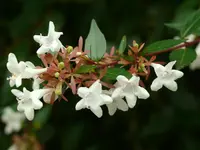
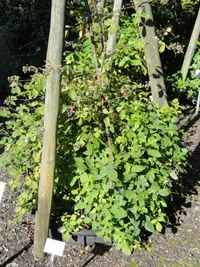
Glossy abelia (Abelia × grandiflora) is a compact, multi-stemmed shrub valued for its long flowering season and fine-textured foliage. It is commonly used in mixed borders, hedges, and foundation plantings.
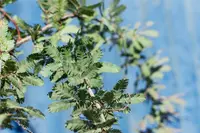
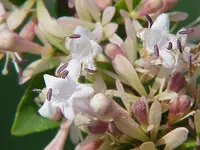
The plant typically forms an arching mound with small, semi-evergreen leaves and clusters of tubular white to pale pink flowers that attract bees and butterflies. Its parents are native to Asia, and it is now widely grown in temperate landscapes.
This shrub is considered relatively easy to grow, adapting to a range of garden soils as long as drainage is good. Understanding how to care for glossy abelia focuses mainly on providing enough light and avoiding waterlogged conditions.

Care Difficulty
Easy Care

Light Preference
Full Sun

Water Requirements
Moderate Water

Temperature Preference
Cold Hardy

Hardiness Zone
5–9

Soil Texture
Sandy, Loamy, Clay

Soil pH
Acidic (5.5–6.5), Slightly acidic (6.5–7.0)

Soil Drainage
Moist but well-drained

Fertilization
Minimal (feed rarely)
Scan your plant to receive care tips personalized for your specific plant
Available on iOS and Android
This shrub thrives with plenty of sun while tolerating some shade in most gardens.
This shrub prefers moderately moist, well-drained soil rather than constant wetness.
This shrub is adaptable but performs best in mild, temperate conditions.
Abelia × grandiflora handles a wide humidity range and usually does not need special humidity management outdoors.
Abelia × grandiflora performs best in evenly moist, well-drained soil with a stable structure.
This species adapts well to container growing when the pot supports its eventual size and branching habit.
This shrub responds well to moderate feeding during the main growing season for best flowering and dense foliage when caring for glossy abelia.
Abelia × grandiflora benefits from light, timed pruning to maintain shape and encourage flowering wood.
This shrub is more often grown in the ground, so care focuses on transplanting rather than frequent repotting.
Abelia × grandiflora is commonly propagated from cuttings for consistent flowering and form.
This shrub is generally cold hardy in mild to moderate climates and needs only modest winter care.

Plant Health Check
Not sure what's wrong with your plant? Check your plant's health inside the app.
Abelia × grandiflora is a garden-origin hybrid between Abelia chinensis and Abelia uniflora, first raised in Italy in the late 19th century and then widely distributed through European nurseries before reaching North America. Its horticultural traits are stable, so most plants in landscapes are clonal descendants of a small number of original hybrid seedlings.
In mild climates, this shrub often flowers from late spring into fall, far longer than many ornamental shrubs with similar growth habits. The continuous production of small tubular flowers results from the plant forming new flowering shoots throughout the growing season rather than in a single flush.
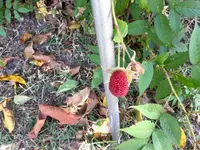
After the white to pink flowers fade and drop, the papery calyces remain on the stems and turn pinkish or bronze, extending the ornamental effect. These colored calyces can stay for weeks, giving the shrub a speckled appearance even when it is technically past peak bloom and supporting Abelia × grandiflora plant care choices focused on long-season interest.

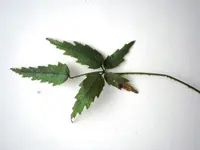
In regions with mild winters, this hybrid behaves as semi-evergreen or nearly evergreen, holding much of its foliage and often showing bronze, copper, or purplish tints in cold weather due to increased production of protective pigments called anthocyanins, which help shield leaf tissues from low-temperature and light stress.
Poor flowering is usually linked to too much shade, heavy pruning at the wrong time, or nutrient imbalance. Prune lightly just after flowering, avoid cutting old wood in late winter, and maintain moderate, balanced fertilization for reliable blooms.
Keep your plants happy and healthy with plant identification, disease detection, and easy care guidance.