Edge containment
Install a shallow plastic or metal edging 5–8 cm deep around beds to prevent this mat-forming plant from rooting into lawns or paths while still allowing it to fill its designated space.

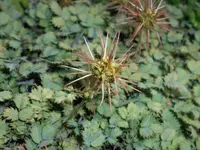
Acaena saccaticupula is a low, mat-forming perennial often used as a groundcover in cool, temperate gardens. It stays close to the soil surface, creating a dense, finely textured carpet of foliage.
This species is native to southern South America, where it grows in open, often windswept habitats. Its appearance is subtle, with small divided leaves and inconspicuous flower heads that mature into burr-like fruits.
It is generally considered a tough plant, coping well with poor soils and moderate drought once established, which makes it relatively easy to care for Acaena saccaticupula. It usually performs best in sun to light shade with free-draining soil and protection from extreme humidity.

Care Difficulty
Moderate Care

Light Preference
Partial Sun

Water Requirements
Moderate Water

Temperature Preference
Cold Hardy

Hardiness Zone
7–10

Soil Texture
Sandy, Loamy, Rocky

Soil pH
Acidic (5.5–6.5), Slightly acidic (6.5–7.0)

Soil Drainage
Well-drained

Fertilization
Minimal (feed rarely)
Scan your plant to receive care tips personalized for your specific plant
Available on iOS and Android
This low mat-forming species prefers bright outdoor conditions without extreme afternoon exposure.
This plant prefers consistent but not saturated soil moisture once established outdoors.
This hardy groundcover tolerates a wide temperature range when grown outdoors in suitable climates.
This species prefers moderately moist air but usually adapts to typical household humidity if soil moisture is well managed.
Soil for this plant should be loose, free-draining, and slightly on the lean side to mimic its natural, open habitats.
This species can be grown successfully in containers, especially shallow, wide ones that allow its mat-forming habit to spread.
This groundcover grows well in modest soils and usually needs only light feeding.
Pruning is mainly used to keep this mat-forming perennial tidy and within bounds.
This plant is most often used as an outdoor groundcover, so focus on transplanting rather than frequent repotting.
Acaena saccaticupula is commonly propagated to spread groundcover or renew older plantings.
This species is generally cold hardy in temperate climates and needs only modest winter care outdoors.

Plant Health Check
Not sure what's wrong with your plant? Check your plant's health inside the app.
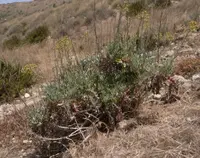
This species forms low, dense cushions in the windswept grasslands and rocky slopes of southern Patagonia, an adaptation that reduces heat loss and mechanical damage from strong, persistent winds.
After flowering, it develops distinctive, inflated, bladder-like cups beneath the fruits; these papery structures are thought to help protect developing seeds and may slightly aid in their dispersal near the parent plant.
Native populations experience cool summers, cold winters, and strong ultraviolet radiation at high southern latitudes, so the species is naturally tolerant of low temperatures and intense light compared with many other groundcovers.
This species is a low, mat-forming ground cover that spreads steadily by creeping stems. In suitable conditions it can colonize open soil, but it is usually manageable with edging, division, and removing unwanted runners.
Keep your plants happy and healthy with plant identification, disease detection, and easy care guidance.