Rhizome containment
Install a 20–30 cm deep root barrier or plant in a bottomless container sunk into the ground to keep creeping spread under control while still allowing the plant to function as a groundcover.

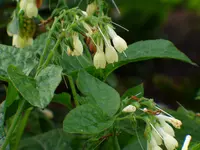
Creeping comfrey (Symphytum grandiflorum) is a low, spreading perennial often used as a groundcover in shaded or partially shaded gardens. It forms dense clumps of coarse, slightly hairy leaves that create a lush green carpet.
In spring, it produces clusters of small, tubular flowers in soft shades of cream, yellow, or blue that attract pollinators. The plant spreads steadily by short rhizomes, helping to suppress weeds.
Symphytum grandiflorum originates from parts of eastern Europe and adapts well to many temperate garden conditions. It thrives in moist, well-drained soil and partial shade, and gardeners generally find it straightforward to care for Creeping Comfrey.

Care Difficulty
Easy Care

Light Preference
Partial Shade

Water Requirements
Regular Water

Temperature Preference
Cold Hardy

Hardiness Zone
4–8

Soil Texture
Loamy, Clay, Organic-rich

Soil pH
Acidic (5.5–6.5), Slightly acidic (6.5–7.0)

Soil Drainage
Moist but well-drained

Fertilization
Minimal (feed rarely)
Scan your plant to receive care tips personalized for your specific plant
Available on iOS and Android
Symphytum grandiflorum grows best in sites with soft, indirect light rather than intense midday sun.
Symphytum grandiflorum prefers consistently moist, but not soggy, soil throughout the growing season.
This hardy perennial tolerates a wide temperature range but grows most actively in mild conditions.
Humidity is rarely a concern for Symphytum grandiflorum in typical outdoor conditions.
Symphytum grandiflorum prefers moist, fertile, well-structured soil that stays aerated and free-draining.
This species can grow in containers outdoors if the pot supports its spreading root system.
This deep-rooted perennial usually needs little feeding, but light supplementation can support lush foliage and flowering in Creeping Comfrey.
Symphytum grandiflorum responds well to periodic pruning that tidies growth and encourages fresh foliage and flowers.
This comfrey is most often grown in the ground, where transplanting young plants matters more than container repotting.
This species is commonly propagated by division and root cuttings, which both produce true-to-type plants.
This hardy perennial usually needs minimal winter care in temperate climates once well established.

Plant Health Check
Not sure what's wrong with your plant? Check your plant's health inside the app.
This species forms dense, low mounds typically under 30 cm tall, which makes it distinct from the much taller common comfrey Symphytum officinale used in traditional herb gardens.
It is naturally adapted to woodland edges in eastern Europe and thrives in partial to full shade, where it can outcompete many weeds and stabilize soil under shrubs and trees.
Its nodding, bell-shaped yellow to creamy white flowers open in mid to late spring and provide nectar for early-flying bumblebees and other pollinating insects when many other perennials are not yet in bloom.

Genetic and morphological studies place this species in the so-called grandiflorum group within the genus, and it has been widely used in breeding compact ornamental comfrey hybrids because it reliably passes on its low, spreading habit and shade tolerance.
This species spreads steadily by short rhizomes, forming dense, low clumps rather than running far. It can slowly enlarge and edge outward, so give it space and use edging if tight boundaries are important.
Keep your plants happy and healthy with plant identification, disease detection, and easy care guidance.