Salt-tolerant placement
Use this plant as a front-edge border in coastal or roadside beds where salt spray or de-icing salt might reach, since its foliage tolerates salt better than many companions and can shield more sensitive plants behind it.

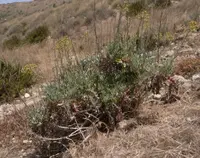
Silver ragwort (Jacobaea maritima) is a compact, shrubby perennial often grown as an annual in cooler climates. It is valued for its dense, silvery, finely divided foliage rather than its flowers.
This coastal species is native to Mediterranean shorelines, where it tolerates wind, salt spray, and poor, gritty soils. Its naturally drought-tolerant habit and slow, tidy growth make it relatively low-maintenance once established.
Silver ragwort prefers sunny, well-drained sites and does best when soil is not constantly wet. These traits make it easier to care for Silver Ragwort in containers, borders, and mixed plantings, provided excess moisture is avoided.

Care Difficulty
Easy Care

Light Preference
Full Sun

Water Requirements
Low Water

Temperature Preference
Warm Climate

Hardiness Zone
7–10

Soil Texture
Sandy, Loamy, Rocky

Soil pH
Slightly acidic (6.5–7.0), Slightly alkaline (7.0–7.5)

Soil Drainage
Well-drained

Fertilization
Minimal (feed rarely)
Scan your plant to receive care tips personalized for your specific plant
Available on iOS and Android
Jacobaea maritima prefers bright, open conditions to keep foliage compact and silvery.
This species is drought-tolerant and prefers to dry between waterings.
This coastal species prefers mild conditions but handles a wide temperature range once established.
This coastal species handles dry air well, so humidity is rarely a concern indoors or outdoors.
This plant prefers lean, sharply draining soil that mimics sandy coastal conditions.
This species is well suited to container growing outdoors in sunny, exposed spots.
Moderate feeding supports compact, silvery growth in Jacobaea maritima without making it lush and floppy.
Thoughtful pruning keeps Jacobaea maritima dense, tidy, and long-lived.
This plant is usually treated as a landscape perennial or annual, so focus on transplanting rather than frequent repotting.
Jacobaea maritima is commonly multiplied from both cuttings and seeds.
This plant is fairly cold hardy, but winter care depends on local climate and planting method.

Plant Health Check
Not sure what's wrong with your plant? Check your plant's health inside the app.
The dense white hairs on its leaves act as a reflective insulation layer, reducing water loss and protecting leaf tissues from intense coastal sun and salty wind exposure.
This species naturally occupies rocky sea cliffs and sandy shores in the Mediterranean region, where it tolerates windblown salt spray that would damage many other garden plants.
Many silver-foliage bedding forms sold under older names like Senecio cineraria are now classified under this species, which has been selectively propagated for compact shape and persistent silvery color.

Jacobaea maritima produces flower heads that are highly attractive to pollinating insects such as hoverflies and bees, and in some coastal plantings it is deliberately included to support beneficial insects that help control garden pests.
Yellowing leaves often result from overly wet soil, poor drainage, or nutrient-poor, compacted substrates. Check for soggy roots, improve drainage, and remove affected foliage. In containers, ensure excess water can drain freely and avoid leaving pots in saucers.
Keep your plants happy and healthy with plant identification, disease detection, and easy care guidance.