Parish's oxytheca Care (Acanthoscyphus parishii)

Also known as: flowery puncturebract, Cushenbury Oxytheca
Parish's oxytheca

About Parish's oxytheca

Parish's oxytheca (Acanthoscyphus parishii) is a small annual shrub-like wildflower native to arid, rocky slopes of southern California and nearby desert regions. It typically forms low, branching mounds with slender stems, tiny leaves, and clusters of spiny, bracted flowers that give it a somewhat prickly look. This species is adapted to dry, nutrient-poor soils and seasonal rainfall, which makes it drought tolerant but sensitive to overwatering and heavy, rich substrates in cultivation. It prefers open, sunny positions and well-drained, gravelly or sandy soil. Gardeners who want to care for Parish's oxytheca should focus on replicating its dry, bright, low-fertility native habitat conditions.

Main Plant Requirements

Care Difficulty

Moderate Care

Light Preference

Full Sun

Water Requirements

Low Water

Temperature Preference

Warm Climate

Hardiness Zone

8–10

Soil Texture

Sandy, Loamy, Rocky

Soil pH

Slightly acidic (6.5–7.0), Neutral (7.0)

Soil Drainage

Well-drained

Fertilization

Minimal (feed rarely)

Get Personalized Care Plan

Scan your plant to receive care tips personalized for your specific plant

Available on iOS and Android

How to Care for the Parish's oxytheca

This desert annual prefers strong light and thrives in open, exposed sites.

  • Provide 6–10 hours of direct sun daily; morning and midday sun are ideal in most dry climates.
  • In very hot inland summers, give Parish's oxytheca light afternoon shade to reduce leaf scorch and moisture loss.
  • Avoid prolonged shade; spindly, weak stems and poor flowering indicate insufficient light, especially if surrounding vegetation grows taller through the season.

This species is adapted to arid conditions and needs sparse, careful watering.

  • Allow the top 5–8 cm of soil to dry completely before watering; sandy, fast-draining soil is essential to prevent root rot.
  • During active growth and flowering, water deeply but infrequently, then let the soil return to a dry, crumbly feel at the surface.
  • Reduce or stop watering once Acanthoscyphus parishii starts to brown and set seed, as this signals the natural end of its annual cycle.

This annual desert plant prefers warm, dry conditions and tolerates a wide temperature range.

  • Aim for daytime growth temperatures around 65–85°F (18–29°C) during the main growing season for best development.
  • Mature plants can tolerate short dips to about 25°F (-4°C), but repeated hard frosts damage new growth and flowers.
  • In hot spells above 95°F (35°C), good air movement and very well-drained soil help prevent heat stress and root decline.

Humidity is rarely critical for Acanthoscyphus parishii, which is adapted to very dry air.

  • Target 20–40% humidity, similar to arid or heated indoor air conditions.
  • Plant tolerates prolonged dry air; avoid placing it in persistently damp, enclosed spaces like covered terrariums.
  • Early humidity stress shows as soft, mildew-prone foliage rather than crisp tips; improve air flow instead of adding moisture.

Acanthoscyphus parishii prefers sharply draining, mineral soils that mimic rocky desert slopes.

  • Use a sandy or gritty mix with low organic matter, such as 50–60% coarse sand or grit blended with 40–50% cactus mix.
  • Ensure very fast drainage; water should pass through in seconds, not sit on the surface or pool in the saucer.
  • Aim for slightly acidic to neutral pH around 6.0–7.2, avoiding highly alkaline substrates with excess lime.
  • Improve aeration by adding pumice or perlite and avoid dense compost, peat-heavy mixes, or any soil that compacts when dry.

This species can be grown in containers if the setup closely imitates dry, stony ground.

  • Choose a wide, shallow pot to spread the root system horizontally and keep the mix drying evenly after irrigation.
  • Select unglazed clay to speed evaporation, preventing the mineral-rich substrate from staying wet around the crown.
  • Top-dress with a 1–2 cm gravel layer to stabilize stems, reduce surface crusting, and keep the stem base dry.

This dryland annual generally needs minimal feeding, especially in lean, sandy soils similar to its native habitat.

  • If soil is very poor, apply a light dressing of compost or low-rate, balanced NPK (such as 5-5-5) at planting time.
  • Use fertilizer at 25–50% of the label rate to avoid lush, weak growth and salt buildup.
  • Skip feeding once flowering peaks; additional nutrients rarely improve performance.
  • Avoid fertilizing Parish's oxytheca during winter or outside its active growing season.

Pruning Acanthoscyphus parishii is limited to light cleanup, since it is a small, short-lived annual.

  • Perform any pruning in late season after peak flowering, once seed has set if seed collection is desired.
  • Remove dead, broken, or diseased stems with clean, sharp scissors or hand pruners.
  • Thin out crowded, spindly shoots at the base to slightly improve airflow and flowering display.
  • Avoid cutting back hard into green, healthy growth, as this shortens the ornamental life of the plant.

This species is usually grown in the ground, and transplanting should be done carefully to avoid disturbing its fine roots.

  • Transplant young seedlings when roots just fill the plug or small pot, before circling or binding occurs.
  • Aim to plant out in spring after frost risk has passed, into fast-draining, sandy or gravelly soil.
  • Move the root ball gently, keeping soil intact, and water once to settle, then allow soil to dry slightly.
  • Acanthoscyphus parishii is best treated as an annual in place rather than repeatedly repotted in containers.

Propagation of this annual is mainly done from seed rather than vegetative methods.

  • Sow fresh seed in late fall outdoors in mild climates or in early spring where winters are colder.
  • Provide gritty, sharply draining soil and full sun to support germination and strong seedling growth.
  • Barely cover seeds, keep slightly moist but never waterlogged until seedlings establish.
  • For nursery production, grow Acanthoscyphus parishii in small plugs or cells to reduce root disturbance at planting.

Mature plants usually complete their life cycle before winter, so winter care focuses on seed and young plants rather than frost protection.

  • In cold regions, collect seed before hard freezes and store dry for spring sowing.
  • For fall-sown containers, place in a bright, sheltered spot with good drainage to prevent waterlogging.
  • Light mulch around fall seedlings can moderate soil temperature but should not smother crowns.

Care Tips

Slope or mound planting

Plant on a slight slope or low mound to ensure rapid runoff after rare heavy rains, which helps prevent root rot in this desert annual.

Gravel surface mulch

Apply a 1–2 in layer of coarse gravel around, but not touching, the stems to mimic its native rocky habitat, improving drainage and reducing soil crusting after irrigation.

Minimal disturbance sowing

Broadcast seed over prepared, weed-free ground and press gently into the soil instead of burying deeply, since the fine seeds need light and shallow contact to germinate well.

Targeted weed control

Keep a 10–15 cm weed-free ring around each plant using hand-pulling rather than hoes to avoid damaging the shallow root system.

Seasonal re-seeding plan

Mark the best-performing plants and allow them to dry fully in place, then collect and scatter their seed in late fall to maintain a self-sustaining population when growing Parish's oxytheca.

Common Pests and Diseases

Leaf spot fungi

This disease causes small brown to tan spots on the narrow leaves, often with a darker margin, especially after late-season rain or overhead watering. Symptoms include premature yellowing and shedding of foliage on stressed plants.

Solution

Remove and discard affected leaves to reduce spore load, avoid overhead irrigation, and space plants so wind can dry foliage quickly. In very wet climates, use a mulch layer to reduce soil splash and, if needed, apply a sulfur or copper-based fungicide labeled for ornamental annuals at the first sign of spotting.

Powdery mildew

This disease shows as a white to gray powdery coating on leaves and stems, which can cause distortion and reduced vigor in dense plantings or in late-season growth. Symptoms include dull, pale foliage and slowed flowering in humid but not necessarily wet conditions.

Solution

Improve air movement around plants, avoid overhead watering in the evening, and thin overcrowded stems or nearby vegetation. At early onset, remove heavily infected stems and consider using a potassium bicarbonate or sulfur product labeled for powdery mildew, applied according to label directions.

Aphids

These insects cluster on soft stems, buds, and the undersides of leaves, sucking sap and sometimes causing curled, sticky foliage due to honeydew deposits. This pest is most noticeable on new growth and can attract sooty mold on the sugary exudate.

Solution

Dislodge colonies with a firm stream of water, repeating every few days, and encourage natural predators such as lady beetles by avoiding broad-spectrum insecticides. For persistent infestations, use an insecticidal soap or a light horticultural oil, coating stems and leaf undersides thoroughly while avoiding applications in high heat.

Leafhoppers

These insects feed by piercing and sucking sap from leaves, causing pale speckling, marginal browning, and sometimes a general bronzed look to the plant. This pest is active, quick-moving, and more common in dry, open sites where Acanthoscyphus parishii naturally grows.

Solution

Limit nearby tall weeds and grasses that harbor leafhoppers, and use reflective mulches or light-colored ground covers to reduce landings on plants. If damage is significant, apply insecticidal soap or a low-impact contact insecticide in the early morning when insects are less active, directing spray to both upper and lower leaf surfaces.

Interesting Facts

Sky-island specialist

This species is naturally restricted to high-elevation desert mountains in southern California, where it grows on open, rocky slopes and ridges with very shallow, fast-draining soils.

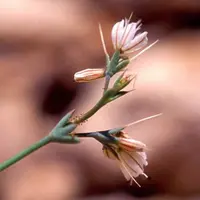
Bristly flower architecture

Its small white to pinkish flowers are surrounded by a distinctive cup of spiny, bristly bracts that likely help protect developing seeds from herbivores and abrasive wind-blown sand.

Short-lived desert annual

In the wild it behaves as a short-lived annual that times its life cycle to cool-season moisture, completing growth and flowering before the hottest, driest part of the year.

FAQs about Parish's oxytheca

This species behaves as a short-lived perennial or biennial in mild, dry climates but often acts as an annual in harsher sites. Many gardeners treat it as an annual and refresh plantings regularly for best display.

Grow Healthy Plants with Botan Care

Keep your plants happy and healthy with plant identification, disease detection, and easy care guidance.

Botan plant care app — identify plants on mobile

Explore More Plants