



7 min read · 24 Aug 2026
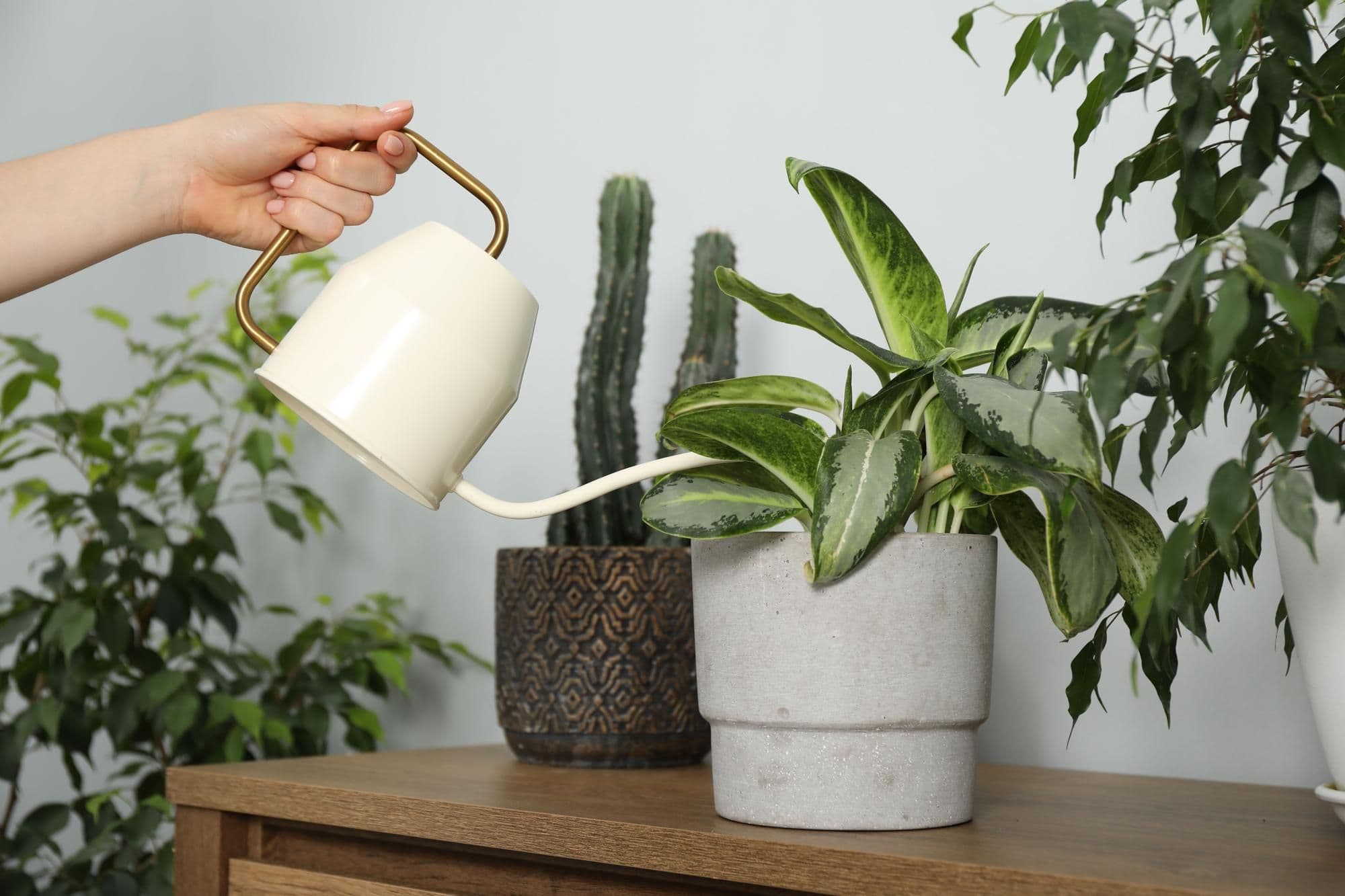
How to Water Houseplants: Watering Guide
Learn how often to water indoor plants, key factors for proper watering, and how to adjust the care routine by plant type, season, pot size, light, and indoor conditions.
Plant Care

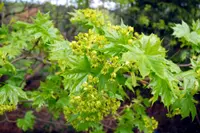
To recognize Norway Maple, check for opposite leaves with 5 to 7 broad, pointed lobes and long leaf stalks. The crown is dense and rounded on a stout trunk.
Clusters of small yellow-green flowers sit upright above the twigs before the leaves open.
Not sure about your plant ID? Upload a photo and check it with Botan.
Clear images work best. Avoid photos taken too close or too far away
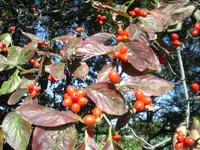
Check the leaf shape, twig pattern, flowers, and paired seeds on Acer platanoides.
Use several of these features together for a more confident visual check.
Acer platanoides shows useful visual shifts from seedling structure to flowers and fruit.
Norway Maple has several named forms that are easy to separate by foliage color or crown shape.
In spring, Norway Maple is easy to spot when clusters of yellow-green flowers open before or with the leaves. The leaves soon expand broad and bright green. By fall, the canopy turns clear yellow, then drops to reveal opposite branching and large pointed buds through winter. Paired winged samaras often hang on into late summer or early fall.
Several maples are often mistaken for Norway maple.
sugar maple(Acer saccharum)
Often confused because both have opposite, 5-lobed leaves. Norway maple usually has broader leaves with a few coarse teeth; sugar maple leaf margins are mostly smooth. Break a leaf stalk: Norway maple exudes milky sap, sugar maple does not.
sycamore maple(Acer pseudoplatanus)
Similar in overall leaf shape and tree form. Sycamore maple leaves are usually rougher and more leathery, with toothed margins. Its paired winged seeds spread nearly flat, while Norway maple seeds form a wider angle.
Acer platanoides is native across much of Europe and west into parts of western Asia. In its natural range, it occurs in mixed deciduous woodland, forest edges, ravines, and streamside woods rather than in bogs, alpine zones, or dry open grassland. That setting helps with identification because a maple matching this species in lowland woodland or along settled roadsides in Europe is more likely to be Acer platanoides than a species tied to mountains, wetlands, or strongly acidic heath habitats.
What Plant Is This?
Find out what plant you have and get specific care tips
Use Botan to compare a photo and help verify the plant, which is useful when similar species can cause confusion.
Yes. When a leaf stalk is broken, this species releases a distinctive milky white sap. That trait is one of the quickest checks used in identifying Norway Maple and helps separate it from most other maples.
Identify it from a photo with Botan, then get plant details, care information, and common problems for that species.
7 min read · 24 Aug 2026
Learn how often to water indoor plants, key factors for proper watering, and how to adjust the care routine by plant type, season, pot size, light, and indoor conditions.
8 min read · 31 Jul 2026
To keep plants healthy and thriving, provide the right balance of light, humidity, nutrients, airflow, and quality soil. This guide covers the essentials of year-round plant care.
7 min read · 22 Jul 2026
Curious which fruits the world actually eats the most? Here's the top-20 by production volume, an overview of what people choose in each region, and a few figures that defy common assumptions.