Root flare check
Expose and keep the trunk flare visible at soil level by gently removing excess mulch and soil from the base each spring to reduce rot risk and improve stability.

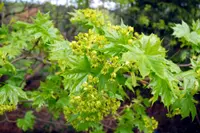
Norway maple, Acer platanoides, is a medium to large deciduous tree commonly used in streets, parks, and large gardens. It forms a broad, dense crown that gives deep shade. Leaves are wide, 5-lobed, and turn from rich green to yellow in autumn, and the tree produces winged seeds in abundance. Native to Europe and western Asia, it has naturalized widely in North America. It is generally tough and adaptable, tolerating urban pollution and a range of soils, which makes it relatively easy to establish but sometimes invasive. It prefers full sun, consistent moisture, and well-drained soil, and these traits guide how to care for Norway Maple.

Care Difficulty
Easy Care

Light Preference
Full Sun

Water Requirements
Moderate Water

Temperature Preference
Cold Hardy

Hardiness Zone
3–7

Soil Texture
Loamy, Clay, Silty

Soil pH
Slightly acidic (6.5–7.0), Neutral (7.0)

Soil Drainage
Moist but well-drained

Fertilization
Minimal (feed rarely)
Scan your plant to receive care tips personalized for your specific plant
Available on iOS and Android
This species grows best in full sun to light shade in temperate outdoor sites.
This tree prefers consistently moist, well-drained soil rather than frequent shallow watering.
This hardy deciduous tree tolerates a broad temperature range typical of cool to cold climates.
This species tolerates a wide humidity range and does not usually need special adjustments outdoors.
Acer platanoides grows best in moist, well-structured mineral soils with ample pore space and reliable drainage.
This species is generally unsuited to long-term container growing and is best planted in open ground.
Mature Acer platanoides in the ground usually need little feeding if soil is moderately fertile.
Pruning Acer platanoides focuses on safety, structure, and long-term canopy health.
Acer platanoides is usually grown in the ground, so transplanting young trees correctly is more important than repotting.
Propagation of Acer platanoides is most often done from seed rather than vegetative methods.
Established Acer platanoides trees are cold hardy in most temperate climates and usually need minimal winter care.

Plant Health Check
Not sure what's wrong with your plant? Check your plant's health inside the app.
Norway maple shows unusually high tolerance to air pollution, compacted soils, and de-icing salts, which is why it became a very common street and parking-lot tree in many North American cities.
This species develops a broad, dense crown that casts very deep shade, often suppressing the regeneration of native understory plants and tree seedlings beneath its canopy.
When a leaf stalk of Norway maple is broken, it exudes a characteristic white, milky latex, which helps distinguish it in the field from similar maples like sugar maple that have clear sap.
Norway maple was widely planted in North America after the early 20th century as a replacement for American elms lost to Dutch elm disease, and this large-scale use later contributed to its recognition as an invasive species in many regions.
This species is generally fast-growing, especially in youth, often adding 30–60 cm of height per year under favorable conditions. Growth slows as the tree matures and may be reduced by poor soil or drought stress.
Keep your plants happy and healthy with plant identification, disease detection, and easy care guidance.