Shear After Flowering
As soon as the main flush of blooms fades, shear the stems back by about one-third to encourage a tighter mound, extend the flowering season, and prevent the plant from becoming leggy.

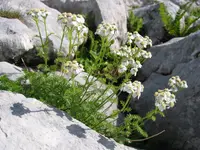
Achillea clusiana is a compact, clump-forming perennial herb in the daisy family, known for its finely divided, feathery foliage and flat-topped flower clusters. The blooms are typically white to pale cream and appear on upright stems, giving the plant a light, airy look in borders and rock gardens.
This species is native to mountainous and rocky regions, where it thrives in sunny, well-drained sites with low to moderate fertility. It is generally considered easy to grow, thanks to its drought tolerance and resilience in poor soils. Gardeners who learn how to care for Achillea clusiana usually appreciate its reliability and low maintenance needs in temperate climates.

Care Difficulty
Easy Care

Light Preference
Full Sun

Water Requirements
Low Water

Temperature Preference
Cold Hardy

Hardiness Zone
4–8

Soil Texture
Sandy, Loamy, Rocky

Soil pH
Slightly acidic (6.5–7.0), Slightly alkaline (7.0–7.5)

Soil Drainage
Well-drained

Fertilization
Minimal (feed rarely)
Scan your plant to receive care tips personalized for your specific plant
Available on iOS and Android
This sun-loving alpine yarrow thrives in bright, open conditions with low competition from taller plants.
This species prefers dry, well-drained conditions and is more tolerant of drought than excess moisture.
This hardy perennial tolerates a wide temperature range once established, especially in dry, free-draining soils.
This species is adapted to dry climates and typical outdoor air in the US, so humidity management is rarely necessary.
Achillea clusiana prefers lean, well-drained, mineral soils that do not stay wet after rain or watering.
This species can be grown in containers if the potting setup prevents waterlogging and compaction.
This drought-adapted perennial needs only modest feeding, as Achillea clusiana naturally thrives in lean soils.
Pruning maintains compact growth and sustained flowering in Achillea clusiana.
Garden-grown Achillea clusiana is usually transplanted rather than repotted, as it is most often treated as a border perennial.
This species is commonly multiplied to refresh plantings and share divisions.
This hardy perennial generally needs minimal winter care in most temperate climates.

Plant Health Check
Not sure what's wrong with your plant? Check your plant's health inside the app.
This yarrow is naturally restricted to high-elevation limestone scree and rocky slopes in the eastern Alps, where it endures intense sun, thin soils, and strong temperature fluctuations.
It forms neat, flat-topped clusters of pure white flower heads held just above finely dissected foliage, creating a clear visual contrast with many other alpine yarrows that show more variable or yellowish tones.
Instead of tall upright stems, it typically forms low, dense mats with short flowering shoots, an adaptation that helps reduce wind damage and water loss in exposed mountain habitats.
This species spreads gradually by short rhizomes and self-seeding but is not usually considered aggressive in well-drained, low-fertility soils. In richer beds, remove unwanted seedlings and divide clumps every few years to control spread.
Keep your plants happy and healthy with plant identification, disease detection, and easy care guidance.