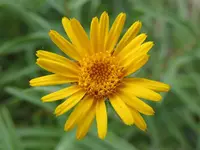
Chamomile-leaved Lavender-cotton Care (Achillea cretica)

Chamomile-leaved Lavender-cotton

About Chamomile-leaved Lavender-cotton

Chamomile-leaved lavender-cotton (Achillea cretica) is a compact, evergreen perennial known for its finely divided, chamomile-like foliage and small, button-shaped yellow flower heads. It forms low, mounding clumps that suit rock gardens, dry borders, and edging.

This species is native to rocky, sun-exposed habitats in parts of the eastern Mediterranean, where it grows in lean, well-drained soils. Its drought tolerance and slow, tidy growth habit generally make it straightforward to manage.

Gardeners who want to care for Chamomile-leaved Lavender-cotton usually succeed by providing strong light, low to moderate moisture, and soil that does not stay wet for long periods.

Main Plant Requirements

Care Difficulty

Easy Care

Light Preference

Full Sun

Water Requirements

Low Water

Temperature Preference

Cold Hardy

Hardiness Zone

5–9

Soil Texture

Sandy, Loamy, Rocky

Soil pH

Slightly acidic (6.5–7.0), Slightly alkaline (7.0–7.5)

Soil Drainage

Well-drained

Fertilization

Minimal (feed rarely)

Get Personalized Care Plan

Scan your plant to receive care tips personalized for your specific plant

Available on iOS and Android

How to Care for the Chamomile-leaved Lavender-cotton

Achillea cretica thrives in strong, direct sun typical of dry, open sites.

  • Provide 6–8 hours of full sun daily; light afternoon shade is acceptable in very hot inland areas.
  • Place Chamomile-leaved Lavender-cotton where it receives unfiltered morning to early afternoon sun, avoiding deep shade near buildings or dense shrubs.
  • In shade exceeding 3–4 hours, stems may stretch and flowering declines, while extreme reflected heat from walls can scorch foliage in midsummer.

This species prefers dry, well-drained conditions and is highly drought tolerant once established.

  • Water only when the top 3–5 cm of soil are completely dry; in many climates this means long intervals between deep soakings.
  • Use sharply drained, gritty or sandy soil so water runs through quickly, reducing the risk of root rot and fungal problems in Achillea cretica.
  • In cool seasons, natural rainfall often suffices; in heat waves, watch for wilting or crisping tips as a cue for a slow, thorough watering.

This plant is adapted to warm, dry climates with cool winters and hot summers.

  • Active growth and flowering are strongest around 65–80°F (18–27°C) with dry air and well-drained soil.
  • Mature plants tolerate down to about 10–15°F (-12 to -9°C) in free-draining ground, though young plants benefit from a light mulch in winter.
  • Heat tolerance is high up to 90–95°F (32–35°C) if soil is not waterlogged; prolonged frost in wet, heavy soil increases crown and root damage risk.

Humidity is rarely a limiting factor for Achillea cretica, including Chamomile-leaved Lavender-cotton.

Achillea cretica prefers lean, mineral-rich soil that drains very quickly.

  • Use sandy or gritty loam with low organic matter to mimic dry, rocky habitats.
  • Aim for slightly alkaline to neutral pH around 7.0–8.0, adding crushed limestone if the mix is acidic.
  • Combine 2 parts coarse sand or grit with 1 part loam and a small amount of compost to improve structure without waterlogging.
  • Avoid heavy clay, peat-heavy mixes, or spots where water lingers after rain, as roots are prone to rot in saturated conditions.

This species is suitable for container growing when the pot is set up to stay dry between waterings.

  • Choose a wide, shallow container to accommodate its spreading, fibrous roots and prevent water from collecting deeply around them.
  • Select unglazed terracotta rather than plastic so moisture can escape through the pot walls, keeping the root zone drier.
  • Raise the pot on feet or bricks so drainage holes stay clear and runoff leaves quickly after rain or irrigation.

Achillea cretica is adapted to lean, rocky soils and needs only light feeding in cultivation.

  • Apply a small amount of balanced slow-release fertilizer (around 10-10-10) once in early spring as growth resumes.
  • In richer garden soils, use a thin layer of compost instead of granular fertilizer to avoid lush, floppy growth.
  • Dilute liquid feed to 1/2 strength if used in containers, and feed no more than once a month in the growing season.
  • Avoid fertilizing in fall and winter when growth is slow or dormant, especially for Chamomile-leaved Lavender-cotton.

Pruning Achillea cretica supports compact growth and sustained flowering in garden settings.

  • Cut back spent flower stems in mid to late summer to encourage a lighter rebloom and tidy appearance.
  • Remove dead, damaged, or weakly growing shoots at the base using clean, sharp hand pruners.
  • In late winter or very early spring, shear old, woody stems down to a low mound to stimulate fresh basal growth.
  • Thin overcrowded clumps by removing a few older stems, which improves air flow and reduces disease risk.

This species is most often grown in the ground, so care focuses on transplanting rather than frequent repotting.

  • Transplant in early spring or early fall when temperatures are mild, avoiding hot, dry periods.
  • Move plants when clumps become congested, growth declines, or bare centers appear after several seasons.
  • Lift the clump carefully, retain as much root ball as possible, and replant into sharply drained soil at the same depth.
  • Water in gently, then keep soil lightly moist (not wet) for 1–2 weeks to limit transplant shock and promote root re-establishment.

Achillea cretica is commonly multiplied by division, with seeds and cuttings as additional options for growers.

  • Divide mature clumps in early spring or early fall, replanting healthy sections with strong roots and several shoots.
  • Sow seeds in late winter to early spring on the surface of well-drained mix, providing light and temperatures around 65–70°F.
  • Take non-flowering stem cuttings in late spring or early summer and root in sandy, free-draining substrate.
  • Maintain bright, indirect light and evenly moist, not waterlogged, conditions until divisions, seedlings, or cuttings establish.

This yarrow is cold hardy in most temperate gardens and usually needs minimal winter care.

  • In regions with wet winters, ensure soil drainage is excellent to prevent root rot in cold, saturated ground.
  • Apply a light mulch layer around, not on top of, the crown in colder zones to moderate soil temperature.
  • Leave some dry stems over winter in very exposed sites to catch insulating snow, then cut back in late winter.

Care Tips

Gravel collar

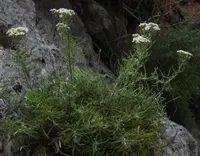
Create a 5–10 cm wide collar of coarse gravel around the crown to keep stems dry at the base, discourage rot, and reduce weed competition in thin, rocky soils.

Controlled clump renewal

Every 3–4 years, lift and divide the clump in early spring, replanting only the firm, outer sections to maintain compact growth and flower density while discarding any woody, exhausted centers.

Lean nutrient management

If neighboring plants receive compost or fertilizer, place a physical barrier such as a shallow edging or stone ring around the plant to prevent nutrient runoff that can cause leggy growth and reduced drought tolerance.

Heat and reflection use

Position plants near south-facing rocks or gravel paths to take advantage of reflected heat and improved drainage, which mimics the rocky habitats where growing Chamomile-leaved Lavender-cotton naturally thrives.

Self-seeding control

If volunteer seedlings are unwanted, shear off spent flower stems before seeds mature, or designate one small patch for seed set and deadhead the rest to balance natural regeneration with tidy planting areas.

Common Pests and Diseases

Powdery mildew

This disease appears as a white to gray, powdery coating on leaves and stems, often during warm days and cool, humid nights. Symptoms include distorted foliage and reduced flowering if the infection is heavy.

Solution

Improve air circulation by thinning crowded stems and avoid overhead watering, especially late in the day. Remove and discard heavily infected foliage and, if needed, apply a sulfur or potassium bicarbonate fungicide labeled for ornamentals, following label directions closely as part of broader Achillea cretica plant care.

Botrytis blight

This disease causes brown, water-soaked spots on flower heads and foliage that quickly develop gray, fuzzy mold, especially in prolonged damp, cool weather. Symptoms include collapse of flower clusters and mushy tissue at the base of stems.

Solution

Remove and discard all affected flower heads and leaves and keep plant debris off the soil surface. Improve drainage and airflow, water at soil level in the morning, and in persistent cases use a registered ornamental fungicide targeting Botrytis, rotating products to reduce resistance risk.

Aphids

These insects cluster on young stems, buds, and the undersides of leaves, sucking sap and causing curling or yellowing foliage. This pest also excretes sticky honeydew that can attract sooty mold and ants.

Solution

Spray colonies off with a firm stream of water, focusing on shoot tips and leaf undersides. For ongoing infestations, apply insecticidal soap or a light horticultural oil, ensuring thorough coverage and repeating at 5–7 day intervals until populations drop.

Spittlebugs

These insects produce conspicuous white, frothy masses on stems and leaf joints, where nymphs feed on plant sap. Symptoms include minor distortion or yellowing of nearby leaves, though healthy plants usually tolerate light feeding.

Solution

Physically remove or wash off the foam masses with a strong water spray during routine watering. In more severe cases, prune heavily infested stems and dispose of them, and avoid excessive fertilization that encourages lush, attractive growth for spittlebugs.

Leaf spot complex

This disease group causes small brown, purple, or tan spots on leaves that may merge into larger blotches, often starting in the lower, denser parts of the clump. Symptoms include premature leaf drop and a generally thinning, unsightly mound when humidity stays high.

Solution

Remove and discard affected lower leaves and any plant debris around the crown to reduce pathogen buildup. Water at the base in the morning, increase spacing for better airflow, and if spotting continues, use a copper-based or chlorothalonil fungicide labeled for ornamental leaf spots, applied according to label instructions.

Interesting Facts

Rock crevice specialist

This species is naturally restricted to limestone and rocky slopes in the eastern Mediterranean, where it anchors itself in crevices and very shallow, mineral soils that many other plants cannot tolerate.

Strongly aromatic foliage

The finely divided gray leaves release a strong scent when touched due to abundant essential oil glands on the leaf surface, which help reduce herbivory and limit water loss.

Low cushion growth

Unlike many taller yarrow relatives, it typically forms a low, cushion-like mound that hugs the ground, an adaptation that reduces exposure to wind and intense sun in its native habitats.

Botan icon

Did you know?

Achillea cretica shows a high level of morphological variation across its island and coastal populations in the Aegean region, and this geographic differentiation has been studied as a model for understanding how isolation and harsh environments drive microevolution within the genus Achillea.

FAQs about Chamomile-leaved Lavender-cotton

This species forms low, slowly spreading clumps and short creeping stems but is not usually aggressive. It stays fairly compact, especially in poorer, well-drained soils. Occasional division or edging controls its spread in small beds and rock gardens.

Grow Healthy Plants with Botan Care

Keep your plants happy and healthy with plant identification, disease detection, and easy care guidance.

Botan plant care app — identify plants on mobile

Explore More Plants