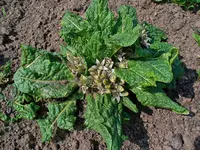
Sneezewort Care (Achillea ptarmica)

Also known as: Sneezewort Yarrow, Sneezeweed
Sneezewort

About Sneezewort

Sneezewort (Achillea ptarmica) is a hardy herbaceous perennial in the daisy family, valued for its clusters of small, white, button-like flowers. It typically forms low to medium clumps with narrow, toothed leaves and upright, branching stems.

This species is native to damp meadows and stream edges across Europe and parts of Asia, and it adapts well to many temperate garden settings. It is generally easy to grow, as it tolerates cool conditions and average soils, though it prefers moist, well-drained ground and full sun to light shade.

Gardeners often find it straightforward to care for Sneezewort because it is resilient, long-flowering, and attractive to pollinators, yet not overly demanding in routine maintenance.

Main Plant Requirements

Care Difficulty

Easy Care

Light Preference

Full Sun

Water Requirements

Regular Water

Temperature Preference

Cold Hardy

Hardiness Zone

3–8

Soil Texture

Sandy, Loamy, Clay

Soil pH

Slightly acidic (6.5–7.0), Neutral (7.0)

Soil Drainage

Moist but well-drained

Fertilization

Minimal (feed rarely)

Get Personalized Care Plan

Scan your plant to receive care tips personalized for your specific plant

Available on iOS and Android

How to Care for the Sneezewort

This species prefers open, bright conditions typical of meadow habitats.

  • Provide full sun for 6–8 hours per day; light afternoon shade is helpful in hotter regions to reduce stress and leaf scorch.
  • Tolerates partial shade (3–4 hours sun), but flowering declines and stems may stretch if light is consistently low.
  • Position Sneezewort where it receives strong morning sun and only filtered or dappled light in the hottest part of summer days.

Achillea ptarmica prefers evenly moist but not waterlogged soil, especially in the growing season.

  • Water when the top 3–5 cm of soil feels dry, allowing the root zone to stay slightly moist rather than fully drying out.
  • In spring and early summer, monitor more closely during rapid growth; reduce watering in late fall and winter when the plant is dormant.
  • Watch for drooping, crisp leaves as a sign of underwatering, and yellowing, limp foliage or a sour soil smell as indicators of overwatering or poor drainage.

This hardy perennial tolerates a wide temperature range typical of temperate climates.

  • Optimal active growth occurs around 60–75°F (16–24°C), with strongest flowering in mild to warm summer conditions.
  • The plant is cold-hardy, surviving down to about -20°F (-29°C) in the ground when established and mulched, though top growth dies back in winter.
  • Handles summer heat up to about 85–90°F (29–32°C) if soil moisture is maintained; prolonged hotter periods may reduce flowering and cause leaf scorch.

This species tolerates a wide humidity range and usually does not need special humidity management outdoors.

Achillea ptarmica prefers moderately fertile, well-drained but moisture-retentive soil.

  • Use a loamy or sandy-loam texture with some organic matter to hold moisture without becoming heavy.
  • Ensure fast drainage by incorporating coarse sand or fine gravel at 20–30% of the mix.
  • Aim for slightly acidic to neutral pH, roughly 6.0–7.0, which supports nutrient availability.
  • Avoid compacted clay, waterlogged spots, or peat-heavy mixes that stay soggy and exclude air from roots.

This species is suitable for container growing when given enough root space and sharp drainage.

  • Choose a deep, stable pot that is at least 25–30 cm wide to accommodate its spreading root system and prevent tipping in wind.
  • Select a heavier material such as ceramic or thick terracotta if the top growth becomes dense, to keep the container from shifting.
  • Use a slightly raised pot stand or bricks to keep drainage holes clear so excess water exits quickly after rainfall or irrigation.

This species grows well in modest soils and benefits from only light, targeted feeding during the growing season.

  • In spring, apply a thin layer of compost or a low-dose balanced NPK granular fertilizer around the clump.
  • Use a balanced NPK such as 10-10-10 at half strength, keeping granules off the stems and leaves.
  • Feed once in spring and, if growth seems weak, once again in mid-summer for Sneezewort.
  • Avoid fertilizing in fall and winter to prevent soft growth that is prone to lodging.

Pruning Achillea ptarmica maintains compact growth, encourages more flowering, and prevents self-seeding from getting out of control.

  • In late spring to early summer, deadhead spent flower stems down to a healthy leaf node to extend blooming.
  • Cut back dead, damaged, or overcrowded stems to the base in late fall or very early spring.
  • Use clean, sharp hand pruners or scissors to make angled cuts and reduce disease risk.
  • Shear the entire clump to 5–8 cm after flowering to refresh foliage and keep a tidy, upright habit.

This species is most often grown in garden beds, where division and transplanting keep clumps vigorous and within bounds.

  • Plan to lift and divide garden clumps every 3–4 years in early spring or early fall.
  • Transplant when growth becomes crowded, flowering declines, or stems flop outward from an overfull center.
  • Dig up the clump, gently tease or cut it into smaller sections, and replant divisions at the same depth in well-drained soil.
  • Water thoroughly after transplanting, then keep soil evenly moist for 1–2 weeks to reduce root stress and improve establishment.

Achillea ptarmica is commonly propagated by division, stem cuttings, and seeds to expand plantings or renew aging clumps.

  • Divide established clumps in early spring or early fall, replanting vigorous outer sections into prepared soil.
  • Take 7–10 cm softwood cuttings in late spring, remove lower leaves, and root in moist, well-drained medium under bright, indirect light.
  • Sow fresh seeds in late winter to early spring on the surface of a free-draining mix, as they need light to germinate.
  • Maintain gentle bottom warmth around 65–70°F and consistent moisture for reliable rooting or germination success.

This cold-hardy perennial usually needs minimal winter care in most temperate climates.

  • Plants tolerate typical frosts once established, with top growth dying back while roots survive.
  • After the first hard frost, cut back dead stems to 3–5 cm to reduce disease carryover and tidy beds.
  • Apply a light 3–5 cm mulch layer over the root zone in colder areas, keeping mulch slightly away from crowns.
  • Move containers to a sheltered, unheated area to avoid root freeze-thaw cycles and water only sparingly.

Care Tips

Divide clumps

Lift and divide mature plants every 3–4 years in early spring or early fall to keep flowering strong and prevent the center of the clump from becoming woody and sparse.

Deadhead strategically

Shear off spent flower stems just above the foliage mat to encourage a second, lighter flush of blooms and keep the plant from self-seeding excessively into nearby beds.

Provide discreet support

In windy or exposed sites, insert low, ring-style or grid supports around young shoots in spring so stems grow through the frame and remain upright when in full flower.

Control spread edges

Use a flat spade once a year to slice around the clump and remove any creeping rhizomes that invade lawns or neighboring perennials, especially in moisture-retentive soils.

Monitor for rust

Check foliage regularly for orange or brown pustules and remove affected leaves promptly; in humid regions, increase spacing and airflow as a primary disease-prevention step when growing Sneezewort.

Common Pests and Diseases

Powdery mildew

This disease appears as white, powdery patches on leaves and stems, often during warm days and cool, humid nights. Symptoms include distorted new growth and reduced flowering if the infection is heavy.

Solution

Remove and dispose of the worst-affected leaves, then improve air circulation by thinning crowded stems and avoiding overhead watering. If conditions stay humid, apply a sulfur or potassium bicarbonate fungicide labeled for ornamentals, and space plants so foliage dries quickly after rain.

Botrytis blight

This disease causes brown, water-soaked spots on flower heads and leaves that become covered with a gray, fuzzy mold in cool, damp weather. Symptoms include collapsing stems and flower clusters that fail to open properly.

Solution

Cut off and discard all affected flower stalks and foliage, and keep plant debris off the soil surface. Improve airflow, avoid wetting the flowers when watering, and, in persistent cases, use a labeled fungicide for gray mold during extended cool, wet periods.

Aphids

These insects cluster on tender shoots and flower stalks, sucking sap and excreting sticky honeydew. Symptoms include curled or distorted new growth and reduced vigor, sometimes with sooty mold growing on the honeydew.

Solution

Spray colonies off with a strong stream of water and remove heavily infested shoot tips. If needed, treat remaining aphids with insecticidal soap or a light horticultural oil, ensuring thorough coverage of stems and the undersides of leaves while avoiding applications in hot sun above about 85°F.

Leafhoppers

These insects feed on foliage and can cause pale stippling, small white spots, or yellowing patches on leaves. Symptoms include quick movement of small, wedge-shaped insects that jump or fly when disturbed.

Solution

Reduce grassy weeds and tall vegetation near plantings, as these can harbor leafhoppers. For persistent damage, use yellow sticky traps for monitoring and treat foliage with insecticidal soap or neem-based products, applying in the evening to avoid leaf burn and to protect beneficial insects.

Interesting Facts

Traditional sneezing remedy

Dried and powdered flowers and leaves of this species were historically used in parts of Europe as a sternutatory, a substance that induces sneezing, which led to the common name sneezewort.

Preference for wet soils

Unlike many other yarrow species that favor dry, well-drained ground, this plant is often native to damp meadows, stream margins, and marshy grasslands, showing a strong tolerance for periodically waterlogged soils.

Distinctive white pompon blooms

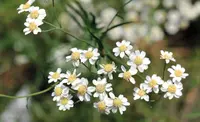
The flower heads are composed of many tightly packed florets that form small, button-like white pompons, which differ from the flatter, plate-like clusters seen in more common yarrows such as Achillea millefolium.

Botan icon

Did you know?

This species has been documented as a larval food plant for several European moths and other insects, meaning its presence can support specialized invertebrate communities in traditionally managed wet meadows.

FAQs about Sneezewort

This species spreads steadily by rhizomes and self-seeding but is usually manageable in typical garden settings. It can form loose colonies; edging, root barriers, and lifting extra clumps every few years keep it under control.

Grow Healthy Plants with Botan Care

Keep your plants happy and healthy with plant identification, disease detection, and easy care guidance.

Botan plant care app — identify plants on mobile

Explore More Plants