Encourage Low Mounding
Pinch back soft shoot tips once in spring to promote a denser, low mound rather than a few long, straggly stems that are more prone to wind damage.

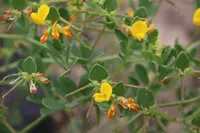
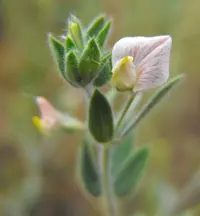
Coastal bird's-foot trefoil, Acmispon maritimus, is a low, spreading perennial legume native to sandy and coastal habitats of western North America. It forms small mats or loose clumps with delicate stems and narrow leaflets, often dotted with bright yellow pea-like flowers. These traits make it useful for stabilizing sandy soil and supporting pollinators such as bees. It suits gardeners seeking a tough, drought-tolerant groundcover rather than a lush, ornamental feature. The plant prefers full sun, fast-draining, lean soil, and minimal summer irrigation, which shapes how to care for coastal bird's-foot trefoil in garden settings.

Care Difficulty
Easy Care

Light Preference
Full Sun

Water Requirements
Low Water

Temperature Preference
Warm Climate

Hardiness Zone
8–10

Soil Texture
Sandy, Loamy, Rocky

Soil pH
Slightly acidic (6.5–7.0), Neutral (7.0)

Soil Drainage
Well-drained

Fertilization
Minimal (feed rarely)
Scan your plant to receive care tips personalized for your specific plant
Available on iOS and Android
This coastal legume prefers strong light similar to its native sandy shore habitats.
This species is drought-tolerant and prefers infrequent, deeper watering once established.
This coastal perennial thrives in mild, maritime-type climates with moderate temperatures.
This coastal legume tolerates low humidity well and does not need special moisture control.
This coastal wildflower prefers lean, fast-draining soil similar to sandy coastal dunes.
This species can be grown in containers if the pot and medium prevent persistent moisture around the roots.
This coastal native usually needs little feeding, but light nutrition can support growth in poor soils when caring for coastal bird's-foot trefoil.
Pruning Acmispon maritimus is minimal and mainly helps maintain a compact, flowering mound.
This species is most often grown in the ground, with transplanting more relevant than frequent repotting.
Acmispon maritimus is commonly propagated from seed, with some success also possible from soft cuttings.
This coastal legume is generally hardy in mild-winter climates and needs little dedicated winter care in the ground.

Plant Health Check
Not sure what's wrong with your plant? Check your plant's health inside the app.
This species is naturally restricted to sandy coastal habitats along the Pacific coast of western North America, where it helps stabilize loose dunes and upper beach sands with its spreading root system.
As a member of the legume family, it forms nodules on its roots with symbiotic bacteria that fix atmospheric nitrogen, enriching nutrient-poor coastal sands and supporting other dune plants nearby.
In many sites it behaves as a short-lived perennial or facultative annual, growing and flowering rapidly during favorable moist seasons, then dying back or disappearing from the surface during hot, dry periods.

Along some stretches of the California coast, this low, mat-forming species can create bright yellow flowering carpets that are important early-season nectar and pollen sources for native bees and other dune insects when few other plants are in bloom.
This species spreads moderately by seed and short creeping stems, forming low patches rather than large monocultures in most gardens. In sandy, disturbed coastal sites it can naturalize faster, but it is not typically considered highly aggressive.
Keep your plants happy and healthy with plant identification, disease detection, and easy care guidance.