Establish deep roots
During the first growing season, give one slow, deep soak every 10–14 days in dry weather rather than frequent light watering to encourage a deep root system that improves long‑term drought tolerance.

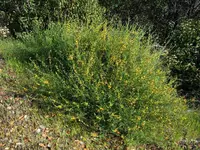
Deerweed, Acmispon glaber, is a small, shrubby legume native to dry, open habitats in California and parts of the southwestern United States. It often grows on coastal bluffs, chaparral slopes, and disturbed hillsides.
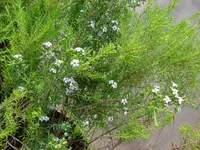
Plants form low, branching mounds with fine stems, small leaflets, and many small yellow to orange pea-like flowers that attract bees and other pollinators. As a nitrogen-fixing plant, it helps improve poor, sandy soils over time.
Deerweed suits low-water, sunny landscapes and adapts well to lean, fast-draining soil, which makes it a useful choice for native and habitat gardens. Understanding how to care for deerweed starts with matching its dry, sunny, low-fertility conditions.

Care Difficulty
Easy Care

Light Preference
Full Sun

Water Requirements
Low Water

Temperature Preference
Warm Climate

Hardiness Zone
7–10

Soil Texture
Sandy, Loamy, Rocky

Soil pH
Slightly acidic (6.5–7.0), Slightly alkaline (7.0–7.5)

Soil Drainage
Well-drained

Fertilization
Minimal (feed rarely)
Scan your plant to receive care tips personalized for your specific plant
Available on iOS and Android
This drought-adapted shrub thrives in strong sun and is best suited to open, exposed sites.
This species is strongly drought-tolerant and needs infrequent, careful watering once established.
This California native shrub prefers warm, dry conditions and does not tolerate hard frost.
This drought-adapted shrub tolerates a wide humidity range and rarely needs special humidity management.
This dryland legume prefers lean, fast-draining mineral soils and is sensitive to prolonged wetness.
This species can be grown in containers if they mimic its dry, sharply drained native conditions.
Acmispon glaber is adapted to nutrient-poor soils and usually needs little or no fertilizer once established.
Pruning Acmispon glaber is mainly for light shaping and maintaining plant health.
This native shrub is typically grown in the ground, so management focuses on careful transplanting rather than frequent repotting.
Propagation of Acmispon glaber is most reliable from seed, with attention to dormancy-breaking steps.
In mild, Mediterranean-type climates, deerweed generally needs little dedicated winter care.

Plant Health Check
Not sure what's wrong with your plant? Check your plant's health inside the app.
Seeds of this species often germinate best after exposure to fire-related cues such as heat and smoke, which helps the plant quickly recolonize burned coastal scrub and chaparral habitats.
Like many legumes, this shrub forms nodules on its roots that house symbiotic bacteria capable of converting atmospheric nitrogen into a usable form, enriching poor, sandy soils over time.
Its long blooming season in coastal California provides nectar and pollen for a wide array of native bees, butterflies, and other insects, making it a critical food resource in spring and early summer.

This species is a primary larval host for the threatened Hermes copper butterfly (Lycaena hermes) in parts of southern California, meaning the butterfly’s caterpillars depend on its leaves as their main food source during development.
Flowering often declines when the plant is pruned too hard at the wrong time, receives excess water or nutrients, or becomes too shaded. Light, post-bloom pruning and lean, well-drained conditions usually restore a normal bloom cycle.
Keep your plants happy and healthy with plant identification, disease detection, and easy care guidance.