

Wind-shaping benefits
Plant in a position with light, regular wind exposure so stems grow sturdier and less likely to splay or break as the shrub matures.

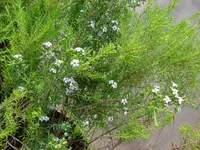
Pink breath of heaven, Coleonema pulchellum, is an evergreen shrub valued for its fine, aromatic foliage and clouds of tiny pink star-shaped flowers. It usually forms a soft, rounded mound that moves easily in the wind, giving a light, airy look in garden borders.
This species comes from coastal areas of South Africa, where it grows in mild, sunny, well-drained sites. In suitable climates it blooms over a long season, attracting bees and other pollinators.
Its tolerance of wind, salt spray, and light pruning makes it useful in coastal or exposed gardens, though it dislikes heavy, waterlogged soils. Gardeners who want to care for Pink Breath of Heaven should provide good light, moderate moisture, and free-draining soil.

Care Difficulty
Moderate Care

Light Preference
Full Sun

Water Requirements
Moderate Water

Temperature Preference
Warm Climate

Hardiness Zone
8–10

Soil Texture
Sandy, Loamy, Rocky

Soil pH
Acidic (5.5–6.5), Slightly acidic (6.5–7.0)

Soil Drainage
Well-drained

Fertilization
Minimal (feed rarely)
Scan your plant to receive care tips personalized for your specific plant
Available on iOS and Android
This sun-loving shrub thrives in bright, open positions with protection from extreme afternoon heat.
This shrub prefers evenly moist, well-drained soil that dries slightly between waterings once established.
This plant prefers mild, Mediterranean-type conditions and does not tolerate hard frost.
This species tolerates a wide humidity range and rarely needs special humidity management.
Coleonema pulchellum prefers very well-drained, light soil that never stays waterlogged.
This shrub is suitable for container growing when drainage and stability are managed carefully.
Coleonema pulchellum benefits from modest feeding to support dense foliage and flowering.
Coleonema pulchellum responds well to light, timely pruning that maintains a compact, floriferous shrub.
Coleonema pulchellum is most often grown in the ground, but container plants or young shrubs may need occasional moving.
Coleonema pulchellum is commonly propagated from semi-ripe cuttings for consistent, garden-quality plants.
Coleonema pulchellum prefers mild, frost-free winters and may suffer damage in prolonged freezes.

Plant Health Check
Not sure what's wrong with your plant? Check your plant's health inside the app.
This species has very finely divided, needle-like leaves that release a strong resinous scent when touched, due to essential oils concentrated in small glands along the foliage.
The shrub produces masses of tiny star-shaped pink flowers along the outer stems, often so dense in late winter to spring that they partly obscure the foliage, especially in mild coastal climates.
It is naturally distributed along the coastal and mountain fynbos of the Western Cape in South Africa, where it experiences cool wet winters and dry, windy summers on well-drained, often sandy or rocky soils.

In its native South African fynbos, this species often grows among other fine-leaved, oil-rich shrubs that are adapted to periodic fire, and like many fynbos plants it can resprout or regenerate from seed after fire events, helping maintain species diversity in this fire-prone ecosystem.
Lack of bloom usually comes from insufficient light, pruning at the wrong time, or nutrient imbalance from high-nitrogen fertilizer. Light, selective post-flowering pruning, and balanced feeding support reliable flowering in suitable climates.
Keep your plants happy and healthy with plant identification, disease detection, and easy care guidance.

 POPULAR
Garden croton
Codiaeum variegatum
European honeysuckle
Lonicera periclymenum
Maesa japonica
Maesa japonica
Wooly Bucket Bumelia
Sideroxylon lanuginosum
shrubby cinquefoil
Dasiphora fruticosa
Japanese Pieris
Pieris japonica 'Mountain Fire'
flower axistree
Glycosmis parviflora
slender myoporum
Myoporum parvifolium