Support early vines
Provide a sturdy trellis or horizontal wires as soon as new season shoots reach 10–15 cm, guiding a few main vines while pruning off weak, crossing side shoots to keep the caudex visible and growth controlled.

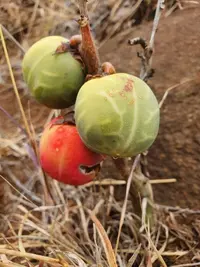
Adenia volkensii is a caudiciform vine valued for its swollen, woody base that stores water. It is often grown as a sculptural container specimen. Native to arid regions of East Africa, it has twining green stems and sparse foliage, giving it a distinctive, bonsai-like look when trained. Growth is usually slow and seasonal, with a marked rest period. This species is moderately challenging, as it dislikes prolonged moisture around the roots and is sensitive to cold, stagnant air, and poor drainage. Bright light, warm temperatures, and a very fast-draining, gritty mix suit it best. Anyone learning how to care for Adenia volkensii should pay close attention to watering restraint and winter rest.

Care Difficulty
Moderate Care

Light Preference
Full Sun

Water Requirements
Low Water

Temperature Preference
Tropical / Frost Sensitive

Hardiness Zone
10–12

Soil Texture
Sandy, Loamy, Rocky

Soil pH
Slightly acidic (6.5–7.0), Neutral (7.0)

Soil Drainage
Well-drained

Fertilization
Minimal (feed rarely)
Scan your plant to receive care tips personalized for your specific plant
Available on iOS and Android
This caudiciform climber thrives in strong light that mimics an open, arid habitat.
Watering should respect its drought-adapted caudex and sensitivity to excess moisture around the roots.
This species prefers warm, dry conditions and reacts poorly to cold, wet weather.
This caudiciform prefers fairly dry air and usually does not need special humidity management indoors.
This species needs a very fast-draining, mineral-heavy mix to protect its caudex from rot.
This species is well suited to container growing due to its slow, compact caudex and manageable vine growth.
This drought-adapted caudiciform needs modest feeding to support slow, healthy growth in containers.
Pruning is mainly used to manage vine length and remove weak growth while preserving the caudex.
Container-grown plants benefit from infrequent, careful repotting to protect the sensitive caudex and roots.
Propagation is possible but slow, with seeds the most reliable method and cuttings less predictable.
This species is not frost tolerant and needs dry, cool, but above-freezing conditions during winter dormancy.

Plant Health Check
Not sure what's wrong with your plant? Check your plant's health inside the app.
This species forms a large, water-storing caudex that can resemble a rounded boulder, an adaptation that helps it survive long dry periods in semi-arid East African habitats.
From the swollen base, it sends out slender, often scrambling or climbing vines that are seasonally deciduous, shedding leaves in the dry season to reduce water loss.
The plant produces a white, irritant latex typical of the passionflower family, and all parts are considered poisonous if ingested, so it is handled with care by local people and growers.
Yellowing leaves often result from root rot, nutrient deficiency, or natural shedding of older foliage. Check for soggy soil and improve drainage, reduce watering, and provide a light, balanced fertilizer during active growth if needed.
Keep your plants happy and healthy with plant identification, disease detection, and easy care guidance.