


Rotate For Symmetry
Turn the pot 90° every 2–3 weeks so stems thicken evenly and the plant does not lean or flatten on the light-facing side.

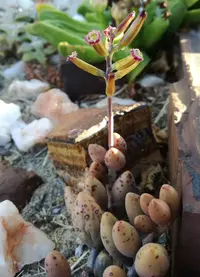
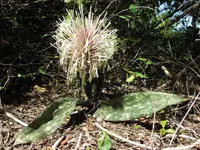
Adromischus filicaulis, often called brittle adro, is a compact succulent from South Africa’s arid regions. It forms low clusters of narrow, fleshy leaves on fragile stems. Leaf colors range from gray-green to reddish tones, sometimes with subtle markings, and the plant may produce small tubular flowers on slender stalks. This species grows slowly and stays small, which makes it suitable for windowsills and mixed succulent containers. Its drought tolerance and preference for bright light make it relatively easy to manage, as long as excess moisture is avoided. A basic understanding of how to care for Brittle Adro helps prevent stem breakage and root rot in indoor conditions.

Care Difficulty
Moderate Care

Light Preference
Partial Sun

Water Requirements
Low Water

Temperature Preference
Tropical / Frost Sensitive

Hardiness Zone
10–11

Soil Texture
Sandy, Loamy, Rocky

Soil pH
Slightly acidic (6.5–7.0), Neutral (7.0)

Soil Drainage
Well-drained

Fertilization
Minimal (feed rarely)
Scan your plant to receive care tips personalized for your specific plant
Available on iOS and Android
This compact succulent prefers bright, dry conditions similar to its native South African habitat.
This drought-adapted succulent stores moisture in its leaves and prefers infrequent, thorough watering.
This species prefers warm, dry conditions but is sensitive to frost and sudden extreme temperature swings.
This succulent handles dry indoor air well and rarely needs humidity adjustment.
Provide a sharply draining, mineral-rich mix to protect Adromischus filicaulis roots from rot.
This species is very suitable for container growing, especially in small, stable pots.
This compact succulent has modest nutrient needs, so light, controlled feeding is enough for healthy growth in Brittle Adro indoor care.
Adromischus filicaulis needs only light, corrective pruning to maintain a compact, tidy form.
This slow-growing succulent prefers being slightly root-bound and only needs infrequent repotting.
This species is commonly propagated from leaf or short stem cuttings rather than seed in home collections.
This succulent is not frost hardy and needs careful winter care in most temperate climates.

Plant Health Check
Not sure what's wrong with your plant? Check your plant's health inside the app.
This species forms small clusters of very slender, cylindrical leaves that can look almost like green threads, an adaptation that reduces surface area and helps limit water loss in its dry native habitat.
In the wild it often grows tucked into crevices of quartzitic or sandstone rock outcrops in South Africa, where shallow pockets of gritty soil and rapid drainage prevent its roots from staying wet for long.
It tends to grow and leaf out during cooler, slightly wetter periods and slow down or partially rest in hotter, drier conditions, reflecting the seasonal rainfall patterns of its native range and informing appropriate Adromischus filicaulis care.

The tubular flowers of this species are adapted for insect pollination, with a narrow floral tube and colored lobes that guide small pollinators directly toward the nectar while ensuring that pollen is efficiently transferred between plants.
Slow growth is normal for this compact succulent, especially in winter rest. Growth further slows with low light, crowded roots, or depleted nutrients. After checking basics, accept its naturally modest pace rather than expecting fast expansion.
Keep your plants happy and healthy with plant identification, disease detection, and easy care guidance.

tree stonecrop
Sedum dendroideum
Veld Grape
Cissus quadrangularis
Eriosyce heinrichiana
Eriosyce heinrichiana
 POPULAR
Crown-of-thorns
Euphorbia milii
Red yucca
Hesperaloe parviflora
Haworthiopsis reinwardtii
Haworthiopsis reinwardtii
Adromischus liebenbergii
Adromischus liebenbergii
star sansevieria
Dracaena pethera