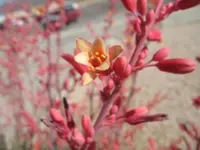
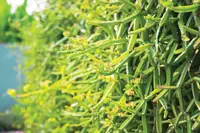
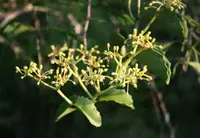
tree stonecrop Care (Sedum dendroideum)

tree stonecrop

About tree stonecrop

Tree stonecrop (Sedum dendroideum) is a shrubby succulent, valued for its clustered, fleshy leaves and branching, tree-like form. It stays compact but can form small mounds over time. Native to rocky slopes and cliffs in Mexico, it is adapted to bright sun, good drainage, and periods of drought. These traits make it a resilient choice for containers, rock gardens, and dry borders. Sedum dendroideum is generally easy to grow as long as excess moisture is avoided. Understanding how to care for tree stonecrop starts with providing strong light and a well-drained, gritty soil mix.

Main Plant Requirements

Care Difficulty

Easy Care

Light Preference

Full Sun

Water Requirements

Low Water

Temperature Preference

Warm Climate

Hardiness Zone

9–11

Soil Texture

Sandy, Loamy, Rocky

Soil pH

Slightly acidic (6.5–7.0), Neutral (7.0)

Soil Drainage

Well-drained

Fertilization

Minimal (feed rarely)

Get Personalized Care Plan

Scan your plant to receive care tips personalized for your specific plant

Available on iOS and Android

How to Care for the tree stonecrop

This succulent prefers bright light with some protection from intense afternoon sun for compact, colorful growth.

  • Provide 4–6 hours of direct morning sun plus bright indirect light for the rest of the day to support dense foliage on tree stonecrop.
  • In hot summer climates, give light shade from 1–4 p.m. to prevent leaf scorch and bleaching, especially in reflected-heat spots near walls or pavement.
  • In areas with weak winter sun, choose the brightest south- or west-facing site available to reduce stretching and floppy stems.

This drought-tolerant succulent needs infrequent, deep watering and fast-draining soil.

  • Water only when the top 3–5 cm of soil is completely dry; leaves should feel firm, not soft or wrinkled, before watering again.
  • Use gritty, fast-draining soil or a cactus mix on slopes or raised areas so Sedum dendroideum does not sit in water after rain.
  • Reduce watering sharply in cool seasons; pale, mushy leaves indicate overwatering, while shriveled leaves and limp stems signal prolonged dryness.

This species prefers mild, dry conditions and dislikes hard frost or prolonged extreme heat.

  • Aim for 65–80°F (18–27°C) during active growth for best shoot and root development.
  • Protect plants when temperatures drop near 28–32°F (-2–0°C); brief light frost may be tolerated, but repeated freezes can damage foliage and stems.
  • In hot regions, it copes with 90–95°F (32–35°C) if soil drains well and the plant has some afternoon shade, especially during dry heat waves.

This succulent prefers dry to moderately dry air and rarely needs extra humidity attention.

  • Ideal humidity is 30–50%, matching typical indoor and outdoor air in many homes and gardens.
  • It tolerates drier air well; humidity stress is uncommon unless combined with prolonged heat and underwatering.
  • If leaves wrinkle and shrivel despite normal watering, slightly increase local humidity by grouping plants or placing near a pebble tray without making the soil wetter.

Sedum dendroideum needs very fast-draining, mineral-rich soil to keep its roots dry between waterings.

  • Use a gritty mix such as 50–70% inorganic material (pumice, perlite, coarse sand) blended with 30–50% lean potting mix or cactus mix.
  • Aim for a loose, airy structure that never compacts; water should drain through in seconds and the surface should dry quickly.
  • Slightly acidic to neutral pH around 6.0–7.0 is suitable, and heavy clay or peat-heavy substrates should be avoided.
  • If existing soil holds water too long, top-dress with coarse grit and gently work in extra perlite or pumice near the root zone to boost aeration.

This species is very suitable for container growing due to its compact, drought-tolerant root system.

  • Choose a wide, shallow pot that allows spreading roots and offsets while limiting deep, moisture-retentive soil zones.
  • Select unglazed terracotta or another porous material to speed evaporation and reduce the risk of root rot after heavy watering or rain.
  • In windy or exposed spots, use a heavier pot or add surface stones to stabilize the container against the plant’s branching, top-heavy growth.

Sedum dendroideum needs only light feeding to maintain compact, healthy growth.

  • Use a balanced, low-dose liquid fertilizer (for example 10-10-10) diluted to 25–50% strength for caring for tree stonecrop in pots.
  • Feed once at the start of spring and once in midsummer during active growth only.
  • Skip fertilizer in fall and winter when growth slows or stops.
  • Avoid rich compost or frequent feeding, which encourages weak, leggy stems and softer growth.

Pruning Sedum dendroideum helps maintain a dense, tidy mound and supports flowering.

  • Best timing is late winter or early spring, before strong new growth begins.
  • Remove dead, damaged, or overly elongated stems with clean, sharp scissors or pruners.
  • Shorten crowded or floppy stems to encourage branching and a more compact shape.
  • Shear lightly after flowering if needed to tidy spent blooms and stimulate fresh shoots.

This succulent tolerates slightly crowded roots and does not need frequent repotting.

  • Repot or transplant every 2–3 years, or when roots circle the pot, drainage slows, or growth stalls.
  • Choose late winter to early spring so the plant can recover as new growth starts.
  • Use a shallow container with drainage holes and a gritty cactus or succulent mix.
  • Handle roots gently, keep the old soil mostly intact, and water lightly after moving to limit transplant shock.

Sedum dendroideum is commonly propagated from stem or leaf cuttings and by division.

  • Take 5–8 cm non-flowering stem cuttings in spring or early summer.
  • Allow cut ends or plucked leaves to dry and callus for 1–2 days before planting.
  • Set cuttings into barely moist, gritty mix in bright, indirect light until roots form.
  • Divide mature clumps in spring, replanting sections at the same depth and watering sparingly.

This species is mildly frost tolerant but benefits from simple winter precautions in colder climates.

  • In-ground plants in mild regions usually need no extra protection beyond well-drained soil.
  • In areas with repeated freezes below about 25°F, add a light gravel or coarse sand mulch around the crown.
  • Move containers under cover or indoors to a bright, cool spot before hard frost.
  • Keep winter watering minimal, allowing soil to dry fully between light waterings.

Care Tips

Propagate From Prunings

After trimming leggy stems, allow 3–5 cm tip cuttings to dry for 1–2 days, then insert them into a gritty mix so you can quickly thicken the clump or replace bare patches in the container.

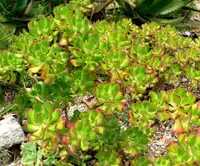
Control Plant Height

Pinch or cut back taller outer stems by 2–5 cm at the start of the growing season to keep the plant compact, prevent it from becoming top‑heavy, and encourage dense branching.

Protect From Hail

In regions with spring or summer hail, keep a rigid plastic tray or mesh panel near outdoor pots and place it over plants temporarily during storms to prevent leaf bruising and stem breakage.

Rotate For Even Form

Turn containers 90° every 2–3 weeks so the rosettes receive light from all sides, which reduces lopsided growth and helps maintain a balanced, rounded habit when growing tree stonecrop.

Inspect For Mealybugs

Every few weeks, check stem joints and leaf bases closely and spot-treat any white cottony clusters with a cotton swab dipped in 70% isopropyl alcohol before infestations become established.

Common Pests and Diseases

Aphids

This pest often clusters on young shoots and flower stalks, sucking sap and causing leaf curling, distortion, and sticky honeydew deposits that can attract sooty mold.

Solution

Spray the foliage with a strong stream of water to dislodge colonies, then treat remaining insects with insecticidal soap or a ready-to-use neem oil spray, repeating weekly until populations decline; reduce excess nitrogen fertilization, which encourages soft, aphid-prone growth while maintaining typical Sedum dendroideum care practices.

Mealybugs

These insects appear as white, cottony masses in leaf axils and along stems, weakening the plant through sap feeding and sometimes causing yellowing or stunted growth.

Solution

Dab visible insects with cotton swabs dipped in 70% isopropyl alcohol, then follow with a light application of insecticidal soap or horticultural oil, ensuring good coverage of hidden crevices; isolate heavily infested plants and prune out severely affected stems to prevent spread to nearby succulents.

Soft scale

This pest shows up as rounded, tan to brown bumps along stems and leaf undersides, excreting honeydew that can lead to sooty mold on waxy foliage.

Solution

Gently scrape or rub off scales with a soft cloth or toothbrush, then apply a horticultural oil spray to thoroughly coat stems and leaf undersides; repeat treatments 2–3 times at 7–10 day intervals and avoid overfertilizing, which can encourage scale outbreaks when caring for tree stonecrop.

Leaf spot

This disease causes small, water-soaked or brown lesions on leaves that may coalesce under humid, crowded conditions, sometimes leading to premature leaf drop.

Solution

Remove and discard affected leaves and any fallen debris around the plant, then improve air circulation and avoid wetting the foliage when watering; if spotting continues in outdoor plantings, apply a sulfur or copper-based fungicide labeled for ornamental succulents during prolonged humid periods.

Edema

Symptoms include small, corky, blister-like spots on leaves caused by cells bursting when roots take up water faster than the plant can transpire, often after sudden overwatering or sharp swings in soil moisture.

Solution

Allow the soil to dry more thoroughly between waterings, especially in cool or low-light conditions, and use a sharply draining gritty mix; move containers to a brighter, airy spot and avoid sudden soaking after a long dry spell to stabilize water uptake and reduce new edema lesions.

Interesting Facts

Tree‑like growth form

This species naturally develops a woody, branching base that can form a small shrub up to about 1 m tall, which is unusual among many low, mat-forming stonecrops.

Distinctive red leaf margins

Under strong light and mild stress, its fleshy green leaves often develop a characteristic narrow red band along the edges, which helps distinguish it from closely related Sedum species.

Mexican lava‑slope native

It is native to central and western Mexico, where it commonly grows on rocky volcanic slopes and cliffs, tolerating thin, fast‑draining soils and high light exposure.

Botan icon

Did you know?

In several regions of Mexico, this species is intentionally planted on old roofs, walls, and rocky terraces because its shallow roots and drought tolerance allow it to stabilize fragile surfaces without adding much structural weight.

FAQs about tree stonecrop

Lack of blooms usually comes from insufficient light, nutrient‑rich soil, or excessive watering. This species flowers best in lean, gritty substrates, full sun, and with a brief dry rest. Avoid high‑nitrogen fertilizer, which promotes leaves over flowers.

Grow Healthy Plants with Botan Care

Keep your plants happy and healthy with plant identification, disease detection, and easy care guidance.

Botan plant care app — identify plants on mobile

Explore More Plants