Aeonium lindleyi Care

Aeonium lindleyi

About Aeonium lindleyi

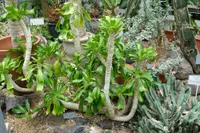
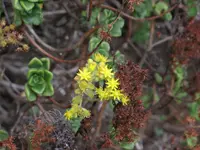
Aeonium lindleyi is a compact, shrubby succulent from the Canary Islands. It forms many short, branching stems topped with tight rosettes of small, fleshy leaves. The foliage often has a slightly hairy texture and can take on warmer tones in strong light, while clusters of starry yellow flowers appear on mature plants. This species stays relatively low and bushy, making it suitable for containers and rocky plantings. It prefers bright light, very well-drained soil, and infrequent watering, which makes it suitable for growers who like low-maintenance succulents. Understanding how to care for Aeonium lindleyi mainly involves providing enough light and avoiding excess moisture around the roots.

Main Plant Requirements

Care Difficulty

Moderate Care

Light Preference

Full Sun

Water Requirements

Low Water

Temperature Preference

Tropical / Frost Sensitive

Hardiness Zone

10–11

Soil Texture

Sandy, Loamy, Rocky

Soil pH

Slightly acidic (6.5–7.0), Neutral (7.0)

Soil Drainage

Well-drained

Fertilization

Minimal (feed rarely)

Get Personalized Care Plan

Scan your plant to receive care tips personalized for your specific plant

Available on iOS and Android

How to Care for the Aeonium lindleyi

This compact succulent prefers bright, soft sun with some protection from intense midday exposure.

  • Provide 4–6 hours of direct morning sun or late-afternoon sun, with bright filtered light around midday, especially in hot, dry climates.
  • Aeonium lindleyi tolerates light partial shade, but stems may stretch and rosettes loosen if it receives under 3–4 hours of direct light per day.
  • In summer, monitor for leaf scorch or bleached patches signaling too much harsh sun; in winter, move it to the brightest spot available to maintain compact growth.

This species stores water in its leaves and needs infrequent but thorough watering in fast-draining soil.

  • Water only when the top 3–5 cm of soil are completely dry; in active growth, this may mean every 7–14 days in warm, dry conditions.
  • Use a gritty, sharply draining mix so water runs through quickly and roots do not sit in soggy soil, which leads to black, mushy stems and leaf drop.
  • Reduce watering significantly in summer dormancy and cool winter periods, watching for slight leaf wrinkling as a cue to water rather than following a fixed schedule.

This succulent prefers mild, frost-free conditions with only moderate heat.

  • Aim for 60–75°F (16–24°C) for strongest growth, with good airflow to prevent heat buildup around the rosettes.
  • Protect from frost; short dips to 32°F (0°C) may damage leaves, and extended exposure below 30°F (-1°C) can kill stems and roots.
  • In hot weather above 90°F (32°C), growth often slows; give light shade and avoid reflective surfaces that can overheat foliage, especially during summer dormancy.

This species handles typical indoor humidity well and rarely needs special humidity control.

  • Aeonium lindleyi grows comfortably at 30–50% humidity and suits most heated or air-conditioned homes.
  • Dry air is usually tolerated, but prolonged hot drafts can desiccate leaf edges and tips.
  • If leaves shrivel while soil is lightly moist, move the pot away from vents and provide light air movement rather than added humidity.

This succulent needs a sharply drained, gritty substrate to protect the roots from excess moisture.

  • Use a cactus mix blended with extra mineral material, such as 30–50% coarse sand, pumice, or perlite, to create a fast-draining, open structure.
  • Aim for slightly acidic to neutral soil, around pH 6.0–7.0, which suits most bagged cactus or succulent mixes.
  • Ensure the mix feels dry and loose within 1–2 days after watering; compact or slow-drying soil encourages rot in fine feeder roots.
  • Avoid peat-heavy, water-retentive, or clay-based substrates; if using them, lighten the texture with plenty of grit to improve aeration and drainage.

This species is well suited to container growing, including outdoor pots and balcony planters.

  • Choose a broad, shallow pot that matches the fibrous, surface-focused root system and prevents unnecessary moisture retention at depth.
  • Use unglazed terracotta where possible, as it accelerates evaporation and reduces the risk of waterlogging after infrequent deep watering.
  • Select a heavy or wide-based container to keep the branching rosettes stable and prevent tipping in windy or exposed positions.

Feeding supports compact growth and leaf color but Aeonium lindleyi stays healthy with modest nutrition.

  • Use a balanced, low-strength liquid fertilizer (around 10-10-10) diluted to 1/4–1/2 strength for container plants.
  • Apply every 4–6 weeks during active growth in spring and early summer, on already moist soil.
  • Skip or greatly reduce feeding in summer dormancy and winter when growth slows.
  • Compost or a slow-release succulent formula in the potting mix can provide a gentle background supply.

Pruning helps maintain shape and remove weak tissue on Aeonium lindleyi without stressing the plant.

  • Carry out light pruning in late winter to early spring, before strong new growth starts.
  • Use clean, sharp scissors or pruners to remove dead, damaged, or diseased stems and rosettes.
  • Thin crowded rosettes to improve airflow and light penetration, encouraging compact, branching growth.
  • Trim back leggy stems above a node to keep a neat cushion shape and stimulate new shoots.

Repotting or transplanting maintains root health and stable growth for Aeonium lindleyi in containers or beds.

  • Check for roots circling the pot, emerging from drainage holes, or unexplained slow growth as signs to repot.
  • Plan repotting every 2–3 years in late winter or early spring, just before active growth resumes.
  • Slip the plant from its pot, gently loosen circling roots, and remove old, compacted soil to limit stress.
  • Replant into a slightly larger container with fresh, gritty succulent mix and keep lightly watered until established.

Multiplying Aeonium lindleyi is most reliable from stem cuttings taken during the active growing season.

  • Take 5–10 cm stem cuttings in late winter to late spring, choosing firm, healthy rosettes.
  • Allow cut ends to dry and callus for 2–3 days in a shaded, airy place to reduce rot risk.
  • Insert cuttings into a barely moist, gritty succulent mix and keep in bright, indirect light.
  • Maintain warmth around 65–75°F and avoid heavy watering until clear root growth and new leaves appear.

Winter care focuses on avoiding frost damage and excess moisture for Aeonium lindleyi.

  • Treat as frost-sensitive; sustained temperatures below 30–32°F can damage foliage and stems.
  • Move containers indoors to a cool, very bright spot or an unheated, frost-free greenhouse.
  • Keep soil on the dry side, watering lightly only when the mix is almost completely dry.
  • In mild climates, use a gritty, fast-draining bed and a light mulch around, not on, the crown.

Care Tips

Rotate for symmetry

Turn the pot 90° every 1–2 weeks during active growth so rosettes develop evenly and stems do not lean permanently toward the brightest side.

Control stem elongation

If stems become long and bare, cut the top rosettes with 3–5 cm of stem and replant them, which keeps the plant compact and encourages new branching from the old stems.

Summer dormancy adjustment

During very hot, bright summer periods when growth slows, reduce watering frequency and avoid repotting or taking cuttings until cooler, active growth resumes in late summer or fall.

Outdoor rain protection

If grown outdoors in containers, move the plant under an overhang or use a simple cover during prolonged rain to prevent waterlogged soil and rosette rot.

Clean, dry propagation

When taking cuttings, use a sterile, sharp blade and allow the cut ends to dry and callus for 2–4 days before planting, which greatly improves success when growing Aeonium lindleyi from stem pieces.

Common Pests and Diseases

Mealybugs

This pest often hides in leaf rosettes and stem joints, sucking sap and leaving cottony white clusters on the plant. Symptoms include stunted growth, distorted new rosettes, and sticky honeydew that can lead to sooty mold on the leaves.

Solution

Isolate the plant, then dab visible insects with cotton swabs dipped in 70% isopropyl alcohol and repeat weekly until clear. Combine this with a strong but gentle water spray to dislodge hidden insects and, if the plant is badly infested, use a labeled systemic insecticide suitable for succulents, keeping the plant in bright, dry, well-ventilated conditions.

Aphids

These insects gather on young shoots and flower stalks, feeding on sap and causing curled, sticky, and distorted growth. Honeydew deposits can attract ants and encourage black sooty mold on leaves and stems.

Solution

Rinse colonies off with a firm stream of water, repeating every few days as needed, and remove heavily infested flower stalks. For persistent problems, apply an insecticidal soap or neem oil spray in the early morning, ensuring full coverage of the rosettes while protecting the plant from intense sun until leaves are dry.

Soft scale

This pest appears as small, rounded or oval bumps on stems and older leaves, often along the lower parts of branching shoots. This pest feeds slowly but continuously, weakening plants over time and leaving sticky honeydew that may lead to mold growth.

Solution

Scrape or peel individual scales off stems and leaves with a fingernail or soft brush and wipe affected areas with a cloth lightly moistened with 70% isopropyl alcohol. For larger infestations on outdoor plants, use horticultural oil when temperatures are mild, coating stems thoroughly and improving air movement around the plant to discourage reinfestation.

Fungal leaf spots

This disease shows as small brown, tan, or dark purple spots on older leaves, sometimes with a yellow halo, most often after prolonged damp or overcrowded conditions. Symptoms include premature leaf drop and a generally untidy rosette, especially on shaded or poorly ventilated plants.

Solution

Remove and discard affected leaves, then improve spacing, airflow, and sun exposure to allow foliage to dry quickly after watering or rain. If spotting continues during humid periods, apply a succulent-safe fungicide according to label directions and shift to watering at the soil line rather than over the rosettes.

Crown rot

This disease starts where water sits in the rosette or at the stem base, leading to soft, brown, collapsing tissue and a foul smell. Symptoms include sudden wilt and rosettes that detach easily from a mushy stem base, especially after cool, wet spells or frequent overhead watering.

Solution

At the first sign, cut away healthy rosette sections above the rot and re-root them in fresh, fast-draining gritty soil, discarding all mushy tissue. To prevent recurrence, use pots with large drainage holes, water only when the mix is fully dry, avoid letting water sit in the rosettes, and position the plant in bright sun with good airflow, which is central to reliable Aeonium lindleyi care.

Interesting Facts

Endemic to Canary cliffs

Aeonium lindleyi is naturally restricted to the western Canary Islands, where it grows on dry coastal cliffs and rocky slopes exposed to strong sun and wind.

Three recognized subspecies

Botanists currently recognize several infraspecific taxa, including Aeonium lindleyi subsp. lindleyi, subsp. viscatum, and subsp. lindleyi f. variegatum, which differ in leaf stickiness, hairiness, and coloration.

Sticky, hairy leaves

The small rosettes have glandular, slightly sticky, and often hairy leaves, which help reduce water loss and may trap fine dust and moisture in its windy island habitat.

Botan icon

Did you know?

The original description of Aeonium lindleyi dates back to the 19th century, and the species has since become an important reference taxon for understanding evolution and diversification of shrubby Aeonium on the Canary Islands.

FAQs about Aeonium lindleyi

Brown leaves usually result from strong sun scorch, underwatering, or old age of lower rosettes. Check for very dry soil, crispy tips, or sun-exposed sides. Remove dead leaves and adjust exposure and moisture gradually.

Grow Healthy Plants with Botan Care

Keep your plants happy and healthy with plant identification, disease detection, and easy care guidance.

Botan plant care app — identify plants on mobile

Explore More Plants