Rotate For Symmetry
Rotate the pot 90° every 1–2 weeks so the rosette develops evenly and does not grow lopsided toward the strongest light source.

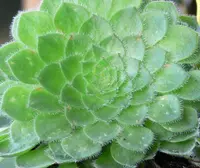
Aeonium tabuliforme, commonly called saucer plant, is a compact rosette-forming succulent from the Canary Islands. It grows as a flat, circular disk of overlapping leaves that resembles a green plate.
The plant stays low and wide rather than tall, making it well suited to pots, shallow dishes, and rock gardens. Its symmetrical form is stable but the rosette is monocarpic, meaning it dies after flowering, though offsets may continue the plant.
This species prefers bright light, mild temperatures, and well-drained, gritty soil. With these conditions, it is generally considered easy to care for Saucer plant, especially in protected outdoor spots or bright indoor locations.

Care Difficulty
Moderate Care

Light Preference
Partial Sun

Water Requirements
Low Water

Temperature Preference
Tropical / Frost Sensitive

Hardiness Zone
10–11

Soil Texture
Sandy, Loamy, Rocky

Soil pH
Acidic (5.5–6.5), Slightly acidic (6.5–7.0)

Soil Drainage
Well-drained

Fertilization
Minimal (feed rarely)
Scan your plant to receive care tips personalized for your specific plant
Available on iOS and Android
This flat rosette succulent needs bright, gentle light to maintain its tight form and healthy color.
This species prefers thorough but infrequent watering that allows the soil to dry between soakings.
This succulent grows best in mild, frost-free conditions with moderate temperatures.
Humidity is a minor factor for Aeonium tabuliforme and it adapts well to typical indoor and outdoor household conditions.
Aeonium tabuliforme prefers a fast-draining, mineral-rich substrate that dries quickly between waterings.
This species is very suitable for container growing due to its shallow, rosette-forming habit.
Aeonium tabuliforme benefits from light, controlled feeding during its active spring–fall growth.
Aeonium tabuliforme needs only light pruning to stay tidy and healthy.
This compact succulent prefers infrequent repotting and minimal root disturbance.
Aeonium tabuliforme is usually propagated from cuttings or seed under warm, bright conditions.
This succulent is frost-tender and needs protection in regions with freezing temperatures.

Plant Health Check
Not sure what's wrong with your plant? Check your plant's health inside the app.
This species naturally forms an almost perfectly flat, disk-like rosette that can exceed 40 cm across, an unusual growth form among succulents that helps maximize light capture in its native rocky habitats on Tenerife.
The leaves often develop wavy, upturned margins and a slightly concave surface, which helps channel dew and light rainfall toward the rosette center where water is more effectively absorbed.
Each rosette flowers only once, producing a tall cone of yellow star-shaped flowers, then slowly dies after setting seed, while younger side rosettes may continue the life cycle.

In its native Canary Islands cliffs and rock faces, this species often grows in very shallow crevices with minimal organic soil, anchoring itself into cracks where competition is low but light and drainage are extremely high, a niche strategy that allows it to persist in sites many other plants cannot use.
Yellowing leaves usually come from overwatering, poor drainage, or natural aging of the outer rosette leaves. Check for soggy soil, improve drainage, and remove only fully dry, papery leaves to reduce rot risk.
Keep your plants happy and healthy with plant identification, disease detection, and easy care guidance.