trailing jade Care (Kleinia petraea)

Also known as: Creeping Jade
trailing jade

About trailing jade

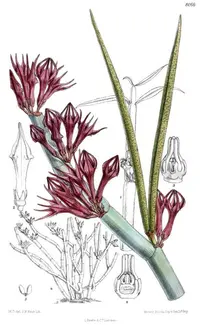
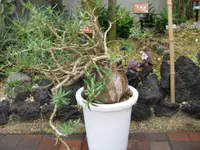
Trailing jade, Kleinia petraea, is a succulent from East Africa valued for its cascading stems and fleshy, blue-green leaves. It is often grown in hanging baskets or high planters, where its stems can spill over the edges and form dense, trailing curtains.

This species stores water in its leaves and stems, which makes it relatively forgiving of short dry periods. It prefers bright, indirect light and a free-draining, gritty soil to avoid root problems.

Because of its drought tolerance and compact size, many indoor gardeners find it straightforward to care for trailing jade once its basic light and watering needs are understood.

Main Plant Requirements

Care Difficulty

Easy Care

Light Preference

Partial Sun

Water Requirements

Low Water

Temperature Preference

Tropical / Frost Sensitive

Hardiness Zone

10–11

Soil Texture

Sandy, Loamy, Rocky

Soil pH

Slightly acidic (6.5–7.0), Neutral (7.0)

Soil Drainage

Well-drained

Fertilization

Minimal (feed rarely)

Get Personalized Care Plan

Scan your plant to receive care tips personalized for your specific plant

Available on iOS and Android

How to Care for the trailing jade

This succulent prefers bright, indirect light with some direct sun for compact growth.

  • Provide 4–6 hours of morning sun or late-afternoon sun, with bright filtered light the rest of the day to support healthy trailing jade stems.
  • It tolerates light partial shade, but in fewer than 3–4 hours of bright light daily, stems elongate, leaves pale, and growth becomes sparse.
  • In very strong midday sun, especially in summer, protect from scorch with light shade cloth or dappled shade, watching for bleached or crispy leaf edges.

Watering for this succulent should mimic a dry, seasonal climate.

  • Allow the top 3–5 cm of soil to dry before watering, then soak thoroughly so excess drains away, avoiding any standing water around roots.
  • In spring and summer, expect more frequent watering as growth is active; in cooler months, reduce frequency sharply and water only after a prolonged dry spell.
  • Signs of overwatering include yellow, mushy leaves and stem collapse, while wrinkling, thin leaves and very light pots suggest Kleinia petraea is too dry.

This species prefers warm, frost-free conditions throughout the year.

  • Aim for 65–80°F (18–27°C) for best growth, with steady temperatures and good air movement around the foliage.
  • Protect from cold below 40°F (4°C); brief dips may be tolerated, but frost can damage or kill stems and roots.
  • In hot weather above 90°F (32°C), provide afternoon shade and slightly increased airflow, and avoid dark surfaces that can overheat the root zone.

This succulent tolerates a wide humidity range and rarely needs special humidity management indoors.

  • Aim for 30–50% humidity, similar to average heated or air-conditioned rooms.
  • Trailing jade handles dry air well but may wrinkle slightly if very dry for long periods.
  • If stems shrivel and leaf tips crisp despite proper watering, raise humidity slightly using nearby open-water trays rather than misting.

Use a sharply draining, mineral-based mix that dries quickly between waterings.

  • Choose a gritty, sandy mix with coarse particles that resist compaction, such as cactus or succulent substrate.
  • Combine roughly 60–70% inorganic material (perlite, pumice, coarse sand, or small gravel) with 30–40% low-organic components like coconut coir or fine bark.
  • Maintain slightly acidic to neutral pH, around 6.0–7.0, which supports nutrient availability for Kleinia petraea without increasing rot risk.
  • Avoid dense, peat-heavy or clay-rich soils that hold water around the roots; add extra perlite or pumice to improve aeration and rapid drainage.

This species is well suited to container growing for controlled drainage and compact trailing display.

  • Select a wide, shallow pot that matches the relatively shallow root system and supports even drying of the mix.
  • Use a heavier container material or add a top dressing of gravel to stabilize spreading, pendulous stems and prevent tipping.
  • Ensure large, unobstructed drainage holes so water exits within seconds and does not pool at the base of the trailing foliage.

Kleinia petraea benefits from light, controlled feeding that supports growth without soft, weak tissues.

  • Use a diluted balanced liquid fertilizer (around 10-10-10 or 20-20-20 at 25–50% strength) during active growth in spring and summer.
  • Apply every 4–6 weeks, only on moist soil, to reduce root burn risk in trailing jade.
  • Avoid heavy organic compost; a low-nutrient, gritty succulent mix already provides a suitable base.
  • Stop feeding in late fall and winter when growth slows, to match the plant’s semi-dormant state.

Pruning helps maintain a compact, trailing form and removes weak growth on Kleinia petraea.

  • Carry out light pruning in late winter or early spring before strong new growth begins.
  • Remove dead, damaged, or very thin stems back to a healthy node to reduce disease risk.
  • Shorten overly long, leggy vines to encourage branching and a fuller hanging or cascading shape.
  • Use clean, sharp scissors or pruning snips, disinfected between plants, to keep cuts neat and reduce infection.

This succulent grows well slightly root-bound and only needs infrequent repotting or transplanting.

  • Repot every 2–3 years or when roots circle the pot, drainage slows, or growth becomes noticeably weak.
  • Choose late spring as the best time, when active growth helps the plant recover from root disturbance.
  • Move to a container only 2–3 cm wider, using a fast-draining cactus or succulent mix to prevent rot.
  • Handle roots gently, loosen tight circles lightly, and keep the plant slightly dry for 3–5 days after repotting to limit stress.

Kleinia petraea is commonly propagated from stem cuttings taken during its active season.

  • Take 7–10 cm healthy stem cuttings in late spring or early summer, avoiding very old or shriveled growth.
  • Allow cut ends to dry and callus for 1–3 days before planting to reduce rot risk.
  • Insert cuttings into a gritty, almost dry succulent mix and keep in bright, indirect light at 70–80°F.
  • Water sparingly until roots form, then increase watering slightly and transition to normal trailing jade indoor care.

This succulent is frost-sensitive and needs protection from freezing conditions, especially in containers.

  • Avoid exposure below about 40°F; sustained frost can damage or kill stems and roots.
  • Move potted plants indoors or into a bright, frost-free porch or greenhouse before the first hard frost.
  • Keep soil almost dry in winter, watering lightly only when the mix is fully dry to prevent root rot.
  • In mild climates, use a very light, dry mulch around outdoor roots, keeping it away from the stem base.

Care Tips

Support Long Trails

Use wall-mounted hooks, trellises, or a wire grid to gently support older stems so they do not kink or snap under their own weight, especially when the pot is moved or rotated.

Segmented Repotting

When stems become very long and the root ball is dense, trim a few healthy trails, root them in a separate pot, and gradually replace the original plant to maintain a compact, vigorous specimen over several seasons.

Strategic Pinching Back

Pinch or cut growing tips just above a node on selected stems in early spring to encourage branching near the container rim and create a fuller cascade rather than a few sparse, elongated vines.

Elevated Airflow Placement

Place hanging baskets or high shelves so that air can circulate freely around and beneath the foliage, which reduces the risk of rot where stems rest against pot edges or saturated surfaces.

Targeted Pest Scouting

Inspect the undersides of leaves and stem joints every few weeks with a handheld magnifier, and at the first sign of mealybugs or scale, isolate the plant and wipe affected areas with a cotton swab dipped in 70% isopropyl alcohol to keep caring for trailing jade manageable long-term.

Common Pests and Diseases

Mealybugs

This pest feeds on the fleshy stems and leaves, often hiding in crevices along the trailing growth. Symptoms include white, cottony clusters, sticky honeydew, and gradual yellowing or stunted segments.

Solution

Isolate the plant, then dab visible insects with cotton swabs dipped in 70% isopropyl alcohol and wipe down stems and leaf joints. For heavier infestations, rinse the plant thoroughly with lukewarm water, allow it to dry, then apply a neem oil or insecticidal soap spray weekly until no new pests appear, making sure the potting mix is not left soggy.

Aphids

These insects often colonize soft new shoots and flower stems, sucking sap and causing distortion of the trailing tips. Symptoms include sticky residue, curled young growth, and sometimes sooty mold on the honeydew deposits.

Solution

Move the plant to a sink or shower and wash off the aphids with a firm stream of lukewarm water, repeating every few days as needed. If populations persist, treat the new growth and undersides of stems with insecticidal soap or a light neem oil spray, and improve air movement around the plant to discourage reinfestation.

Spider mites

This pest appears in warm, dry conditions, especially indoors, and targets the succulent foliage. Symptoms include fine webbing between segments, tiny speckling on leaves, and a dull, dusty appearance of the plant.

Solution

Rinse the entire plant thoroughly, including the undersides of stems, to remove mites and webbing, then let it dry with good airflow. Follow with repeated applications of insecticidal soap or neem oil every 5–7 days, and slightly increase ambient humidity without wetting the soil excessively to make conditions less favorable for mites.

Fungal leaf spots

This disease can develop on older or shaded stems and leaves when moisture lingers on the surface. Symptoms include small brown or black lesions on the succulent segments, sometimes with a yellow halo, which may merge into larger patches.

Solution

Remove and discard affected segments, sterilizing cutting tools between cuts, and avoid overhead watering so foliage dries quickly. Improve air circulation, reduce crowding in planters, and if spots continue to spread, apply a low-toxicity fungicide labeled for succulents according to the product directions.

Stem rot

This disease appears when the plant is grown in poorly draining soil or watered too frequently, which trailing Kleinia is especially sensitive to. Symptoms include soft, mushy, discolored stems at the base, sometimes with a sour odor and sudden collapse of trailing sections.

Solution

Promptly cut away all softened or darkened tissue back to firm, healthy stems and discard the rotten parts. Allow remaining cut surfaces to dry, then repot in a dry, fast-draining succulent mix in a pot with large drainage holes, and adjust watering so the soil dries fully between waterings to support long-term Kleinia petraea care.

Interesting Facts

Unusual leaf geometry

This species develops flattened, bead-like leaves with distinct constrictions, creating a jointed chain appearance that is uncommon among succulents in its group.

Woody trailing stems

Mature plants form semi-woody, pendulous stems that can drape over 1 m, allowing the plant to anchor in rocky crevices and cascade down cliffs in its native habitat.

Aster-family succulent

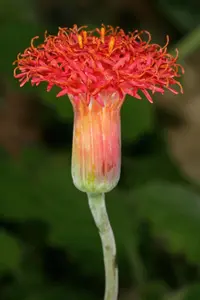
Although succulent and often confused with jade plants, it belongs to the Asteraceae (daisy family), so its small, tufted flower heads are botanically closer to daisies than to Crassula species.

Botan icon

Did you know?

The species is naturally adapted to exposed, rocky coastal and cliff environments in East Africa, where its succulent leaves and trailing stems help it withstand intense sun, episodic drought, and salt-laden winds.

FAQs about trailing jade

Yellowing leaves usually result from overwatering, compact or poorly drained soil, or sudden temperature stress. Check that the pot drains freely, let the mix dry more between waterings, and remove heavily damaged leaves to reduce rot risk.

Grow Healthy Plants with Botan Care

Keep your plants happy and healthy with plant identification, disease detection, and easy care guidance.

Botan plant care app — identify plants on mobile

Explore More Plants