Control Plantlets
Regularly remove excess plantlets forming along leaf margins and fallen plantlets in the pot to prevent overcrowding, poor air flow, and nutrient competition in Kalanchoe prolifera plant care.

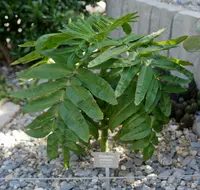
Blooming Boxes is a cultivated form of Kalanchoe prolifera, a succulent perennial from Madagascar. It naturally grows in warm, dry habitats with plenty of light. The plant forms upright, branched stems with fleshy leaves that often produce small plantlets along the edges, creating a multiplying, architectural look. Its growth can be fast in the right conditions and may become tall over time. This succulent is generally considered easy to manage for indoor growers who care for Blooming Boxes, as it tolerates some neglect and prefers bright light, well-draining soil, and moderate watering.

Care Difficulty
Easy Care

Light Preference
Full Sun

Water Requirements
Low Water

Temperature Preference
Tropical / Frost Sensitive

Hardiness Zone
10–12

Soil Texture
Sandy, Loamy, Rocky

Soil pH
Slightly acidic (6.5–7.0), Neutral (7.0)

Soil Drainage
Well-drained

Fertilization
Minimal (feed rarely)
Scan your plant to receive care tips personalized for your specific plant
Available on iOS and Android
This succulent prefers bright light that mimics open, dry habitats.
This plant stores water in its tissues and needs a careful, sparing watering approach.
This species thrives in warm, frost-free conditions typical of many arid and subtropical regions.
Kalanchoe prolifera handles typical indoor humidity well, so humidity is rarely a concern.
Kalanchoe prolifera prefers a sharply draining, mineral-based mix that dries quickly between waterings.
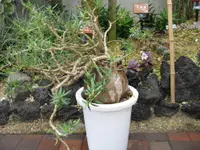
This species is well suited to container growing.
Kalanchoe prolifera benefits from light, controlled feeding during active growth but does not need heavy fertilization.
Pruning Kalanchoe prolifera helps control size, maintain a tidy outline, and support healthy stems.
This succulent prefers slightly snug containers and only occasional repotting when clear stress signs appear.
Kalanchoe prolifera is commonly propagated from stem cuttings and plantlets formed along the stems.
This species is sensitive to frost and needs protection in regions where temperatures drop near or below freezing.

Plant Health Check
Not sure what's wrong with your plant? Check your plant's health inside the app.
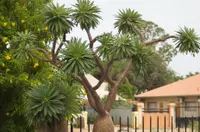
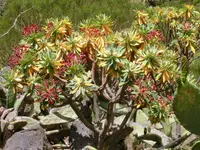
This species often forms tall, sparsely-leaved stems topped with clusters of plantlets along the upper leaf margins, giving mature plants a characteristic candelabra or tower-like appearance unlike many compact kalanchoes.
It produces numerous adventitious plantlets along the edges of its pinnate leaves; these miniature clones root readily when they drop, allowing the plant to spread efficiently without seed.
The species is native to coastal regions of East Africa and nearby islands, where it grows in rocky, well-drained sites with high light and seasonal drought, shaping its strong drought tolerance and succulent leaf structure.

In suitable climates this species can escape cultivation and naturalize rapidly because its detachable leaf-edge plantlets are easily dispersed by wind and water, allowing large numbers of genetically identical offspring to establish around the parent plant.
This species spreads readily through plantlets that form along leaf margins and by self-seeding. In warm climates it can become weedy outdoors, so use containers or remove unwanted offsets regularly to keep it contained.
Keep your plants happy and healthy with plant identification, disease detection, and easy care guidance.