geelplakkie Care (Kalanchoe tetraphylla)

Also known as: Kalanchoe thyrsiflora, paddle plant, flapjacks, desert cabbage, white lady, plakkie
geelplakkie

About geelplakkie

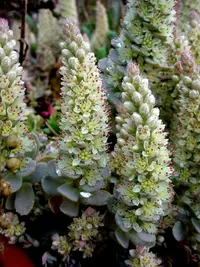
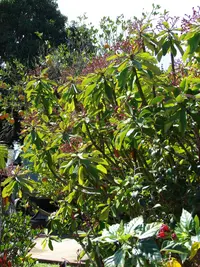
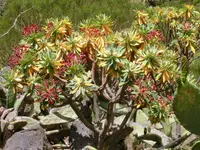
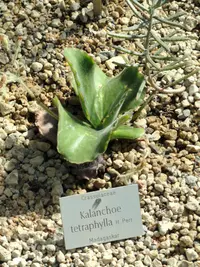
Geelplakkie (Kalanchoe tetraphylla) is a compact succulent shrub known for its thick, fleshy leaves and showy clusters of tubular flowers. It typically stays low and branching, forming a neat mound in pots or rock gardens.

This species comes from dry regions of southern Africa, so it naturally stores water in its leaves and tolerates short dry periods well. Its growth habit and drought tolerance make it suitable for busy or beginner plant owners who want to care for geelplakkie without frequent watering.

It usually prefers bright, indirect light, low to moderate watering, and a gritty, fast-draining soil that prevents roots from sitting in moisture.

Main Plant Requirements

Care Difficulty

Easy Care

Light Preference

Partial Sun

Water Requirements

Low Water

Temperature Preference

Tropical / Frost Sensitive

Hardiness Zone

10–12

Soil Texture

Sandy, Loamy, Organic-rich

Soil pH

Acidic (5.5–6.5), Slightly acidic (6.5–7.0)

Soil Drainage

Well-drained

Fertilization

Minimal (feed rarely)

Get Personalized Care Plan

Scan your plant to receive care tips personalized for your specific plant

Available on iOS and Android

How to Care for the geelplakkie

This succulent prefers bright light with some protection from intense midday sun for steady growth.

  • Provide 4–6 hours of direct morning sun plus bright, filtered light for the rest of the day to support compact, sturdy stems.
  • In very hot climates, give geelplakkie light shade from 11 a.m. to 3 p.m. to prevent leaf scorch, bleaching, or crisp brown patches.
  • In winter, move plants to the brightest spot available and rotate weekly to limit stretching, pale new leaves, and weak, leaning growth.

Watering for this succulent should favor dry conditions between thorough soakings to protect the roots.

  • Water only when the top 3–5 cm of soil are completely dry, then soak deeply and let excess water drain away fully.
  • Use a sharply draining, gritty mix and containers or beds with free drainage to reduce the risk of root rot and swollen, mushy leaves in Kalanchoe tetraphylla.
  • In winter or cool, low-light periods, reduce frequency so leaves stay firm; wrinkling signals underwatering, while yellowing, translucent tissue suggests excess moisture.

This species prefers warm, dry conditions and does poorly in cold or frosty weather.

  • Aim for 65–80°F (18–27°C) for active growth, as this range supports steady metabolism without stressing the succulent tissues.
  • Protect plants below 40°F (4°C); brief dips may be tolerated, but frost at 32°F (0°C) or lower can damage leaves and stems.
  • In hot spells above 90°F (32°C), increase airflow, provide light shade, and avoid watering during peak heat to limit heat stress and tissue damage.

This succulent tolerates typical indoor humidity and rarely needs special adjustment for geelplakkie.

  • Aim for 30–50% relative humidity; most heated or air-conditioned homes fall in this range.
  • Dry air is usually fine, but very low humidity can crisp leaf edges and slow new growth.
  • If air is extremely dry, group plants together or place the pot on a shallow pebble tray with water below the pot base.

Use a sharply draining, airy substrate that mimics desert-like, mineral soils for Kalanchoe tetraphylla.

  • Choose a sandy or gritty mix that feels loose in the hand, combining roughly 50–70% cactus mix with mineral components.
  • Add coarse perlite, pumice, or coarse sand to increase drainage and air spaces around the roots.
  • Keep pH slightly acidic to neutral, around 6.0–7.0, which suits most succulent species.
  • Avoid heavy, peat-dense or clay-based substrates that stay wet, as these quickly lead to root rot.

This species is very suitable for container growing due to its compact, succulent growth habit.

  • Select a pot only slightly wider than the root ball to reduce unused, constantly wet substrate that can cause rot.
  • Use a stable, heavier container material if the plant becomes top-heavy so it does not tip when soil is dry and light.
  • Place the pot where air can circulate around its sides so the substrate surface dries more evenly between waterings.

Kalanchoe tetraphylla is a light feeder, so modest nutrition is enough to support healthy, compact growth.

  • Use a balanced liquid fertilizer (around 10-10-10 or 20-20-20) diluted to 1/4–1/2 strength for geelplakkie in active growth.
  • Feed every 4–6 weeks in spring and summer when new leaves and stems are forming.
  • Stop or greatly reduce feeding in fall and winter, when growth slows or the plant rests.
  • Avoid heavy organic compost or frequent slow-release pellets, which can hold excess moisture and salt around the roots.

Kalanchoe tetraphylla responds well to light, targeted pruning to maintain shape and flowering performance.

  • Best time is late winter to early spring, just before or as new growth starts.
  • Use clean, sharp scissors or pruning snips to remove dead, damaged, or weak stems at the base.
  • Pinch or trim soft tips after flowering to keep the plant compact and encourage branching.
  • Thin crowded interior stems to improve light penetration and air flow around remaining shoots.

This succulent prefers slightly tight quarters and only needs infrequent repotting or transplanting.

  • Check for roots circling the pot, pushing through drainage holes, or very slow growth as signs it needs more space.
  • Plan to repot every 2–3 years in late winter or early spring, before strong new growth starts.
  • Move up just 1 pot size, using a gritty, fast-draining cactus or succulent mix to limit root rot risk.
  • Handle roots gently, keep the root ball largely intact, then water lightly and shade from strong sun for 3–5 days to reduce stress.

This species is commonly multiplied from vegetative material, making home propagation practical for most growers.

  • Use 5–8 cm stem or leaf cuttings taken in late spring or early summer from healthy, non-flowering shoots.
  • Allow cut ends to callus for 1–3 days, then place in a barely moist, gritty succulent mix.
  • Provide bright, indirect light, warm temperatures around 70–80°F, and very light watering until roots form.
  • Seeds can also be sown on the surface of a well-draining mix, kept lightly moist and warm for germination.

Kalanchoe tetraphylla is frost-tender and needs protection in regions with cold winters.

  • Avoid exposure to frost; keep temperatures above 40°F, ideally 55–70°F indoors.
  • Move containers indoors or into a bright, cool greenhouse before nighttime temperatures drop in fall.
  • Water sparingly in winter, allowing most of the potting mix to dry between light waterings.
  • In mild climates, grow in pots so plants can be relocated easily during unexpected cold spells.

Care Tips

Encourage Compact Growth

Rotate the pot 1–2 times per week and give the plant a slightly brighter, cooler spot in winter to keep stems short and leaves stacked tightly instead of stretching toward one side.

Timed Post‑Bloom Rest

After the main flowering flush, remove spent flower stalks and keep the plant a bit drier and in bright light for 4–6 weeks to help it rebuild energy for the next bloom cycle.

Safe Leaf Propagation

Use firm, undamaged leaves from the midsection of the plant, let the cut edge dry for 24–48 hours, then place them on top of barely moist, gritty mix so plantlets form along the leaf margin without rotting.

Calcium‑Rich Pot Selection

Choose an unglazed terracotta pot with a drainage hole, as the porous clay improves root aeration and its slight alkalinity helps prevent overly acidic conditions that can stress this species.

Prevent Mealybug Build‑Up

Inspect leaf bases and between tightly stacked leaves every 2–3 weeks, and at the first sign of cottony mealybugs, isolate the plant and dab pests with isopropyl alcohol on a cotton swab before populations expand when growing geelplakkie.

Common Pests and Diseases

Powdery mildew

This disease appears as a white, powdery coating on leaves and young stems, often starting on older or crowded foliage under humid, stagnant air. Symptoms include dull, distorted leaves and slower growth.

Solution

Remove heavily affected leaves and increase airflow around the plant by spacing it away from others and avoiding overhead watering. For Kalanchoe tetraphylla care, use a sulfur or potassium bicarbonate fungicide labeled for succulents, applying lightly to dry foliage and repeating as directed until new growth emerges clean.

Soft scale

These insects form small, rounded, tan to brown bumps on stems and leaf undersides that excrete sticky honeydew, which can lead to sooty mold. This pest weakens the plant, causing yellowing leaves and reduced vigor over time.

Solution

Manually remove scales with a cotton swab dipped in isopropyl alcohol and prune heavily infested stems. Follow up with several treatments of a light horticultural oil or insecticidal soap, applied to stems and leaf undersides every 7–10 days while keeping the plant in bright, indirect light during recovery.

Mealybugs

This pest creates white, cottony clusters in leaf axils, along stems, and sometimes on roots, drawing sap and stressing the plant. Symptoms include sticky residue, stunted new growth, and leaf drop if infestations are heavy.

Solution

Isolate the plant and dab visible mealybugs with a cotton swab dipped in 70% isopropyl alcohol, repeating weekly until none are seen. For larger infestations, wash the plant gently with lukewarm water and use insecticidal soap or a systemic insecticide labeled for succulents, ensuring the potting mix dries well between waterings.

Aphids

These insects cluster on tender new growth and flower stalks, sucking sap and causing curling or distortion of leaves and buds. This pest also produces honeydew that can attract ants and promote sooty mold growth.

Solution

Rinse aphids off with a firm but gentle stream of water, focusing on shoot tips and flower stems. After rinsing, apply insecticidal soap or neem oil to all plant surfaces, repeating every 5–7 days until new growth appears clean and maintaining good light so the plant can recover quickly.

Botrytis blight

This disease causes soft, water-soaked spots on leaves, buds, and flowers that can develop into gray, fuzzy mold, especially in cool, humid conditions. Symptoms include rapid collapse of affected tissue and spotting on older leaves near the soil line.

Solution

Remove and discard all affected leaves, flowers, and plant debris, and avoid wetting the foliage during watering. Improve ventilation, reduce humidity around the plant, and, if needed, use a targeted fungicide labeled for Botrytis on ornamentals, applying lightly and allowing surfaces to dry quickly in bright, indirect light.

Interesting Facts

Four-leaved rosette pattern

This species forms compact rosettes where leaves are typically arranged in groups of four, which is the origin of the epithet tetraphylla, meaning four-leaved.

Leaf margin plantlets

Like several other Kalanchoe species, it can produce small vegetative plantlets along the leaf margins, allowing the plant to spread clonally when these drop and root in nearby soil.

FAQs about geelplakkie

This species stays healthiest outdoors in mild, frost-free climates where light and airflow are stronger. Indoors it can do well near a bright window, but growth is slower and flowering may be reduced compared with outdoor conditions.

Grow Healthy Plants with Botan Care

Keep your plants happy and healthy with plant identification, disease detection, and easy care guidance.

Botan plant care app — identify plants on mobile

Explore More Plants