Handle sap safely
Wear gloves and avoid touching your eyes or mouth when pruning or repotting, as the white latex sap is irritating; immediately rinse skin with plenty of water if contact occurs.

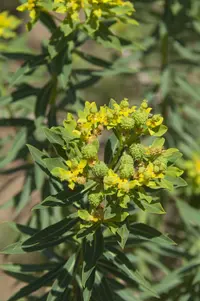
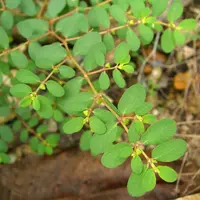
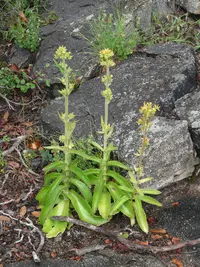
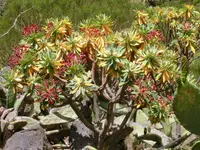
Euphorbia bivonae is a shrubby succulent spurges species, forming low, many-stemmed clumps with thick, segmented green stems and small, inconspicuous flowers. It often shows a sculptural, architectural look that suits rock gardens and dry landscapes.
This species is native to parts of the central Mediterranean, where it grows in rocky, sun-exposed habitats with very well-drained, often poor soils. It is generally low-maintenance but sensitive to overwatering and prolonged frost, which are the main challenges when learning how to care for Euphorbia bivonae.
In cultivation it prefers bright light, minimal moisture, and a gritty, fast-draining substrate, making it suitable for xeric gardens and carefully managed container culture.

Care Difficulty
Moderate Care

Light Preference
Full Sun

Water Requirements
Low Water

Temperature Preference
Warm Climate

Hardiness Zone
9–11

Soil Texture
Sandy, Loamy, Rocky

Soil pH
Slightly acidic (6.5–7.0), Neutral (7.0)

Soil Drainage
Well-drained

Fertilization
Minimal (feed rarely)
Scan your plant to receive care tips personalized for your specific plant
Available on iOS and Android
This Mediterranean succulent prefers bright, open conditions that mimic its native rocky habitats.
This drought-tolerant species needs careful, sparing watering to prevent root rot.
This species prefers warm, dry conditions and is sensitive to cold, especially prolonged damp chill.
This species prefers relatively dry air and usually does not need humidity adjustment indoors.
Euphorbia bivonae needs a very fast-draining, mineral-rich substrate that prevents water from sitting around the roots.
This species is well suited to container growing when drainage and stability are prioritized.
This drought-adapted succulent needs only light feeding to maintain healthy growth.
Pruning is mainly used to maintain shape and remove damaged tissue on this succulent shrub.
This species grows slowly and prefers infrequent disturbance, so repot only when clearly necessary.
Propagation is usually done from cuttings, as seed production and availability are limited in cultivation.
This succulent prefers mild winters and benefits from protection in colder regions.

Plant Health Check
Not sure what's wrong with your plant? Check your plant's health inside the app.
This species is naturally restricted to rocky coastal slopes and cliffs of Sicily and a few nearby Mediterranean islands, where it grows in crevices exposed to intense sun and salt-laden winds.
Unlike many succulents, it often sheds most or all of its leaves in the hottest, driest part of summer, relying on its thick, green stems for photosynthesis to reduce water loss.
Wild populations regularly experience direct sea spray, and the plant shows notable tolerance to saline conditions on coastal rocks compared with many inland Euphorbia species.
This Mediterranean succulent performs best outdoors in mild, dry climates where it receives strong light and good air movement. Indoors it stays smaller and demands very bright exposure, careful watering, and fast-draining substrate to avoid rot and etiolation.
Keep your plants happy and healthy with plant identification, disease detection, and easy care guidance.