Black Pagoda Care (Aeschynanthus longicaulis)

Also known as: Black Pagoda
Black Pagoda

About Black Pagoda

Black pagoda, Aeschynanthus longicaulis, is an epiphytic tropical vine from Southeast Asia, often grown as a trailing or hanging houseplant. It naturally clings to trees, which explains its arching stems and cascading habit indoors.

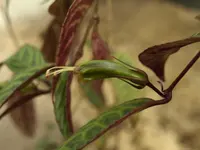
Leaves are mottled dark and light green on top with striking purple undersides, giving good foliage interest even when the plant is not flowering. Tubular orange to reddish blooms appear along the stems and attract hummingbirds outdoors in suitable climates.

This species is moderately easy to grow if its basic needs are met. Bright, filtered light, moderate humidity, and a freely draining potting mix are key points in how to care for Black Pagoda.

Main Plant Requirements

Care Difficulty

Moderate Care

Light Preference

Bright Indirect Light

Water Requirements

Moderate Water

Temperature Preference

Tropical / Frost Sensitive

Hardiness Zone

11–12

Soil Texture

Loamy, Peaty, Organic-rich

Soil pH

Acidic (5.5–6.5), Slightly acidic (6.5–7.0)

Soil Drainage

Moist but well-drained

Fertilization

Light (every 4–6 weeks)

Get Personalized Care Plan

Scan your plant to receive care tips personalized for your specific plant

Available on iOS and Android

How to Care for the Black Pagoda

This species prefers bright, indirect light that mimics dappled forest shade.

  • Provide 6–8 hours of bright, filtered light daily, such as near an east or bright north window, to support compact growth and flowering in Black Pagoda.
  • Tolerates light shade, but growth becomes sparse and flowering declines in dim rooms; move closer to a window or add sheer-curtained morning sun if stems stretch.
  • Avoid harsh midday or strong west sun, which can scorch leaves and cause yellow or brown patches; increase distance from glass or diffuse with sheer fabric, especially in summer.

Watering should keep the root zone slightly moist but never saturated.

  • Before watering Aeschynanthus longicaulis, let the top 2–3 cm of soil dry; check with a finger rather than following a fixed day schedule.
  • In spring and summer, expect to water more often as warm temperatures and active growth increase drying; in fall and winter, extend drying time between waterings.
  • Watch for soft, yellowing leaves and a sour smell as signs of overwatering and poor drainage, while limp, wrinkled leaves and very light pots indicate underwatering.

Stable, warm conditions support steady growth and flowering for this species.

  • Aim for 65–80°F (18–27°C) for best growth; short dips are tolerated, but avoid large daily swings that stress the plant.
  • Protect from cold below 55°F (13°C); prolonged exposure near this level slows growth, and near-freezing or frost can cause leaf drop and stem dieback.
  • Tolerates brief heat up to about 86°F (30°C) if humidity and watering are appropriate, but keep out of hot, stagnant air and away from heaters or cold drafts.

This species prefers moderately high humidity for best foliage and flowering.

  • Aim for 50–70% humidity, as very dry rooms slow growth and reduce bloom production.
  • Leaves curling, browning tips, or buds dropping indicate humidity stress, especially near heating or air-conditioning vents.
  • Increase humidity with a nearby humidifier, grouped plants, or a pebble tray, avoiding misting flowers on Black Pagoda.

This epiphytic vine needs a loose, airy potting mix that drains quickly yet retains some moisture.

  • Use a peat- or coco-based mix with added fine bark and perlite to mimic a chunky, organic-rich forest substrate.
  • Ensure water drains freely within seconds; the mix should feel springy and never pack into a heavy, solid mass.
  • A slightly acidic to neutral pH around 6.0–7.0 suits Aeschynanthus longicaulis and supports nutrient uptake without extra adjustment.
  • Avoid dense garden soil, high-clay mixes, or pots without drainage, which cause waterlogging and rapid root decline.

This species grows very well in containers and hanging baskets.

  • Choose a wide, shallow pot to accommodate its trailing roots while preventing a deep column of constantly wet mix.
  • Select a stable, heavier container or hanging basket hardware that resists tipping as vines elongate on one side.
  • Use plastic pots if slower drying is needed, or unglazed terracotta where conditions are humid and the mix stays wet too long.

This plant benefits from modest, consistent feeding during its active season to support foliage and flowering.

  • Use a balanced liquid fertilizer (for example 10-10-10 or 20-20-20) diluted to 1/4–1/2 strength.
  • Apply every 4–6 weeks in spring and summer when the Black Pagoda is actively growing.
  • Skip feeding in late fall and winter, or limit to once during the whole dormant period.
  • Avoid heavy compost or strong slow-release pellets that can keep the potting mix too rich or salty.

Thoughtful pruning keeps Aeschynanthus longicaulis compact, encourages branching, and maintains flowering performance.

  • Prune in late winter or early spring before strong new growth starts.
  • Use clean, sharp scissors or snips to remove dead, damaged, or very weak stems.
  • Shorten long, bare runners just above a leaf node to promote fuller, bushier growth.
  • After flowering, lightly trim spent flower stems to tidy the plant without heavy cutting.

This species prefers slightly snug pots, so repot only when clear signs of crowding appear.

  • Check for roots circling the pot, growing through drainage holes, or slow growth despite good care.
  • Plan repotting for spring, about every 2–3 years, into a container 2–3 cm wider with fresh airy mix.
  • Water lightly 1–2 days before repotting to ease root removal and reduce stress.
  • Gently loosen outer roots, keep the root ball mostly intact, then water once and keep in bright, indirect light for recovery.

This plant is commonly propagated from stem cuttings taken during the growing season.

  • Take 7–10 cm non-flowering stem cuttings in spring or early summer, just below a node.
  • Remove lower leaves and insert the cuttings into moist, well-draining mix or perlite-based medium.
  • Maintain high humidity, warm temperatures around 70–75°F, and bright, indirect light for rooting.
  • Once roots are 2–3 cm long, pot several cuttings together to create a fuller plant.

This tropical vine is frost-sensitive and needs mild, stable conditions over winter.

  • Keep indoors when outdoor temperatures drop below 55°F; avoid any exposure to frost.
  • Maintain indoor temperatures around 60–70°F and keep the plant away from cold drafts or heater blasts.
  • Reduce watering slightly in winter, letting the top of the mix dry more between waterings.
  • Provide as much bright, indirect light as possible to limit leaf drop and weak, stretched growth.

Care Tips

Encourage Cascading Stems

Position the pot at eye level or higher on a shelf or in a hanging basket so the stems can naturally trail, then gently direct new growth over the rim instead of letting it tangle against the pot or wall.

Use Light Support

If stems become long and floppy, insert a small hoop or compact trellis in the pot and loosely tie a few main vines with soft plant ties to create a fuller, layered curtain of growth instead of one long thin cascade.

Rotate For Even Growth

Turn the pot 90° every 1–2 weeks so all sides receive similar light exposure, which helps maintain a symmetrical, dense plant rather than one-sided growth that stresses the shaded stems.

Manage Flower Debris

After a main flowering flush, gently remove spent flowers and any sticky residue from leaves and pot rims to reduce mold risk and keep the plant’s nodes clear for the next round of buds when caring for Black Pagoda.

Monitor Pot Weight

Learn the plant’s dry vs. just-watered pot weight by lifting it with one hand, then use this quick check before watering to avoid chronic overwatering without disturbing the soil surface.

Common Pests and Diseases

Mealybugs

This pest appears as small white cottony clusters in leaf axils, on stems, and sometimes on roots, causing leaf yellowing and stunted growth.

Solution

Isolate the plant, then wipe or dab visible mealybugs with cotton swabs dipped in 70% isopropyl alcohol and rinse the foliage with lukewarm water; repeat weekly until no new insects appear and consider using a neem oil or insecticidal soap spray for larger infestations.

Spider mites

These insects are tiny and often invisible to the naked eye but cause fine webbing, dull stippled leaves, and gradual leaf drop, especially in warm, dry indoor air.

Solution

Increase humidity around the plant, thoroughly shower the foliage to physically remove mites, and apply insecticidal soap or a horticultural oil spray to both leaf surfaces every 5–7 days for several cycles to disrupt their life cycle.

Aphids

This pest forms soft green, black, or brown clusters on tender shoots and flower stems, leading to distorted growth and sticky honeydew on leaves.

Solution

Rinse the plant under a gentle but firm stream of water to dislodge aphids, then treat remaining insects with insecticidal soap or neem oil, repeating at 5–7 day intervals and pruning heavily infested soft tips if needed.

Leaf spot

This disease causes small water-soaked or brown lesions on leaves that can enlarge, sometimes with yellow halos, and may lead to premature leaf drop in humid, poorly ventilated conditions.

Solution

Remove and discard affected leaves, improve air circulation, avoid wetting foliage when watering, and if new spots keep appearing, apply a labeled copper-based or broad-spectrum fungicide according to package directions.

Botrytis blight

This disease leads to soft, brown, and sometimes mushy patches on leaves, stems, or spent flowers, often covered by gray fuzzy mold in cool, damp conditions.

Solution

Promptly remove all affected tissue and faded flowers, increase airflow, reduce overhead watering, and in persistent cases use a fungicide labeled for botrytis while ensuring the plant is not kept crowded or in stagnant, humid air to support better Aeschynanthus longicaulis care instructions.

Interesting Facts

Calcareous cliff specialist

In the wild, this species often grows as an epiphyte or lithophyte on limestone cliffs in Southeast Asia, anchoring its roots in rock crevices rather than soil.

Cryptic leaf patterning

Its leaves show a mottled, marbled pattern on the upper surface and a purple underside, which is thought to help with light absorption and camouflage in dappled forest shade.

Pollinator-guided flowers

The tubular, greenish to dark purple flowers with darker spotting are adapted for pollination by specific forest insects that are attracted to dark, tube-shaped corollas in shaded habitats.

FAQs about Black Pagoda

Brown leaf edges usually result from low humidity, underwatering, or fertilizer buildup. Sudden brown patches can follow direct sun scorch. Check soil moisture, flush excess salts when needed, and trim damaged tips for appearance only.

Grow Healthy Plants with Botan Care

Keep your plants happy and healthy with plant identification, disease detection, and easy care guidance.

Botan plant care app — identify plants on mobile

Explore More Plants