Dracaena Care (Dracaena fragrans 'Janet Craig Compacta')

Also known as: Corn Plant
Dracaena

About Dracaena

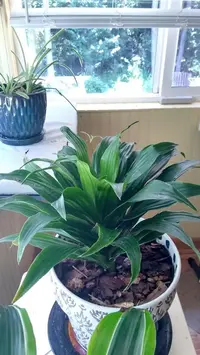
Dracaena fragrans 'Janet Craig Compacta' is a compact, slow-growing tropical shrub commonly used as an indoor foliage plant. It forms a tight rosette of short, glossy, dark green leaves on thick canes. Native to tropical Africa, this cultivar has been selected for its dense, upright habit that fits well in smaller rooms and offices. Its sturdy leaves and moderate growth rate make it relatively forgiving of minor care mistakes. The plant tolerates indoor conditions with stable temperatures and moderate light, though it does best in bright, indirect light and evenly moist but not waterlogged soil. This makes it a suitable choice for people learning how to care for Dracaena in typical home or workplace environments.

Main Plant Requirements

Care Difficulty

Easy Care

Light Preference

Bright Indirect Light

Water Requirements

Moderate Water

Temperature Preference

Tropical / Frost Sensitive

Hardiness Zone

10–12

Soil Texture

Loamy, Sandy, Organic-rich

Soil pH

Acidic (5.5–6.5), Slightly acidic (6.5–7.0)

Soil Drainage

Moist but well-drained

Fertilization

Light (every 4–6 weeks)

Get Personalized Care Plan

Scan your plant to receive care tips personalized for your specific plant

Available on iOS and Android

How to Care for the Dracaena

This compact dracaena prefers bright, filtered light with some protection from harsh sun.

  • Provide bright, indirect light for 6–8 hours per day, such as near an east- or north-facing window with sheer curtains.
  • Tolerates partial shade and can grow several feet from a window, but very low light leads to slow growth, stretched stems, and dull, darker leaves.
  • Avoid strong midday or afternoon sun, especially in summer; direct rays can scorch foliage, so shift slightly back from hot windows or add light filtering.

Dracaena fragrans 'Janet Craig Compacta' prefers evenly moist but not saturated soil and reacts quickly to excess water.

  • Allow the top 2–4 cm of soil to dry before watering; use your finger to check, then water thoroughly until excess drains away.
  • Reduce watering in fall and winter when growth slows, but never let the root zone stay dry long enough for leaves to curl or develop crispy brown tips.
  • Watch for yellowing lower leaves, soft stems, or a sour soil smell as signs of overwatering, and ensure a free-draining mix with unobstructed drainage holes.

This plant prefers stable, warm conditions and is sensitive to cold drafts and frost.

  • Aim for a general range of 65–80°F (18–27°C) for steady growth, with the best performance typically around 70–75°F (21–24°C).
  • Avoid exposing it to temperatures below 55°F (13°C); brief dips may cause leaf yellowing or dark, water-soaked patches, especially on newer growth.
  • It tolerates short periods up to about 85°F (29°C) if humidity and watering are consistent, but protect from hot, dry air near heaters or sun-baked windows.

This compact dracaena prefers moderately humid indoor air but usually tolerates typical home conditions.

  • Aim for 40–60% humidity to limit brown leaf tips and slow edge crisping.
  • Tolerates drier air, but persistent tips browning and leaf edges curling indicate humidity stress rather than underwatering.
  • Increase humidity by grouping plants, placing the pot on a pebble tray with water below the base, or using a small room humidifier nearby.

This plant performs best in a loose, airy, well-drained potting medium that still holds some moisture.

  • Use a peat- or coco-coir-based mix amended with perlite and fine bark to create a light, organic-rich, loamy structure.
  • Ensure rapid drainage; the mix should drain in seconds yet feel slightly moist rather than soggy 1–2 cm below the surface.
  • Target a slightly acidic to neutral pH around 6.0–7.0, which supports nutrient uptake for Dracaena fragrans 'Janet Craig Compacta'.
  • Avoid heavy garden soil, mixes that stay wet for days, or large amounts of unamended compost that collapse and reduce aeration.

This species is well suited to container growing for homes and offices.

  • Choose a pot just 2–5 cm wider than the root mass so the mix does not stay wet for long periods.
  • Select a heavier ceramic or clay container if the plant becomes top-heavy to reduce tipping risk.
  • Use a saucer that allows quick emptying of drained water so the lower root zone does not sit submerged.

Nutrient needs for Dracaena fragrans 'Janet Craig Compacta' are modest but consistent during active growth.

  • Use a balanced liquid fertilizer (around 10-10-10 or 20-20-20) diluted to 1/4–1/2 strength for container plants.
  • Feed every 4–6 weeks in spring and summer when new leaves form, after thoroughly watering the soil.
  • Skip compost-heavy mixes that stay wet; use a well-drained potting medium with optional slow-release pellets.
  • Reduce or stop feeding in fall and winter when growth slows, to avoid salt buildup and weak, leggy growth.

Pruning supports a compact, tidy form and maintains foliage quality in Dracaena fragrans 'Janet Craig Compacta'.

  • Plan main pruning in late winter or early spring before strong new growth starts.
  • Remove yellow, brown, or damaged leaves at the base and cut out weak, crossing, or crowded stems.
  • Shorten tall canes with clean, sharp pruners just above a node to encourage branching and denser growth.
  • Wipe blades with alcohol before and after use to reduce disease spread and prevent leaf-spotting problems.

Container-grown plants appreciate periodic repotting to refresh soil and support root health.

  • Check for roots circling the pot, pushing through drainage holes, or slow growth despite good care as repotting signals.
  • Plan repotting every 2–3 years in spring, moving Dracaena to a pot only 2–5 cm wider with drainage holes.
  • Gently loosen circling roots, trim dead or mushy sections, and set the plant at the same soil level as before.
  • Use a free-draining peat-free or peat-reduced mix, water thoroughly after repotting, then keep in bright, indirect light to reduce stress.

Propagation is most successful from stem cuttings taken during the warm growing season.

  • Take 7–15 cm sections of healthy cane in late spring or summer, cutting just below a node with sterilized pruners.
  • Plant upright in a moist, well-drained medium or root in water, keeping nodes slightly buried or submerged.
  • Maintain warmth around 70–80°F, high humidity, and bright, indirect light to support root initiation.
  • After strong roots form and new leaves emerge, pot into a small container and resume standard Dracaena fragrans 'Janet Craig Compacta' plant care.

This tropical houseplant is frost-sensitive and needs stable indoor conditions in winter.

  • Keep temperatures around 60–75°F indoors and avoid exposing foliage to drafts or cold windows.
  • For container plants kept outside in summer, move indoors before outdoor temperatures drop near 50°F.
  • Reduce watering in winter, allowing the top soil to dry more, while keeping humidity moderate to limit leaf browning.
  • Keep the pot off very cold surfaces and away from heating vents to prevent root and leaf stress.

Care Tips

Rotate For Symmetry

Turn the pot 90° every 2–3 weeks so new leaves develop evenly around the stem and the plant keeps a compact, upright form instead of leaning toward the light source.

Stabilize Cane Stems

If the plant becomes top-heavy, insert a discreet stake alongside each cane and secure it loosely with soft plant ties to keep stems upright and prevent stress at the base.

Leaf Dust Management

Wipe the broad leaves every 3–4 weeks with a barely damp, soft cloth, supporting each leaf from beneath, to improve light capture and reduce habitat for pests like spider mites and mealybugs.

Salt Buildup Control

Every 2–3 months, water thoroughly until excess drains freely from the pot to flush out accumulated fertilizer salts that can cause brown leaf tips on this relatively salt-sensitive species.

Safe Repot Timing

Plan repotting or dividing into separate canes in late spring or early summer when growth is active, which helps the plant recover faster from root disturbance and supports long-term Dracaena indoor care.

Common Pests and Diseases

Fluoride leaf tip burn

Symptoms include brown, crispy tips and margins on older leaves while new growth remains relatively healthy. This disorder is common on Dracaena due to sensitivity to fluoride and salts in tap water and some fertilizers.

Solution

Use filtered, distilled, or rainwater and allow chlorine to dissipate from tap water for 24 hours before use; leach the pot thoroughly with clean water to flush built-up salts. Switch to a low-fluoride, low-phosphorus fertilizer at reduced strength and remove severely damaged leaves once new growth looks healthy.

Soft scale

This pest appears as dome-shaped, tan to brown bumps along stems and leaf midribs, often accompanied by sticky honeydew and sooty mold. These insects feed on plant sap and commonly infest Dracaena grown indoors under stable, warm conditions.

Solution

Wipe stems and leaves with a cotton pad dipped in diluted alcohol or insecticidal soap to dislodge adults, then repeat every 7–10 days to break the life cycle. Improve light and air movement, isolate the plant from others, and for heavy infestations use a systemic insecticide labeled for indoor ornamental plants, following all label directions carefully.

Mealybugs

This pest forms white, cottony clusters in leaf axils, on roots, and along stems, often causing stunted growth and sticky honeydew. These insects thrive on thick, strap-like leaves and congested crowns typical of this compact Dracaena cultivar.

Solution

Physically remove visible clusters with a cotton swab dipped in 70% isopropyl alcohol and wash foliage with insecticidal soap, repeating every 7–10 days until no new insects appear. Inspect and rinse roots if the infestation is severe, repot into fresh substrate, and keep the plant slightly drier while monitoring closely.

Fusarium leaf spot

This disease causes small, water-soaked or yellow lesions on leaves that enlarge into reddish-brown spots with defined edges, often along the midrib. Symptoms include gradual cosmetic damage that can spread under warm, humid, low-airflow conditions.

Solution

Remove and discard affected leaves, keep foliage dry, and water at the soil level only. Improve air circulation, avoid overcrowding, and if new spots continue to appear, apply a fungicide labeled for Fusarium leaf spot on ornamental foliage plants according to the product instructions.

Bacterial leaf blight

This disease starts as small, translucent, water-soaked patches on leaves that quickly turn brown with yellow halos and may develop an unpleasant odor. Symptoms include rapid spread across crowded foliage, especially when leaves stay wet for long periods.

Solution

Immediately remove and discard heavily affected leaves and any fallen debris, then avoid overhead watering and splashing between plants. Increase spacing and airflow, sterilize cutting tools with alcohol between cuts, and if the plant is badly affected, consider discarding it to protect nearby plants and follow strict hygiene for any replacements to support proper Dracaena indoor care.

Interesting Facts

Naturally compact rosette

This cultivar stays much shorter and denser than typical Dracaena fragrans, forming tight leaf rosettes rather than tall canes, which is the result of strong apical growth suppression selected by growers.

Selected greenhouse sport

It originated as a greenhouse sport, meaning a spontaneous mutation found in cultivated Dracaena fragrans, then propagated vegetatively so every plant is essentially a clone of that original mutation.

Low-light leaf adaptation

Its short internodes and relatively thick, glossy leaves are selected for tolerance of typical indoor low to medium light, allowing effective photosynthesis even under office-type lighting conditions, a key feature in Dracaena fragrans 'Janet Craig Compacta' care.

FAQs about Dracaena

Brown tips usually come from low humidity, excess fertilizer salts, or fluoride/chlorine in tap water. Use filtered or distilled water, flush the pot occasionally, trim crispy tips, and avoid direct blasts from heaters or air conditioners.

Grow Healthy Plants with Botan Care

Keep your plants happy and healthy with plant identification, disease detection, and easy care guidance.


Botan plant care app — identify plants on mobile

Explore More Plants