stiffleaf false foxglove Care (Agalinis strictifolia)

stiffleaf false foxglove

About stiffleaf false foxglove

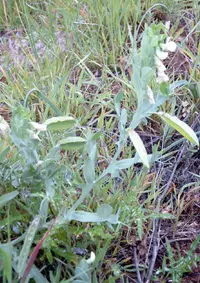
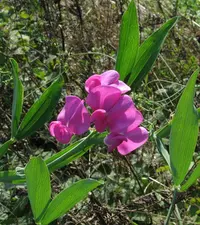
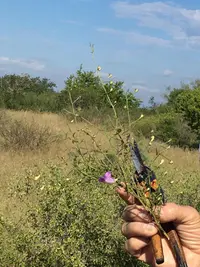
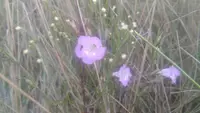
Stiffleaf false foxglove (Agalinis strictifolia) is a slender, short-lived wildflower native to sandy prairies, open pinelands, and coastal habitats in the southeastern United States. It typically grows upright with narrow, stiff leaves and delicate, tubular pink to purple flowers along its stems.

This species is a hemiparasite, meaning it taps the roots of nearby plants for some of its water and nutrients, which makes garden cultivation more challenging. It prefers full sun, well-drained sandy soils, and low to moderate fertility. Gardeners who want to learn how to care for stiffleaf false foxglove should understand that it often performs best in naturalistic or restoration-style plantings rather than in highly managed beds.

Main Plant Requirements

Care Difficulty

Hard Care

Light Preference

Full Sun

Water Requirements

Moderate Water

Temperature Preference

Warm Climate

Hardiness Zone

8–11

Soil Texture

Sandy, Loamy

Soil pH

Slightly acidic (6.5–7.0)

Soil Drainage

Well-drained

Fertilization

Minimal (feed rarely)

Get Personalized Care Plan

Scan your plant to receive care tips personalized for your specific plant

Available on iOS and Android

How to Care for the stiffleaf false foxglove

This sun-loving wildflower thrives in bright, open sites with minimal shade.

  • Provide full sun for 6–8 hours per day; stiffleaf false foxglove flowers and branches best in unobstructed light.
  • Accepts very light, brief partial shade, but dense or all-day shade leads to tall, weak stems and sparse blooming.
  • Avoid placing it where taller plants or shrubs will shade it in summer, since gradual encroaching shade can markedly reduce flowering.

This species is adapted to dry, well-drained sites and is sensitive to prolonged wet soil.

  • Allow soil to dry at least through the top 5–8 cm before watering, using a finger check rather than a fixed schedule.
  • During hot, windy periods, watch for limp foliage or dull, gray-green leaves as signs of drought stress and water deeply once when seen.
  • Ensure sandy or gritty soil with fast drainage; yellowing, soft stems or a sour smell in the root zone indicate overwatering or poor drainage.

This plant is adapted to warm, open habitats and tolerates a fairly wide temperature range once established.

  • Active growth and flowering occur best around 70–90°F (21–32°C), typical of late spring through summer conditions.
  • Mature plants can handle brief heat up to about 95°F (35°C) if soil is not waterlogged, but prolonged extreme heat may shorten flowering.
  • Frost below 30°F (-1°C) can damage or kill top growth; treat it as a warm-season plant that completes its life cycle before hard freezes.

Humidity is rarely a concern for stiffleaf false foxglove, which is adapted to dry, open habitats.

Agalinis strictifolia prefers lean, fast-draining soil that mimics dry prairies or sandy openings.

  • Use sandy or sandy-loam soil with low to moderate organic matter to prevent water retention around the roots.
  • Ensure very sharp drainage; mix in coarse sand or fine grit, avoiding heavy clay or compacted substrates.
  • Aim for slightly acidic to neutral pH around 6.0–7.0, avoiding strongly alkaline or saline conditions.
  • Do not amend with large amounts of compost or peat, which can hold excess moisture and reduce aeration.

This species is not ideal for long-term container growing, but short-term flowering in pots is possible under careful conditions.

  • Choose a tall, narrow container to provide root depth while limiting excess wet volume that can stay saturated.
  • Use a very gritty mix in containers so water drains within minutes, reducing root stress in rainy periods.
  • Place pots in a highly exposed, sunny spot to avoid excess shading, which can cause weak, floppy growth in the confined root space.

This native wildflower usually thrives in lean soils and often needs no fertilizer in garden settings.

Agalinis strictifolia needs only minimal pruning focused on end-of-season clean‑up and plant health.

  • Cut back spent flowering stems in late fall or very early spring to tidy appearance.
  • Remove dead, diseased, or storm-damaged growth with clean, sharp hand pruners.
  • Thin crowded stems lightly to improve air flow without removing too much foliage.
  • Avoid heavy structural pruning, which can reduce flowering on this short-lived perennial.

Transplanting stiffleaf false foxglove is done sparingly, as it dislikes root disturbance and often behaves as a short-lived perennial or annual.

  • Transplant young plants in early spring when soil is workable and weather is mild.
  • Look for roots circling a plug or dense root mass that dries quickly as a sign to move it to the ground.
  • Plant in a sunny, well-drained site and water gently to settle soil around the roots.
  • Keep soil evenly moist for the first 1–2 weeks, then reduce watering to limit transplant stress.

Propagation of Agalinis strictifolia relies mainly on seed, as vegetative methods are unreliable.

  • Collect seeds from mature, dry capsules in late summer or fall and store cool and dry.
  • Sow seeds on the soil surface in fall or very early spring; they need light for good germination.
  • Use a well-drained sandy mix and keep it just moist, not wet, until seedlings establish.
  • Leave some flowering stems to self-seed in place, allowing natural renewal of the stand.

This species is generally cold hardy in its native range and needs little targeted winter care.

  • In colder climates, allow stems to stand over winter to trap snow and protect the crown.
  • Apply a light 2–5 cm layer of mulch in late fall on exposed sites to buffer freeze–thaw cycles.
  • For container-grown plants, move pots to a sheltered, unheated spot to prevent root freezing and thawing swings.

Care Tips

Host Root Partner

Establish nearby native warm-season grasses or small forbs before planting, since this hemiparasitic species benefits from attaching its roots to a host for stronger growth and better flowering.

Lean Soil Management

Avoid adding rich compost or high-organic mulches around plants, as slightly nutrient-poor, open soil helps keep them compact and better adapted to their natural prairie conditions.

Seed Bank Support

Let seedpods dry and shatter in place at the end of the season, and delay mowing or cleanup until late winter so a natural seed bank can maintain or slowly expand the population.

Low-Competition Zone

Keep a small, weeded ring of 10–20 cm around each plant by shallow hand weeding, which reduces competition from aggressive grasses and helps young plants establish without disturbing their fine roots.

Site Rotation Strategy

Periodically introduce fresh seed to nearby, similar habitat patches to compensate for this species’ short-lived nature and maintain a stable stand when growing stiffleaf false foxglove over several years.

Common Pests and Diseases

Aphids

This pest often colonizes fresh flowering stems and buds, sucking sap and weakening shoots. Symptoms include curled or distorted foliage and sticky honeydew on stems near the flowers.

Solution

Prune off heavily infested flowering tips, then wash remaining stems with a strong but controlled stream of water. If needed, spot-treat colonies with insecticidal soap or a light horticultural oil, applying in the early morning and repeating weekly until populations drop.

Spider mites

These insects favor hot, dry roadside or prairie sites and feed on undersides of leaves, causing pale speckling and a dull, stippled appearance. Fine webbing may appear on stems and narrow leaves during prolonged dry periods.

Solution

Increase humidity around plants with occasional overhead rinsing, then spray undersides of leaves with water to physically remove mites. For persistent infestations, use insecticidal soap or a low-rate horticultural oil, ensuring thorough coverage of both leaf surfaces and repeating every 7–10 days as needed.

Leaf spot

This disease produces small brown to tan lesions on the slender leaves, which can coalesce and cause premature yellowing, especially in crowded or poorly ventilated patches. Symptoms include thinning foliage and reduced flowering on stressed plants.

Solution

Remove and discard affected leaves or entire stems at the base to limit spread, and avoid overhead watering in late day so foliage dries quickly. Improve spacing and airflow, and if spots continue to spread, apply a labeled broad-spectrum fungicide during periods of warm, wet weather, following all label directions carefully.

Interesting Facts

Hemiparasitic wildflower

This species is a hemiparasite, meaning it photosynthesizes but also taps into the roots of nearby plants, especially grasses, to obtain additional water and dissolved nutrients.

Narrow, stiff foliage

Its leaves are unusually narrow, linear, and rigid for the genus, an adaptation thought to reduce water loss and suit the dry, open habitats where it typically grows in the south-central United States.

Fall-blooming specialist

The plant produces tubular pink to purple flowers mainly in late summer to fall, aligning its flowering period with peak activity of certain native pollinators in prairie and open savanna habitats.

FAQs about stiffleaf false foxglove

This species behaves as a short-lived annual wildflower. It completes its life cycle in a single growing season, then dies after setting seed. Continued presence in a garden usually depends on successful self-seeding or reseeding by the gardener.

Grow Healthy Plants with Botan Care

Keep your plants happy and healthy with plant identification, disease detection, and easy care guidance.

Botan plant care app — identify plants on mobile

Explore More Plants