Encourage offset production
Plant in a slightly snug, heavy container and avoid frequent repotting, as a mildly root-bound agave is more likely to produce stable pups that can be separated once they reach at least 10–15 cm across.

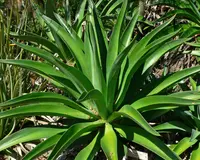
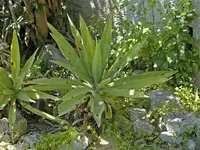
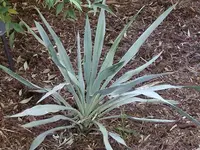
Agave demeesteriana is a compact succulent agave forming a dense rosette of smooth, thick, sword-like leaves with minimal spines. It stays relatively tidy, which suits small gardens and container plantings.
This species is native to Mexico, where it grows in dry, sunny habitats on rocky or well-drained soils. Its slow to moderate growth, drought tolerance, and low maintenance needs make it approachable for beginners learning how to care for Agave demeesteriana.
It prefers bright light, infrequent but deep watering, and gritty, fast-draining soil to avoid root problems and maintain a firm, healthy rosette.

Care Difficulty
Easy Care

Light Preference
Full Sun

Water Requirements
Low Water

Temperature Preference
Warm Climate

Hardiness Zone
9–11

Soil Texture
Sandy, Loamy, Rocky

Soil pH
Slightly acidic (6.5–7.0), Neutral (7.0)

Soil Drainage
Well-drained

Fertilization
Minimal (feed rarely)
Scan your plant to receive care tips personalized for your specific plant
Available on iOS and Android
This sun-loving succulent thrives in strong light but benefits from some protection in very hot climates.
This species prefers infrequent, deep watering and fast-drying soil.
This agave handles heat well but is only marginally tolerant of cold.
This species tolerates typical indoor humidity and does not require special humidity management.
This succulent needs a very fast-draining, mineral-based soil to prevent root and crown rot.
This species is well suited to container growing outdoors in warm climates or moved under protection in colder regions.
This drought-tolerant succulent has modest nutrient needs but responds to light feeding in containers or poor soil.
Pruning needs for Agave demeesteriana are minimal and mainly focused on cleanliness and safety.
Container-grown plants benefit from infrequent repotting or transplanting to maintain drainage and root health.
This species is commonly propagated from offsets, with seeds used mainly by more advanced growers.
Agave demeesteriana tolerates light frost but benefits from simple winter precautions in colder regions.

Plant Health Check
Not sure what's wrong with your plant? Check your plant's health inside the app.
This species forms a dense, symmetrical rosette that typically stays under 60 cm across, much smaller and neater than many other agaves, which makes it suitable for modern landscape designs and container use.
Unlike many closely related agaves with strong marginal spines, this plant has relatively smooth leaf edges with only a terminal spine, reducing its mechanical defense but making it safer to handle in cultivated settings.
Although native to arid regions of Mexico, this species shows notable tolerance to short periods of cooler temperatures compared to many tropical succulents, which has supported its use in warm-temperate dry gardens and studies on stress tolerance in xeric plants.
This species grows slowly, typically adding only a few leaves each year. In suitable outdoor conditions it often forms a symmetrical rosette about 60–90 cm tall and 90–120 cm wide at maturity.
Keep your plants happy and healthy with plant identification, disease detection, and easy care guidance.