Protective mulching ring
Create a 5–8 cm gravel or coarse sand mulch ring around the base to keep the crown dry, reduce soil splash on leaves, and discourage weed competition without trapping moisture against the plant.

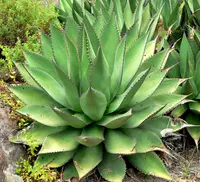
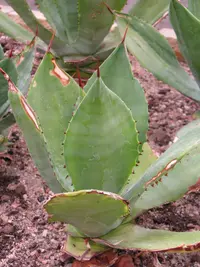
Coastal agave (Agave shawii) is a compact, slow-growing succulent native to coastal bluffs and scrub in southern California and northwestern Baja California. It forms dense rosettes of stiff, blue-green leaves lined with sharp teeth and a strong terminal spine. Mature plants produce tall flower stalks once in their lifetime, then slowly die back while surrounding offsets continue the clump. This species is adapted to intense sun, wind, and poor, fast-draining soils, which makes it drought tolerant but sensitive to heavy, prolonged moisture. For those learning how to care for coastal agave, its main needs are strong light, good drainage, and protection from severe winter cold.

Care Difficulty
Easy Care

Light Preference
Full Sun

Water Requirements
Low Water

Temperature Preference
Warm Climate

Hardiness Zone
9–11

Soil Texture
Sandy, Loamy, Rocky

Soil pH
Slightly acidic (6.5–7.0), Slightly alkaline (7.0–7.5)

Soil Drainage
Well-drained

Fertilization
Minimal (feed rarely)
Scan your plant to receive care tips personalized for your specific plant
Available on iOS and Android
Agave shawii thrives in strong, direct light that mimics its native coastal habitat.
Agave shawii prefers deep, infrequent watering and very fast-draining soil.
This species is adapted to warm, dry climates with mild winters.
This species prefers dry air and does not require added humidity indoors or outdoors.
This desert succulent needs very fast-draining, mineral-based soil to prevent root and crown rot.
This species is suitable for container growing when the pot is prepared to handle its weight and drought-adapted roots.
This coastal agave needs only light feeding in poor or depleted soils.
Pruning Agave shawii focuses on hygiene and safety rather than reshaping the plant.
Transplanting or repotting this agave is infrequent and mainly needed as it outgrows its space.
New Agave shawii plants are most reliably produced from offsets rather than seeds.
This agave tolerates light coastal frost but benefits from simple winter precautions in colder areas.

Plant Health Check
Not sure what's wrong with your plant? Check your plant's health inside the app.
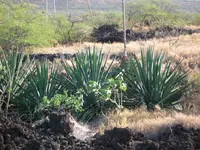
This species is naturally restricted to the coastal strip of northern Baja California and a few sites in southern California, where it grows on rocky maritime bluffs and chaparral slopes exposed to salt-laden winds.
It forms compact rosettes with many closely packed leaves, each edged and tipped with stout, curved spines that help deter herbivores in its open, coastal habitat.
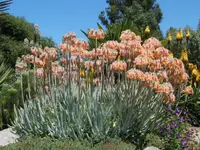
Its tall flowering stalk carries yellow tubular flowers rich in nectar, which in its native range are primarily pollinated by hummingbirds that move along the spike as the flowers open progressively.

Agave shawii is a classic monocarpic succulent, meaning each rosette flowers once after many years, then dies, relying on offsets at the base to keep the clump alive over time.
This species flowers only once at full maturity, often after several decades. If it is still smaller, recently transplanted, or grown in a container, it may never reach the size and age needed to bloom.
Keep your plants happy and healthy with plant identification, disease detection, and easy care guidance.