Mowing Height Rotation
Alternate mowing heights between 0.4–0.6 in during the growing season to reduce stress, discourage thatch buildup, and maintain a denser, more resilient turf canopy.

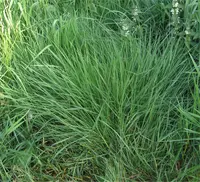
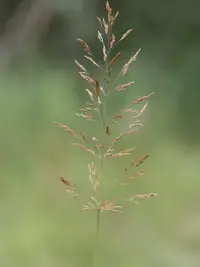
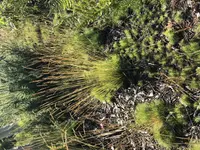
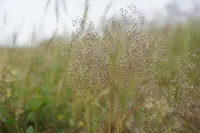
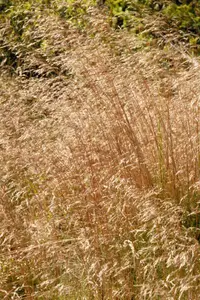
Colonial bentgrass, Agrostis capillaris, is a cool-season perennial grass commonly used in lawns, golf course fairways, and low-maintenance turf areas. It forms a fine-textured, dense mat with slender stems and narrow, soft green leaves.
This species is native to Europe and western Asia but is now widely naturalized in North America, especially in cooler and moist regions. It spreads by short stolons, which helps it fill in thin turf but can also make it invasive in some settings.
Colonial bentgrass prefers full sun to light shade, consistent moisture, and well-drained, moderately fertile soil. Understanding these traits helps gardeners care for Colonial bentgrass in suitable climates without intensive inputs.

Care Difficulty
Moderate Care

Light Preference
Full Sun

Water Requirements
Regular Water

Temperature Preference
Cool Climate

Hardiness Zone
3–8

Soil Texture
Sandy, Loamy, Silty

Soil pH
Acidic (5.5–6.5), Slightly acidic (6.5–7.0)

Soil Drainage
Moist but well-drained

Fertilization
Light (every 4–6 weeks)
Scan your plant to receive care tips personalized for your specific plant
Available on iOS and Android
Agrostis capillaris grows best as a cool-season turf grass with consistent, moderate light exposure.
This cool-season grass prefers evenly moist, well-drained soil rather than extreme wet or dry conditions.
This species performs best in cool climates and declines when exposed to prolonged heat or severe cold without protection.
This cool-season grass prefers moderately moist air but adapts to most outdoor humidity levels.
This species favors cool, moist, well-structured mineral soils with reliable drainage.
This fine-textured grass can be grown in containers, mainly for small turf displays or trials rather than long-term lawns.
Agrostis capillaris benefits from light, balanced feeding on lean soils but often needs little input on fertile ground.
Agrostis capillaris responds well to light pruning and mowing that maintain density and health.
This grass is mainly grown in the ground, so transplanting clumps matters more than container repotting.
Agrostis capillaris is commonly propagated by seed and by dividing established turf or clumps.
This cool-season grass is generally cold hardy and usually needs minimal winter care in temperate regions.

Plant Health Check
Not sure what's wrong with your plant? Check your plant's health inside the app.
This species forms very fine, dense leaves and shoots that create a smooth turf surface, which is why it has been widely used on golf course fairways and bowling greens in cool, moist climates.
Colonial bentgrass often persists on nutrient-poor, acidic soils where many other turf grasses thin out, due to its relatively low nutrient demand and good adaptation to such conditions.
In Europe and parts of North America, this species is a characteristic component of semi-natural grasslands and upland pastures, where it can help stabilize soil and support a diverse understory of forbs and mosses.
In several regions outside its native range, Agrostis capillaris is considered a naturalized or even invasive species because its fine, dense turf can outcompete native grasses and alter the structure of grassland ecosystems.
This species spreads by stolons, forming a dense, fine-textured turf over time. In managed lawns or greens it is controlled by mowing and edging. In suitable climates it can slowly encroach into adjacent thin or disturbed areas.
Keep your plants happy and healthy with plant identification, disease detection, and easy care guidance.