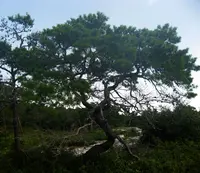
poison-pod false-thorn Care (Albizia versicolor)

Also known as: Large-Leaved False-Thorn, Large-Leaved Albizia, Poisonpod Albizia, Tanga-Tanga, Umvanghaas
poison-pod false-thorn

About poison-pod false-thorn

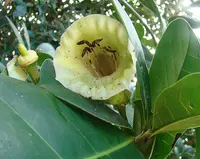
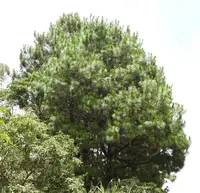
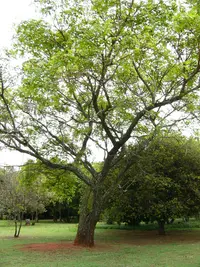
Poison-pod false-thorn (Albizia versicolor) is a deciduous tree from southern Africa, valued mainly in landscapes and larger collections rather than as a typical houseplant. It develops a broad, spreading crown with fine, feathery leaflets and flat, papery seed pods that give the plant its common name.

This species usually grows in warm, frost-free climates and prefers full sun and well-drained soils. It can be challenging in small gardens due to its eventual size and the need for space and light. Those who want to learn how to care for poison-pod false-thorn should first check local climate suitability and available room for its mature canopy.

Main Plant Requirements

Care Difficulty

Moderate Care

Light Preference

Full Sun

Water Requirements

Moderate Water

Temperature Preference

Tropical / Frost Sensitive

Hardiness Zone

10–12

Soil Texture

Sandy, Loamy, Organic-rich

Soil pH

Acidic (5.5–6.5), Slightly acidic (6.5–7.0)

Soil Drainage

Well-drained

Fertilization

Minimal (feed rarely)

Get Personalized Care Plan

Scan your plant to receive care tips personalized for your specific plant

Available on iOS and Android

How to Care for the poison-pod false-thorn

Albizia versicolor grows best in bright, open sites with strong but not extreme sun exposure.

  • Provide 6–8 hours of direct sun daily, ideally with morning sun and light afternoon shade in hotter regions to reduce leaf scorch.
  • Tree-sized plants tolerate light partial shade, but flowering and canopy density decline noticeably if direct sun drops below about 4 hours per day.
  • In hotter climates, protect young poison-pod false-thorn from intense mid-afternoon sun using taller plants or structures, especially during its first 2–3 summers.

Albizia versicolor prefers moderately moist, well-drained soil and reacts quickly to prolonged drought or saturation.

  • Water deeply when the top 3–5 cm of soil feels dry, allowing water to soak into the root zone rather than giving frequent shallow splashes.
  • Reduce watering once the tree is established, using foliage wilt, leaf curling, or pale, crisp edges as signs of drought stress, and yellowing leaves or soggy soil as overwatering warnings.
  • Plant in free-draining ground with added coarse sand or fine gravel if needed so excess water drains within 1–2 hours after heavy rain or irrigation.

This species grows best in warm, frost-free climates with mild seasonal variation.

  • Aim for active growth in temperatures around 70–90°F (21–32°C), which support fast canopy development and healthy flowering.
  • Protect from frost, since damage often occurs below about 30°F (−1°C), and young trees can be killed if temperatures drop near 26°F (−3°C).
  • Mature trees tolerate short hot spells up to about 100°F (38°C) if soil moisture is adequate, but extended heat with dry soil increases risk of leaf scorch and branch dieback.

This species prefers moderately humid air but adapts to a range of household and outdoor conditions.

  • Aim for 40–60% humidity, which supports steady foliage and shoot growth in poison-pod false-thorn.
  • It tolerates brief drier indoor air but prolonged levels below 30% can slow growth and increase leaf edge browning.
  • Humidity stress shows as curled, crispy leaf tips; increase moisture with grouped plants, a nearby humidifier, or occasional fine misting.

Albizia versicolor grows best in loose, well-aerated, free-draining soil that still holds moderate moisture.

  • Use a sandy loam or loam-based mix with 30–40% coarse material such as perlite or sharp sand to prevent waterlogging.
  • Aim for slightly acidic to neutral pH around 6.0–7.0 to support nutrient availability and balanced root development.
  • Incorporate 20–30% mature compost or well-rotted bark fines to add organic matter without making the mix heavy or compacted.
  • Avoid dense clay, peat-heavy mixes, or sites where water sits for more than a few hours after rain, as this increases root rot risk.

This species can be grown in containers for its juvenile and small-tree stages if the pot is managed carefully.

  • Choose a deep, heavy container to provide root run and resist tipping from the developing canopy and wind exposure.
  • Select a mineral-rich, fast-draining mix and elevate the pot slightly so drainage holes stay clear and water exits rapidly.
  • Position large containers where they will not need frequent moving, as the growing root mass and moist substrate become very heavy over time.

Albizia versicolor benefits from modest feeding but often manages on poor soils once established.

  • Use a balanced, slow-release granular fertilizer (around 10-10-10) or well-rotted compost at the start of the growing season.
  • Feed young or container-grown poison-pod false-thorn 1–2 times per growing season, keeping soil lightly moist after application.
  • Apply at half the label rate for trees to avoid excessive, weak growth and salt buildup in the root zone.
  • Stop fertilizing in late summer; do not feed during winter dormancy so growth can harden properly.

Pruning Albizia versicolor helps maintain a strong framework and safe, open canopy.

  • Carry out structural pruning in late winter or very early spring before new growth begins.
  • Remove dead, diseased, crossing, or storm-damaged branches with clean, sharp bypass pruners or a pruning saw.
  • Thin congested interior shoots to improve light penetration and airflow, which supports healthier foliage and flowering.
  • Limit heading cuts; instead, make reduction cuts back to side branches to guide shape without causing weak watersprouts.

This species is usually grown in the ground, so focus on careful transplanting of young trees rather than frequent repotting.

  • Transplant in late winter or early spring when the tree is dormant and temperatures are mild.
  • Look for roots circling the container, slow growth, or quick drying soil as cues a nursery plant needs a larger site.
  • Prepare a wide planting hole in well-drained soil, set the root flare at soil level, and backfill firmly without burying the trunk.
  • Water deeply after planting, then keep soil evenly moist for the first growing season to reduce transplant shock.

Propagation of Albizia versicolor is usually done from seed rather than vegetative methods.

  • Collect mature pods, extract seeds, and store them dry until late winter or early spring sowing.
  • Scarify hard seed coats gently with sandpaper or a brief hot-water soak to improve germination.
  • Sow seeds in a well-drained, sterile mix, keep at 70–80°F, and maintain consistent, light moisture.
  • Once seedlings have several true leaves, pot individually and acclimate gradually to higher light outdoors.

Albizia versicolor is suited to warm climates and needs protection where frost occurs.

  • In marginal zones, mulch 5–8 cm around the root zone, keeping mulch slightly away from the trunk.
  • For young trees, wrap the lower stem with breathable frost cloth during cold snaps to reduce bark damage.
  • Grow container specimens in large pots and move them indoors or into a frost-free greenhouse before temperatures approach freezing.

Care Tips

Wind-resilient training

In the first 2–3 years, stake the young tree on the windward side and gradually loosen ties each season so it develops a sturdy trunk and good wind resistance rather than remaining dependent on support.

Root zone protection

Keep turfgrass and string trimmers at least 30–60 cm away from the trunk, using a mulch ring instead, to prevent bark damage and surface-root injury that can lead to decay and instability.

Selective scaffold pruning

In late winter, choose 3–5 well-spaced main branches at different heights and gently shorten or remove competing shoots so the tree forms a balanced, open crown less prone to storm breakage.

Soil salinity monitoring

In coastal or arid sites, test soil salinity every 1–2 years and, if electrical conductivity is rising, apply a deep, slow irrigation occasionally to flush salts below the main root zone.

Trunk and limb inspection

Inspect the trunk and major limbs at least once a year for vertical cracks, cankers, or borer exit holes, and remove or reduce compromised branches early to maintain safe structure when growing poison-pod false-thorn.

Common Pests and Diseases

Mimosa webworm

This pest forms webbed nests on foliage and feeds on leaflets, causing browning, leaf rolling, and partial defoliation on Albizia species. Symptoms include fine webbing between leaflets and clusters of skeletonized leaves.

Solution

Prune out and destroy webbed clusters as soon as they appear and dispose of them away from the tree. For heavier infestations, use Bacillus thuringiensis (Bt) or a spinosad-based spray targeted to the foliage in late spring to early summer, and encourage natural predators by avoiding broad-spectrum insecticides.

Flat-headed borer

This pest tunnels under the bark and into the wood, often attacking stressed or newly planted trees, leading to dieback of branches and thinning canopies. Symptoms include small D-shaped exit holes and areas of loose, blistered, or cracking bark on trunks and major branches.

Solution

Maintain strong overall Albizia versicolor plant care by reducing drought stress through regular deep watering in dry periods and avoiding trunk injuries. Remove and destroy heavily infested branches, and consider using a systemic insecticide labeled for borers on high-value trees, applied according to local regulations and timing recommendations.

Pink disease

This disease, caused by the fungus Erythricium salmonicolor, produces pink to orange crusts on branches and can lead to twig dieback, bark cracking, and eventual branch death. Symptoms include gummy exudates and patches of white to pink fungal growth on infected limbs, especially in warm, humid climates.

Solution

Prune out infected branches well below visible symptoms and disinfect pruning tools between cuts with 70% alcohol or a 10% bleach solution. Improve airflow around the canopy, avoid overhead irrigation, and apply a copper-based fungicide to remaining limbs if the disease pressure is high and conditions remain humid.

Powdery mildew

This disease appears as a white to gray powdery coating on leaves and young shoots, reducing photosynthesis and causing leaf distortion or premature leaf drop. Symptoms include patchy, felt-like growth on the upper surfaces of leaflets, often in shaded or crowded parts of the canopy.

Solution

Increase light and airflow by selectively thinning dense branches and removing nearby competing vegetation. If needed, apply a sulfur or potassium bicarbonate fungicide labeled for ornamental trees at the first sign of infection, and repeat according to label directions during warm, dry periods when powdery mildew is most active.

Armillaria root disease

This disease, caused by Armillaria fungi, attacks roots and lower trunks, resulting in gradual canopy thinning, yellowing foliage, and dieback, especially in previously forested or orchard soils. Symptoms include white fungal mats under the bark at the root collar and dark, cord-like rhizomorphs on roots or in the soil.

Solution

Avoid planting Albizia versicolor in sites with a known history of Armillaria and minimize stress by maintaining consistent soil moisture and avoiding mechanical damage to roots. Remove and destroy severely affected trees, including as much of the root system as possible, and improve soil drainage and organic matter before replanting with less susceptible species if the site remains heavily infested.

Interesting Facts

Poisonous seed pods

This species develops flat, papery pods whose seeds are toxic to livestock and wildlife when eaten, a trait that helps protect its reproduction but poses a risk in grazing areas.

False-thorn defense

Despite the common name poison-pod false-thorn, the branches lack true botanical thorns; instead, the tree relies on chemical deterrents in its tissues rather than sharp physical defenses.

Miombo woodland native

Albizia versicolor is naturally found in southern African miombo woodlands, where it contributes to seasonal canopy cover and helps fix atmospheric nitrogen in the soil through its root symbiosis with bacteria.

Botan icon

Did you know?

In some regions of southern Africa, large poison-pod false-thorn trees are so prominent in the landscape that their flowering and pod production are used by local communities as seasonal indicators for planning grazing and agricultural activities.

FAQs about poison-pod false-thorn

This species is generally fast-growing, especially in warm climates with a defined rainy season. Young trees can add significant height each year, then gradually slow as they mature and focus more energy on canopy development and seed production.

Grow Healthy Plants with Botan Care

Keep your plants happy and healthy with plant identification, disease detection, and easy care guidance.

Botan plant care app — identify plants on mobile

Explore More Plants