


Encourage Ground Cover
Lightly pinch back the longest stems during early growth to keep the plant low, dense, and better able to form an even ground-hugging mat rather than becoming patchy or straggly.

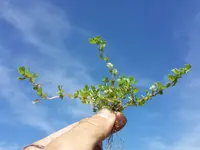
Slender parsley-piert (Alchemilla australis) is a small, low-growing annual herb in the rose family. It forms delicate mats with finely divided, parsley-like leaves and tiny, inconspicuous greenish flowers.
This species is typically found in dry, open, often disturbed sites such as sandy fields, paths, or light grassland in parts of Europe and nearby regions. It tends to be short-lived and can appear opportunistically where soil is thin or slightly compacted.
Its modest size, tolerance of poor soils, and self-seeding habit can make it easy to maintain once established. Understanding how to care for Slender parsley-piert mainly involves providing well-drained soil and not overwatering.

Care Difficulty
Moderate Care

Light Preference
Partial Shade

Water Requirements
Moderate Water

Temperature Preference
Cool Climate

Hardiness Zone
5–8

Soil Texture
Sandy, Loamy, Silty

Soil pH
Acidic (5.5–6.5), Slightly acidic (6.5–7.0)

Soil Drainage
Moist but well-drained

Fertilization
Minimal (feed rarely)
Scan your plant to receive care tips personalized for your specific plant
Available on iOS and Android
Alchemilla australis prefers bright, cool conditions with protection from intense midday sun.
This species prefers consistently moist but not saturated soil throughout the growing season.
This plant is a cool-temperate species that tolerates a wide range of outdoor conditions.
This species tolerates a wide humidity range and usually does not need special humidity management indoors or outdoors.
This small species prefers light, free-draining mineral soil that does not stay wet for long.
This small, shallow-rooted species is suitable for container growing outdoors.
Alchemilla australis is a small, nutrient-efficient wild species that benefits from only light feeding in lean soils.
Pruning Alchemilla australis is simple and mainly helps keep the clump compact and healthy.
This species is usually grown in the ground, so care focuses more on dividing and transplanting clumps than on routine repotting.
Alchemilla australis is commonly propagated by seed and by division of established clumps.
Alchemilla australis is generally cold hardy in temperate climates and needs minimal winter attention in the ground.

Plant Health Check
Not sure what's wrong with your plant? Check your plant's health inside the app.
This species is naturally distributed in parts of southern and central Europe, where it typically grows in grassy, open habitats and light woodland edges rather than in very wet sites like some other lady’s mantle species.
Compared with the more common garden lady’s mantle, this plant has more finely lobed, less dramatically cupped leaves, which makes it easier for botanists to separate it from closely related Alchemilla species in the field.
Some botanists have treated this plant under slightly different names or grouped it with closely related taxa, reflecting ongoing revision in the complex Alchemilla genus, which contains many similar, regionally adapted species.
This species is a small, short-lived annual that often self-seeds, so it can appear in thin lawns, cracks, and bare soil. It does not form dense, smothering mats but can become a light nuisance in disturbed sites.
Keep your plants happy and healthy with plant identification, disease detection, and easy care guidance.

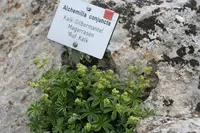
Silver Lady's-mantle
Alchemilla conjuncta
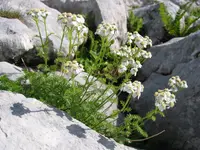
Achillea clusiana
Achillea clusiana
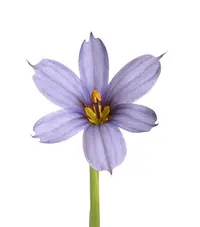
Narrowleaf blue-eyed grass
Sisyrinchium angustifolium

Ajuga lupulina
Ajuga lupulina
sandbog deathcamas
Zigadenus glaberrimus
rasp-leaf pelargonium
Pelargonium radens
fan lady's mantle
Alchemilla flabellata
Achillea salicifolia
Achillea salicifolia