Pinch For Bushiness
Pinch out the very tips of young stems once they reach 10–15 cm to encourage branching and a denser, more productive clump of growth.

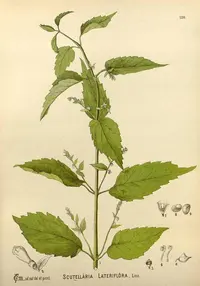
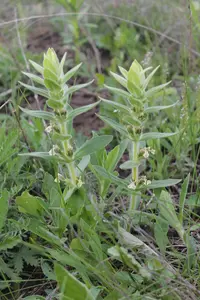
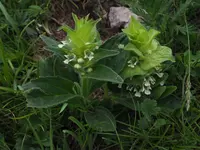
Mad dog skullcap (Scutellaria lateriflora) is a small, clump-forming perennial herb in the mint family, valued mainly as a traditional medicinal plant. It usually has slender, branching stems with opposite leaves and small blue to violet tubular flowers held along one side of the stems. In the wild, it occurs in damp meadows, stream edges, and open woodland areas across eastern North America. It prefers consistently moist, well-drained soil and light shade to partial sun, which makes it moderately easy to care for mad dog skullcap in suitable conditions. Its relatively delicate roots and need for steady moisture can make it less forgiving of neglect or drought.

Care Difficulty
Moderate Care

Light Preference
Partial Shade

Water Requirements
Keep Soil Moist

Temperature Preference
Cold Hardy

Hardiness Zone
3–9

Soil Texture
Loamy, Silty, Organic-rich

Soil pH
Acidic (5.5–6.5), Slightly acidic (6.5–7.0)

Soil Drainage
Moist but well-drained

Fertilization
Minimal (feed rarely)
Scan your plant to receive care tips personalized for your specific plant
Available on iOS and Android
This moisture-loving perennial prefers gentle, indirect light rather than intense, all-day sun.
This species prefers evenly moist soil but reacts poorly to both drought and standing water.
This temperate perennial handles a wide range of outdoor conditions but grows best in mild to warm weather.
This species tolerates a fairly wide humidity range and does not usually need special humidity management outdoors.
Scutellaria lateriflora prefers consistently moist, loose soil that drains well but never dries out completely.
This species adapts well to container growing if given enough root depth and steady moisture.
This North American native needs modest feeding; many healthy clumps grow with minimal fertilizer in good soil.
Pruning Scutellaria lateriflora is simple and mainly supports tidy growth and flowering.
This species is more often grown in beds, where it prefers stable conditions and infrequent disturbance.
Reproduction of this herb is commonly done by division, seeds, or softwood cuttings.
This hardy perennial tolerates typical winters in most temperate regions with minimal intervention.

Plant Health Check
Not sure what's wrong with your plant? Check your plant's health inside the app.
Each small blue flower has a distinctive hollow, helmet-like cap called a scutellum on the upper sepal, which gives the whole genus its name and likely helps shed excess water from the blossom.
This species is naturally found along streams, marsh edges, and wet meadows in eastern North America, often forming loose colonies in consistently moist, partially shaded habitats.
Research has shown that this species opens more flowers at night than during the day, indicating a circadian rhythm in its blooming pattern and suggesting adaptation to specific nighttime pollinators.

Chemical analyses have identified a consistent profile of flavonoids such as baicalin and wogonin in this species, making it a useful reference plant in studies on quality control and authentication of skullcap products to distinguish it from misidentified or adulterant species.
This species is valuable for small native bees and some butterflies that visit its tubular blue flowers for nectar. Growing mad dog skullcap in mixed borders or naturalized areas supports local pollinator diversity and improves overall garden ecology.
Keep your plants happy and healthy with plant identification, disease detection, and easy care guidance.