Narrowleaf blue-eyed grass Care (Sisyrinchium angustifolium)

Also known as: narrow-leaved blue-eyed grass
Narrowleaf blue-eyed grass

About Narrowleaf blue-eyed grass

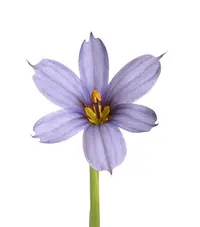
Narrowleaf blue-eyed grass (Sisyrinchium angustifolium) is a small, clumping perennial in the iris family, not a true grass. It forms narrow, grass-like leaves and produces delicate, star-shaped blue to violet flowers with yellow centers in late spring to early summer.

This species is native to moist meadows, open woods, and stream edges in eastern North America. It tends to stay compact and spreads slowly, which makes it easier to manage in garden beds and borders.

The plant is generally easy to grow if given sun to light shade, moderately moist soil, and good drainage. Gardeners who learn how to care for Narrowleaf blue-eyed grass often find it a reliable accent for naturalistic plantings and pollinator gardens.

Main Plant Requirements

Care Difficulty

Easy Care

Light Preference

Full Sun

Water Requirements

Moderate Water

Temperature Preference

Cold Hardy

Hardiness Zone

4–9

Soil Texture

Sandy, Loamy, Rocky

Soil pH

Acidic (5.5–6.5), Slightly acidic (6.5–7.0)

Soil Drainage

Moist but well-drained

Fertilization

Minimal (feed rarely)

Get Personalized Care Plan

Scan your plant to receive care tips personalized for your specific plant

Available on iOS and Android

How to Care for the Narrowleaf blue-eyed grass

This sun-loving perennial grows best in open sites with consistent light exposure.

  • Provide 6–8 hours of direct sun daily; morning sun with light afternoon shade suits Narrowleaf blue-eyed grass in hotter regions.
  • In cooler climates it can handle full sun all day, but in zones with very strong summer sun, give protection from harsh midafternoon rays.
  • Plants grown in too much shade develop floppy, weak foliage and fewer flowers; choose a spot with only light dappled shade at most.

This species prefers evenly moist but not saturated soil, especially during active growth and flowering.

  • Allow the top 2–4 cm of soil to dry before watering, then soak the root zone thoroughly so moisture reaches 10–15 cm deep.
  • In spring and early summer, increase watering during dry spells; reduce frequency in late summer and fall as growth slows and rains increase.
  • Soil must drain well; yellowing, limp leaves or a sour smell suggest overwatering, while crisp leaf tips and drooping foliage signal drought stress.

This hardy perennial tolerates a broad temperature range but grows best in moderate conditions.

  • Active growth and flowering occur around 60–75°F (16–24°C); consistent temperatures in this range support strong foliage and bloom production.
  • Established clumps typically survive down to about -20°F (-29°C) with mulching, though new plantings benefit from protection in their first winter.
  • In summer, plants manage brief heat up to about 90°F (32°C) if soil stays slightly moist; prolonged extreme heat or hot, dry wind can scorch foliage and shorten flowering.

This species is adaptable and usually does not require special humidity management outdoors.

Sisyrinchium angustifolium prefers lean, well-drained mineral soils that do not stay wet for long.

  • Use sandy or sandy-loam soil with low to moderate organic matter to mimic its native meadow and roadside habitats.
  • Ensure sharp drainage; mix in coarse sand or fine grit where clay is present to prevent standing water around the roots.
  • Aim for slightly acidic to neutral pH, roughly 6.0–7.0, avoiding strongly alkaline or highly amended garden soils.
  • Improve aeration by loosening compacted topsoil before planting and avoid locations that receive regular runoff or pooling water.

This species can be grown in containers, especially for small garden spaces or to control spread.

  • Choose a pot at least 20–25 cm deep to accommodate its fibrous roots and prevent the clump from drying out too quickly.
  • Use a heavier material pot, such as clay or ceramic, to reduce tipping risk in windy sites and stabilize the narrow foliage clumps.
  • Elevate the container slightly on pot feet or bricks so drainage holes stay clear and excess water escapes quickly after rain or watering.

This North American native needs only light feeding in most garden soils.

  • Use a balanced, low-strength fertilizer (such as 10-10-10) at half label rate once in early spring as growth begins.
  • In lean or sandy soils, supplement with a thin layer of compost around clumps to support flowering in Narrowleaf blue-eyed grass.
  • Avoid high-nitrogen products, which encourage weak, floppy foliage rather than flowers.
  • Stop feeding by late summer and do not fertilize during winter dormancy.

Pruning needs for Sisyrinchium angustifolium are minimal and mainly cosmetic.

  • In late fall or very early spring, cut back dead or collapsed foliage to just above soil level using clean hand pruners or scissors.
  • Remove spent flower stalks during the growing season to keep clumps tidy and encourage a neater appearance.
  • Thin out congested fans every few years by removing the weakest or most crowded shoots at the base.
  • Discard any diseased or damaged material, rather than composting it, to reduce disease carryover.

This species is usually grown in the ground, with transplanting needed only every few years.

  • Plan division and transplanting in early spring or early fall when temperatures are mild and soil is workable.
  • Lift and split crowded clumps every 3–4 years, especially if flowering declines or centers die out.
  • Replant divisions at the same depth in well-drained soil, spacing 15–20 cm apart to reduce competition.
  • Water thoroughly after transplanting and keep soil evenly moist for 1–2 weeks to limit root stress.

Sisyrinchium angustifolium is commonly propagated by division and seeds.

  • Divide mature clumps in early spring or early fall, ensuring each division has several fans and healthy roots.
  • Replant divisions promptly in loose, well-drained soil and water to settle air pockets.
  • Sow fresh seed in fall outdoors or in trays kept cool; light aids germination, so cover only very lightly.
  • Keep seed trays just moist, not waterlogged, until seedlings develop several true leaves.

This hardy perennial needs little winter care in most temperate climates.

  • Established plants tolerate typical frosts in USDA zones 4–9 without special protection.
  • After hard frost, allow foliage to die back naturally, then cut it down close to the soil line if desired.
  • Apply a light 2–5 cm mulch layer in colder areas to moderate soil temperature and reduce heaving.
  • Container-grown plants benefit from moving to a sheltered, unheated but frost-free spot in very cold regions.

Care Tips

Clump Division Timing

Divide older clumps every 3–4 years in early spring before rapid growth, replanting outer vigorous fans at the same depth to keep flowering strong and prevent overcrowding dieback in the center.

Seedling Self-Sowing Control

If you want controlled patches, deadhead spent flowers before seed set in late spring but leave a few seed heads at the edges of beds if naturalized drifts are acceptable.

Mower-Safe Placement

When planting in lawns or meadow-style areas, place clumps just outside regular mower paths or raise the mower height to avoid repeatedly scalping foliage, which weakens plants over time.

Winter Crown Protection

In colder regions with freeze–thaw cycles, apply a light, airy mulch such as shredded leaves around but not over the crowns in late fall to reduce heaving of roots out of the soil.

Targeted Pest Monitoring

Inspect foliage bases and flower stems every few weeks in spring for aphids or leaf spots, and, when caring for Narrowleaf blue-eyed grass in mixed borders, remove nearby dense weeds that can harbor pests and keep leaves damp for long periods.

Common Pests and Diseases

Rust

This disease causes yellow to orange-brown pustules on leaves and stems, often leading to premature leaf yellowing and decline. Symptoms include scattered spots that may merge, giving foliage a tired or scorched appearance.

Solution

Remove and dispose of heavily infected leaves to reduce spore spread, and avoid overhead watering so foliage dries quickly. Improve spacing and air movement around clumps, and if rust recurs, apply a sulfur or copper-based fungicide labeled for ornamental perennials during moist, cool periods as part of Sisyrinchium angustifolium care instructions.

Leaf spot

This disease produces small, water-soaked or tan to brown lesions on leaves that can enlarge and coalesce under prolonged humidity. Symptoms include thinning clumps and foliage that looks mottled or tattered over time.

Solution

Cut back and discard affected foliage to reduce inoculum, and irrigate at soil level rather than from above. Thin crowded plantings to improve airflow, and in persistent cases use a broad-spectrum ornamental fungicide according to label directions during wet weather cycles.

Spider mites

These insects feed on the narrow leaves, causing fine stippling, a dull gray-green cast, and in heavier infestations, fine webbing along the leaf bases. This pest is more common in hot, dry, sunny sites with stressed plants.

Solution

Spray foliage thoroughly with a strong stream of water, especially the undersides of leaves, to dislodge mites and webbing. Maintain moderate soil moisture, increase humidity slightly if grown in containers, and use insecticidal soap or a horticultural oil labeled for mites if populations rebound.

Aphids

These insects cluster on young shoots and flower stalks, sucking sap and causing distortion, sticky honeydew, and sometimes sooty mold on nearby foliage. This pest can also weaken flowering if populations are high on buds.

Solution

Rinse colonies off with a firm water spray, repeating every few days until numbers drop. Encourage or introduce natural enemies such as lady beetles, and if needed apply insecticidal soap or a light horticultural oil, coating stems and undersides of leaves in the early morning or evening to prevent leaf burn.

Interesting Facts

Iris family imposter

This species looks like a small grass tuft, but botanically it is in the iris family (Iridaceae) and forms flat, iris-like fans of leaves rather than true grass blades.

Spring pollinator magnet

Its small blue-violet flowers with yellow centers open mainly on sunny mornings in late spring, offering accessible nectar and pollen to native bees and small pollinators in meadows and open woods.

Moist meadow specialist

In the wild, this plant commonly occurs along stream banks, moist prairies, and damp open wood edges in eastern North America, showing a preference for sites that are not waterlogged but do not dry out quickly.

FAQs about Narrowleaf blue-eyed grass

Poor flowering is usually linked to insufficient light, overly rich or high-nitrogen soil, or overcrowded clumps. Division every 3–4 years, moderate fertility, and full sun exposure typically restore normal bloom density and flower production.

Grow Healthy Plants with Botan Care

Keep your plants happy and healthy with plant identification, disease detection, and easy care guidance.


Botan plant care app — identify plants on mobile

Explore More Plants