Alchemilla hoppeana Care

Alchemilla hoppeana

About Alchemilla hoppeana

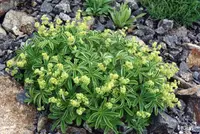
Alchemilla hoppeana is a compact alpine perennial in the rose family, forming low, dense clumps of softly hairy, rounded leaves. The foliage often holds water droplets, giving the plant a distinctive beaded look after rain or watering.

It produces small, yellow-green flower clusters above the foliage in late spring or summer, adding a fine-textured accent rather than bold blooms. This species is native to rocky, mountainous regions of Europe, where it grows in cool, well-drained, often gravelly soils.

Its slow, tidy growth habit and general toughness make it relatively easy to manage in rock gardens, troughs, and border edges. Understanding how to care for Alchemilla hoppeana mainly involves providing good drainage, moderate moisture, and light that is not excessively hot or harsh.

Main Plant Requirements

Care Difficulty

Easy Care

Light Preference

Partial Sun

Water Requirements

Moderate Water

Temperature Preference

Cold Hardy

Hardiness Zone

4–8

Soil Texture

Loamy, Rocky, Sandy

Soil pH

Acidic (5.5–6.5), Slightly acidic (6.5–7.0)

Soil Drainage

Moist but well-drained

Fertilization

Minimal (feed rarely)

Get Personalized Care Plan

Scan your plant to receive care tips personalized for your specific plant

Available on iOS and Android

How to Care for the Alchemilla hoppeana

This alpine perennial prefers cool, bright conditions with gentle sun exposure for best foliage color.

  • Provide 3–5 hours of direct morning sun with light shade or filtered light from midday onward, especially in warmer zones.
  • Tolerates partial shade, but in very dense shade stems may stretch and flowering of Alchemilla hoppeana can decline noticeably.
  • In hot summers, protect from strong afternoon sun to prevent leaf scorch; use nearby taller plants or a fence to cast shade, especially June–August.

Moist, cool soil suits this plant, but it does not tolerate waterlogged conditions.

  • Water when the top 2–3 cm of soil feels dry, aiming for consistently moist but not soggy soil during active growth in spring and early summer.
  • Ensure free-draining soil with added grit or organic matter so excess water moves away from the roots and standing water never persists after rain.
  • Reduce watering in late fall and winter, watching for limp, dull leaves as a sign of underwatering and yellowing, soft foliage as a sign of overwatering.

This hardy alpine species is adapted to cool summers and cold winters in outdoor beds or rock gardens.

  • Active growth is strongest in cool conditions around 50–70°F (10–21°C), with flower and leaf quality best when summer heat is moderate.
  • The plant tolerates winter lows down to about -20°F (-29°C) with good drainage; mulch lightly in colder microclimates to protect crowns.
  • In heat above 80–85°F (27–29°C), growth may slow and leaves can scorch, so provide extra shade and maintain soil moisture without waterlogging.

This alpine species handles typical outdoor humidity and does not need special moisture control.

This plant prefers a free-draining, moderately fertile mineral soil that never stays waterlogged.

  • Use a loamy or sandy loam soil enriched with a modest amount of well-rotted compost or leaf mold.
  • Ensure sharp drainage by incorporating coarse sand or fine grit, especially in wetter climates or heavy native soils.
  • Aim for slightly acidic to neutral pH, around 6.0–7.0, avoiding highly acidic or chalky extremes.
  • Avoid compacted, heavy clay or sites where meltwater or rain stands for more than a few hours, as roots are prone to rot.

This species adapts well to container growing outdoors when drainage and root space are managed carefully.

  • Choose a wide, shallow pot to suit its clumping, spreading root system and prevent the crown from sitting in deep, wet compost.
  • Use a heavy clay or stone container in windy sites so the low, leafy mound is not shifted or tipped by gusts.
  • Raise the pot slightly on feet or bricks so drainage holes stay clear and meltwater or rain can escape freely in cold seasons.

This alpine perennial grows well in modest soils and usually needs only light feeding for steady growth.

  • Use a balanced, slow-release fertilizer (around 10-10-10) or a thin layer of compost in early spring as new growth starts.
  • Apply once per year in the growing season; heavy feeding is unnecessary and can cause lush but weak foliage.
  • Dilute liquid feeds to 1/2 strength if used, and water beforehand to limit root burn.
  • Stop feeding by late summer so Alchemilla hoppeana can harden growth before colder weather.

Pruning keeps Alchemilla hoppeana compact, tidy, and encourages fresh foliage.

  • Cut back spent flower stems in mid to late summer to reduce self-seeding and maintain a neat mound.
  • Remove dead, damaged, or yellowing leaves at the base throughout the season using clean, sharp scissors or hand pruners.
  • Shear the entire clump lightly after flowering to stimulate new foliage and a denser shape.
  • Avoid cutting into crowns too hard; leave some healthy leaves to support recovery.

This species is most often grown in rock gardens or borders, so transplanting is more common than repotting.

  • Plan to lift and divide clumps every 3–4 years in early spring or early fall when growth is slow and temperatures are mild.
  • Look for signs such as congested crowns, bare centers, or reduced vigor indicating the plant benefits from relocation or division.
  • Dig around the clump with a hand fork, lift gently, and tease roots apart into smaller sections with several buds each.
  • Replant divisions at the same depth, water thoroughly, and shade lightly for a few days to reduce transplant shock.

Gardeners most often increase Alchemilla hoppeana by division, though seed is also possible.

  • Divide mature clumps in early spring or early fall, when soil is moist and temperatures are cool but not freezing.
  • Lift the plant, then split the root mass into sections, each with healthy buds and roots, and replant promptly.
  • For seed, sow fresh seed on the surface of gritty, well-drained mix; light improves germination.
  • Keep seed trays evenly moist at 60–65°F with good air flow, and thin seedlings once they produce true leaves.

This alpine species is generally cold hardy in temperate climates and needs minimal winter attention in the ground.

  • In regions with severe frost, add a 3–5 cm layer of mulch or grit around the crown to buffer freeze–thaw cycles.
  • Avoid waterlogged soil in winter, as saturated conditions can damage roots more than low temperatures.
  • Move container-grown plants to a sheltered, unheated spot with good drainage to prevent pot freeze damage.

Care Tips

Rockery positioning

Plant in pockets of a rock garden or along path edges where rainwater naturally drains away, as this helps prevent crown rot and keeps the foliage compact and tidy when growing Alchemilla hoppeana.

Shear after flowering

Once most blooms fade, shear the entire clump back by about one-third to remove spent flowers and encourage a fresh flush of compact foliage instead of a straggly, self-seeding patch.

Self-seeding control

If you want to limit spread, deadhead the flower stems as soon as the seed heads start to dry, collecting them in a bucket so seeds do not drop into cracks or gravel.

Snow cover management

In cold regions, allow natural snow cover to remain over the plant as insulation but brush off heavy wet snow from nearby stones or edging that could slide and crush the crown.

Division for vigor

Every 3–5 years, lift and divide congested clumps in early spring, discarding woody centers and replanting only firm outer sections to maintain dense, healthy growth and flowering.

Common Pests and Diseases

Powdery mildew

This disease appears as a white to gray powdery coating on leaves, especially in warm, dry conditions with poor air circulation. Symptoms include distorted new growth and a general decline in vigor if infection is heavy.

Solution

Remove and dispose of affected leaves, then thin or divide crowded clumps to improve airflow and reduce humidity around foliage. Water at soil level in the morning, avoid wetting leaves, and apply a sulfur or potassium bicarbonate-based fungicide if conditions favor repeated outbreaks, following label directions carefully as part of broader Alchemilla hoppeana care instructions.

Leaf spot

This disease causes small brown to purple spots on leaves that may merge into larger blotches, making the foliage look tired and patchy. Symptoms include premature yellowing and early dieback of lower leaves, especially in damp, shaded positions.

Solution

Cut off and discard badly spotted leaves to reduce the source of infection and keep the crown open so leaves dry quickly after rain or irrigation. Avoid overhead watering, space plants so they are not overcrowded, and if the problem recurs, use a copper or chlorothalonil-based fungicide on new growth during wet periods according to the product label.

Aphids

These insects cluster on young stems and leaf undersides, sucking sap and causing curling, distortion, and sticky honeydew on nearby foliage. This pest can also attract sooty mold and ants that farm them for honeydew.

Solution

Rinse colonies off with a firm stream of water in the morning, repeating every few days until populations drop. For persistent infestations, treat soft growth with insecticidal soap or a light horticultural oil, ensuring thorough coverage of leaf undersides and tender shoots while avoiding application in full midday sun.

Slugs and snails

These pests chew irregular holes in leaves, often starting at the edges, and can severely disfigure young foliage in moist, shaded garden sites. Symptoms include slime trails on or around the plant and missing sections of low leaves.

Solution

Hand-pick slugs and snails in the evening or early morning and reduce hiding spots such as dense debris around the clump. Use barriers like copper tape around containers, set out iron phosphate-based slug baits according to label instructions, and keep mulch thin so the soil surface dries slightly between waterings.

Interesting Facts

High alpine specialist

This lady’s mantle is naturally restricted to high-elevation limestone and siliceous scree slopes in the Eastern Alps, typically above the treeline, where it tolerates strong winds, intense sun, and large daily temperature fluctuations.

Dense silver hairs

Leaves and flowering stems are covered with fine, dense hairs that give the plant a silvery-green appearance and help reduce water loss and protect tissues from strong alpine radiation.

Compact cushion growth

Unlike many related Alchemilla species, it forms tight, low cushions or mats that anchor into rocky crevices, a growth form that stabilizes soil and reduces mechanical damage from snow and shifting gravel.

FAQs about Alchemilla hoppeana

This species forms low, slowly spreading clumps via short rhizomes. It can gently widen over time but is not considered aggressive. Edges are easy to control by lifting or trimming outer sections every few years.

Grow Healthy Plants with Botan Care

Keep your plants happy and healthy with plant identification, disease detection, and easy care guidance.

Botan plant care app — identify plants on mobile

Explore More Plants