Use Wide Containers
Choose a shallow, wide pot to allow the fibrous roots to spread horizontally, which keeps the plant compact and encourages more trailing stems along the rim.

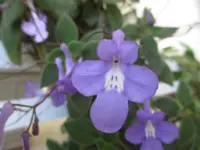
False African violet, Streptocarpus saxorum, is a compact, trailing houseplant from the cloud forests of eastern Africa. It belongs to the same family as true African violets but forms arching stems instead of rosettes.
Plants carry many small, slightly fuzzy leaves and produce clusters of lavender to pale purple tubular flowers over a long season. The soft foliage and delicate stems give it a light, cascading look that suits hanging baskets and shelf edges.
This species is valued for its long bloom period and moderate growth rate, which make it manageable for most indoor growers. It generally prefers bright, indirect light, evenly moist but not soggy soil, and stable indoor temperatures, so learning how to care for False African violet is straightforward for attentive owners.

Care Difficulty
Moderate Care

Light Preference
Bright Indirect Light

Water Requirements
Moderate Water

Temperature Preference
Tropical / Frost Sensitive

Hardiness Zone
11–12

Soil Texture
Loamy, Peaty, Organic-rich

Soil pH
Acidic (5.5–6.5), Slightly acidic (6.5–7.0)

Soil Drainage
Moist but well-drained

Fertilization
Moderate (every 2–4 weeks)
Scan your plant to receive care tips personalized for your specific plant
Available on iOS and Android
Streptocarpus saxorum grows best in bright, indirect light that mimics a lightly shaded forest edge.
Watering for Streptocarpus saxorum should keep the root zone lightly moist but never saturated.
This species prefers mild, stable temperatures without sudden swings or exposure to frost.
This plant prefers moderate, stable humidity and reacts if air becomes too dry.
Streptocarpus saxorum grows best in a light, airy, fast-draining mix that holds some moisture but never stays soggy.
This species suits container growing very well, especially for shelves and hanging positions.
Streptocarpus saxorum benefits from modest, consistent feeding during its active growing season.
Light, ongoing pruning keeps Streptocarpus saxorum compact and flowering well.
This plant prefers slightly snug pots and only occasional repotting.
Streptocarpus saxorum is most often propagated from cuttings taken during the growing season.
This species is frost-sensitive and needs mild, stable conditions over winter.

Plant Health Check
Not sure what's wrong with your plant? Check your plant's health inside the app.
In its native habitat of eastern Africa, this species often grows in humus pockets in shaded rock crevices and cliff faces, anchoring shallow roots into moss and leaf litter rather than deep soil.
The plant has very delicate, fleshy stems and slightly brittle leaves that break easily, an adaptation to fast, low-energy growth in sheltered, humid microhabitats where strong structural support is less critical.
Under stable, bright-indirect light and mild temperatures, this species can produce new flower stalks almost continuously rather than in a single, synchronized blooming season.
Lack of blooms often comes from low light, heavy feeding with high-nitrogen fertilizer, or an old, exhausted plant. Regular deadheading and moderate feeding with a balanced, dilute fertilizer support flowering when overall Streptocarpus saxorum care conditions are suitable.
Keep your plants happy and healthy with plant identification, disease detection, and easy care guidance.