eightpetal mountain-avens Care (Dryas octopetala)

Also known as: Mountain Avens
eightpetal mountain-avens

About eightpetal mountain-avens

Eightpetal mountain-avens (Dryas octopetala) is a low, mat-forming evergreen shrub from cold, open habitats such as Arctic tundra and alpine slopes. It spreads slowly, creating dense cushions of small, leathery leaves.

In late spring to summer it bears white, eight-petaled flowers with yellow centers held on short stems above the foliage. The seed heads are fluffy and ornamental.

This species prefers full sun, cool conditions, and sharply drained, often rocky or calcareous soil. These traits make it rewarding but somewhat specialized for gardeners learning how to care for eightpetal mountain-avens.

Main Plant Requirements

Care Difficulty

Moderate Care

Light Preference

Full Sun

Water Requirements

Low Water

Temperature Preference

Cold Hardy

Hardiness Zone

2–7

Soil Texture

Sandy, Rocky, Loamy

Soil pH

Neutral (7.0), Slightly alkaline (7.0–7.5)

Soil Drainage

Well-drained

Fertilization

Minimal (feed rarely)

Get Personalized Care Plan

Scan your plant to receive care tips personalized for your specific plant

Available on iOS and Android

How to Care for the eightpetal mountain-avens

This alpine shrub needs abundant light that mimics open, rocky mountain slopes.

  • Provide full sun for 6–8 hours daily; in hotter lowland sites, allow light afternoon shade to prevent leaf scorch.
  • Site eightpetal mountain-avens in exposed, unshaded positions rather than under trees, as consistent shade reduces flowering and causes weak, leggy growth.
  • In winter, unobstructed low-angle sun is beneficial; in hotter climates, prioritize strong morning sun with some protection from intense late-afternoon summer sun.

This species is adapted to dry, well-drained, often rocky soils and dislikes prolonged moisture around the roots.

  • Allow the top 3–5 cm of soil to dry fully between waterings; in natural or rock garden settings, established plants often cope with rainfall alone.
  • Use sharply draining, gritty soil so water runs through within seconds; standing water or compacted soil greatly increases root rot risk in Dryas octopetala.
  • In cool, wet seasons, reduce or stop supplemental watering and watch for yellowing, soft foliage as a sign of overwatering; crisp, curling leaves indicate drought stress.

This cold-adapted plant prefers cool conditions and tolerates significant frost once established.

  • Optimal active growth occurs around 45–60°F (7–16°C), typical of cool spring and early summer in alpine or subarctic climates.
  • Mature plants tolerate at least 0°F (−18°C) and often much lower under snow cover; snow acts as insulation against extreme cold and drying winter winds.
  • Heat tolerance is limited; sustained temperatures above 75–80°F (24–27°C) can stress plants, so provide excellent air movement and avoid heat-reflecting sites such as south-facing walls in hot summers.

This alpine shrub prefers cool, dry air and does not need elevated humidity.

This mat-forming shrub needs very free-draining, mineral soil to avoid root problems.

  • Use a gritty mix based on sandy or gravelly loam with 40–60% mineral aggregate such as sharp sand, grit, or fine gravel.
  • Keep drainage extremely sharp; raised beds or rock garden pockets prevent water from lingering around the roots.
  • Aim for slightly alkaline to alkaline conditions (pH 7.5–8.5), often achieved with limestone chips or crushed coral in the mix.
  • Avoid dense, peat-heavy, or clay soils, which compact easily, reduce aeration, and quickly lead to root rot in Dryas octopetala.

This species can grow in containers if the setup mimics a cold, stony alpine slope.

  • Choose a wide, shallow container to suit its spreading, mat-forming habit and prevent stagnant moisture in deep soil columns.
  • Use a heavy, rigid pot or top-dress with gravel to keep the container stable against wind and the plant’s lateral spread.
  • Drill or confirm multiple side and base drainage holes so meltwater or rain exits rapidly, mirroring its natural scree habitat.

This alpine shrub needs very modest feeding, as eightpetal mountain-avens is adapted to nutrient-poor soils.

  • Use a light top-dressing of fine compost or low-strength balanced NPK (around 5-5-5) in early spring.
  • Apply once at the start of the growing season; avoid repeated applications through summer.
  • Dilute liquid feeds to 25–50% strength to prevent root burn and coarse, floppy growth.
  • Do not feed in winter dormancy, and avoid high-nitrogen products that encourage lush, weak foliage.

Dryas octopetala needs only light pruning to keep the mat dense and healthy.

  • Best time is late winter to very early spring, before new growth extends.
  • Use clean, sharp scissors or hand shears to trim dead, damaged, or winter-burned shoots.
  • Thin out sparse or leggy patches slightly to maintain a low, compact carpet and encourage new flowering growth.
  • After flowering, lightly shear off spent flower stalks if a tidier appearance is desired.

This species is usually grown in rock gardens or troughs and dislikes frequent disturbance.

  • Transplant only when roots circle the pot, drainage is poor, or growth declines despite good light.
  • Aim to move plants in early spring or early fall, avoiding hot, dry periods.
  • Typical interval for container plants is every 3–4 years into only a slightly larger, very free-draining, gritty mix.
  • Handle the root ball gently, keep roots shaded and moist during the move, then water lightly and allow soil to drain well.

Dryas octopetala propagation is possible by seed, layering, or careful division, though speed is moderate.

  • Sow fresh seed in late summer to fall in a gritty, well-drained mix, and allow natural cold stratification outdoors.
  • Keep seed trays cool and evenly moist; germination may be slow and irregular.
  • For layering, pin down flexible stems into gritty soil in spring, then sever and transplant once well rooted.
  • Divide only older, vigorous mats in early spring, replanting small sections carefully to reduce root damage.

This alpine shrub is very cold hardy and normally needs little special winter care in the ground.

  • Tolerates hard frosts and snow once established, provided drainage is excellent and soil does not stay waterlogged.
  • In very wet winters, use a gravel mulch around the crown to keep foliage off saturated soil.
  • Container plants in extremely cold or windy sites can be overwintered in a cold frame or unheated, bright shelter.

Care Tips

Rocky crevice planting

Tuck plants into narrow rock crevices or between stones so roots stay cool and anchored while foliage gets maximum light, mimicking the natural alpine habitat and greatly improving long-term vigor.

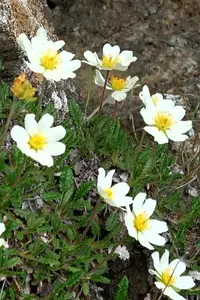
Gravel surface mulch

After planting, add a 1–2 cm layer of sharp grit or small gravel around the crowns to keep leaves off wet soil, reduce rot risk, and discourage moss and algae from smothering the mat.

Snow and ice management

In colder regions, site plants where snow cover is stable and not repeatedly piled and scraped by shoveling or plows, since repeated mechanical damage under heavy, shifting snow can tear the woody mat.

Careful weed exclusion

Hand-weed regularly using narrow tools and remove invading grasses early, because aggressive roots can quickly infiltrate and break up the tight cushion, making caring for eightpetal mountain-avens more difficult over time.

Rooted division renewal

Every 4–6 years, lift and replant only the youngest, well-rooted outer sections of the mat into fresh gritty soil to rejuvenate growth and maintain dense, flowering cushions without bare centers.

Common Pests and Diseases

Leaf-spotting fungi

This disease causes irregular brown or black spots on older leaves, often with a yellowish halo and slight tissue collapse in humid weather.

Solution

Remove and discard affected leaves, keep the foliage as dry as possible, and improve air movement around plants; in persistently wet sites, thin surrounding vegetation and avoid overhead watering to reduce infection pressure.

Rust

This disease produces small orange to brown pustules on the undersides of leaves, sometimes leading to premature leaf drop in moist, cool conditions.

Solution

Prune and remove infected leaves, avoid wetting the foliage, and space plants to increase air circulation; in repeatedly affected plantings, relocate plants to a sunnier, better-drained position to interrupt the rust life cycle.

Caterpillars

These insects chew irregular holes in leaves and flower buds, which can make compact mats look ragged when populations are high.

Solution

Hand-pick and remove visible caterpillars, encourage natural predators such as birds, and, if damage is severe, use a targeted biological product containing Bacillus thuringiensis (Bt) applied according to label directions on affected foliage.

Aphids

These insects cluster on young shoots and flower stems, sucking sap and sometimes causing leaf curling or light stickiness on the foliage surface.

Solution

Rinse colonies off with a firm stream of water, pinch back heavily infested shoot tips, and support plant health through full sun and sharp drainage; in persistent cases, use insecticidal soap sprayed directly on the aphids, repeating as needed.

Interesting Facts

Ice age indicator

Fossil leaf remains of this species are key indicators in Quaternary geology, helping scientists reconstruct past glacial and tundra habitats across Europe and North America.

Nitrogen-fixing partnership

Its roots host symbiotic actinobacteria in the genus Frankia, which convert atmospheric nitrogen into a form the plant can use, allowing it to thrive in very nutrient-poor, rocky soils.

Specialized seed dispersal

Each seed is attached to a long, feathery style that twists as it dries, helping the seed drill into crevices in the soil and also aiding in wind dispersal across open alpine ground.

Botan icon

Did you know?

This species often forms low, mat-like carpets that can stabilize loose, newly exposed glacial or scree substrates, making it a key pioneer plant in primary succession of Arctic and alpine landscapes.

FAQs about eightpetal mountain-avens

This species forms slow, low mats and is not aggressive in most gardens. It spreads gradually by short stolons and woody stems, usually staying within bounds if given rocky, well-drained conditions and not heavily fertilized.

Grow Healthy Plants with Botan Care

Keep your plants happy and healthy with plant identification, disease detection, and easy care guidance.

Botan plant care app — identify plants on mobile

Explore More Plants