Rocky slope placement
Plant bulbs in a sloped or raised, rocky bed so winter and spring moisture drains away quickly, reducing bulb rot and mimicking the species’ natural granite outcrop habitat.

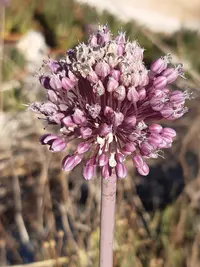
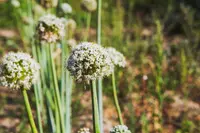
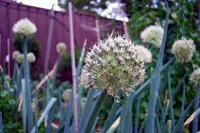
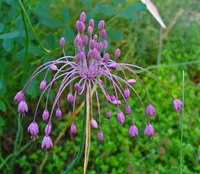
Burlew's onion, Allium burlewii, is a bulb-forming perennial wild onion native to rocky slopes and open hillsides of California. It forms clumps of narrow, grass-like leaves and sends up slender stems topped with rounded clusters of small, usually pink to purple flowers.
This species is adapted to dry, well-drained, often gritty soils and seasonal moisture, which influences how to care for Burlew's onion in gardens. It tends to stay compact, making it suitable for rock gardens or naturalistic plantings where conditions mimic its native habitat.
Plants are generally drought-tolerant once established but dislike heavy, waterlogged soil. In cultivation, success depends mainly on providing strong light, lean soil, and good drainage rather than frequent watering or fertilizing.

Care Difficulty
Moderate Care

Light Preference
Full Sun

Water Requirements
Low Water

Temperature Preference
Cold Hardy

Hardiness Zone
6–9

Soil Texture
Sandy, Loamy, Rocky

Soil pH
Slightly acidic (6.5–7.0), Neutral (7.0)

Soil Drainage
Well-drained

Fertilization
Minimal (feed rarely)
Scan your plant to receive care tips personalized for your specific plant
Available on iOS and Android
This mountain allium thrives in strong light and open exposures.
This bulb prefers dry, fast-draining conditions and is sensitive to excess moisture.
This species is adapted to cool, high-elevation climates with cold winters and mild summers.
This species is adapted to dry, rocky habitats and does not require elevated humidity.
Allium burlewii prefers sharply drained, mineral-rich soil that mimics its native rocky slopes.
This species can be grown successfully in containers when drainage and depth are managed carefully.
This native bulb from dry, rocky habitats has low nutrient demands and usually needs no fertilizer in open ground.
Allium burlewii needs minimal pruning, mainly to keep the clump tidy and reduce disease carryover.
This allium is usually grown in the ground, so transplanting clumps is more common than container repotting.
This species is commonly propagated by bulb division and, less often, by seed under controlled conditions.
This bulb is relatively cold hardy in its native range and usually needs only light winter attention in well-drained soil.

Plant Health Check
Not sure what's wrong with your plant? Check your plant's health inside the app.
This onion is endemic to California’s southern Sierra Nevada and is typically found on granitic outcrops and rocky slopes at higher elevations, reflecting a strong adaptation to shallow, well‑drained mineral soils.
Populations are restricted to a relatively small montane band in Fresno and Tulare counties, where it occurs in open conifer forest clearings and rocky ridges rather than in dense forest understory.
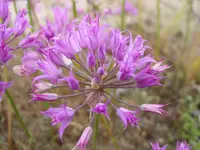
It produces a compact umbel of rose‑purple to pinkish flowers on a leafless stalk, with each flower having narrow tepals and a small, specialized structure at the base of the stamens that helps distinguish it from closely related Allium species.
Lack of flowers often comes from insufficient light, overcrowded bulbs, or the plant being too young. Allow a full dormancy, avoid excessive summer watering, and divide crowded clumps. Balanced nutrition, not high nitrogen, also supports blooming when growing Burlew's onion.
Keep your plants happy and healthy with plant identification, disease detection, and easy care guidance.