drooping she-oak Care (Allocasuarina verticillata)

drooping she-oak

About drooping she-oak

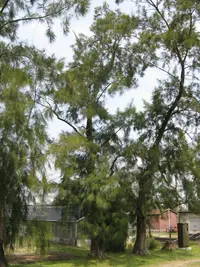
Drooping she-oak (Allocasuarina verticillata) is an evergreen tree from Australia, known for its fine, needle-like branchlets and softly weeping crown. It often forms a slender, upright shape that suits windbreaks and coastal planting.

This species naturally occurs on dry hillsides, coastal cliffs, and poor, sandy or rocky soils, where it tolerates wind, salt spray, and low fertility. Its hardiness and ability to cope with tough sites mean that care for drooping she-oak is generally straightforward once established.

The tree prefers full sun, well-drained soil, and low to moderate moisture, and it can handle periods of drought after rooting deeply.

Main Plant Requirements

Care Difficulty

Moderate Care

Light Preference

Full Sun

Water Requirements

Low Water

Temperature Preference

Warm Climate

Hardiness Zone

9–11

Soil Texture

Sandy, Loamy, Rocky

Soil pH

Acidic (5.5–6.5), Slightly acidic (6.5–7.0)

Soil Drainage

Well-drained

Fertilization

Minimal (feed rarely)

Get Personalized Care Plan

Scan your plant to receive care tips personalized for your specific plant

Available on iOS and Android

How to Care for the drooping she-oak

Allocasuarina verticillata grows best in bright, open conditions with plenty of direct sun.

  • Provide 6–8 hours of direct sun daily; full sun is ideal, though young plants benefit from some light afternoon shade in very hot inland summers.
  • The drooping she-oak tolerates light or dappled shade for part of the day, but plants in less than 4 hours of sun grow thinner and may become sparse.
  • Avoid sudden changes from shade to intense sun; harden plants over 10–14 days to prevent foliage scorch, especially after cloudy or cooler seasons.

Allocasuarina verticillata is drought-tolerant once established but needs sensible watering while roots develop.

  • For young plants, water when the top 3–5 cm of soil is dry and the soil below still feels slightly cool, then apply a deep soak rather than frequent light splashes.
  • In well-drained sandy or loamy soil, gradually reduce watering after the first 1–2 years; established trees usually rely on rainfall except during extended heatwaves or drought.
  • Watch for stress signs: overwatering causes yellowing foliage and soft new growth, while underwatering leads to browning tips and fine branches dying back.

This species tolerates a wide temperature range but has limits at both heat and cold extremes.

  • Optimal growth occurs around 65–80°F (18–27°C), with steady shoot development and good root activity in mild, coastal-type climates.
  • Mature plants usually withstand drops to about 20–25°F (-6 to -4°C); younger trees are more frost-sensitive and benefit from shelter in their first 2–3 winters.
  • Heat tolerance is high in dry air up to about 100°F (38°C) if soil is not parched, but prolonged hot nights slow growth and increase water stress.

This species tolerates a wide humidity range and usually needs no special humidification.

  • Performs well at 30–60% humidity, matching most heated and air-conditioned homes.
  • Handles dry air but prolonged humidity below 25% can cause browning of fine branchlets and tip dieback.
  • If indoor air is very dry, group plants or place near a tray of water and stones rather than misting.

Allocasuarina verticillata prefers mineral, free-draining soil that mimics its native coastal and rocky habitats.

  • Use a sandy or sandy-loam mix with 30–50% coarse sand or fine grit to keep the root zone open and fast-draining.
  • Blend in a modest amount of compost or aged bark for structure but avoid heavy, peat-rich mixes that hold water too long.
  • Aim for slightly acidic to neutral pH around 6.0–7.0; avoid strongly alkaline or saline substrates that restrict nutrient uptake.
  • For containers, increase aeration with extra grit or perlite and ensure no perched water layer develops at the pot base.

This species can be grown in containers when provided with a stable, deep pot and sharp drainage.

  • Choose a tall, relatively narrow container to accommodate the deep, anchoring root system while limiting excessive top growth.
  • Use a heavy, non-tipping pot material or add weight at the base because the fine, tufted foliage can make the plant wind-top-heavy.
  • Ensure multiple, unobstructed drainage holes so that brief heavy watering events do not leave water sitting around the roots.

Allocasuarina verticillata grows well in low‑fertility soils and usually needs only light feeding in cultivation.

  • Use a balanced slow‑release fertilizer or mature compost at the start of spring on young or container plants.
  • Feed 1–2 times per growing season, avoiding high‑phosphorus products that can stress native species.
  • Apply at 1/2 recommended strength on pots; water well afterward to prevent salt buildup.
  • Skip or greatly reduce feeding in winter, as drooping she-oak growth slows in cool conditions.

Pruning Allocasuarina verticillata is mainly used to maintain structure, safety, and size rather than to stimulate flowering.

  • Carry out light structural pruning in late winter or early spring before active growth.
  • Remove dead, diseased, storm‑damaged, or crossing branchlets using clean, sharp bypass pruners or a saw.
  • Thin congested interior growth slightly to improve light and air movement without over‑opening the canopy.
  • Limit cuts to smaller branches, keeping major limbs intact to avoid unnecessary stress and decay risk.

This species is usually grown in the ground, so focus on careful transplanting of young plants rather than frequent repotting.

  • Transplant in late winter to early spring when soil is workable and temperatures are mild.
  • Look for roots circling the pot, poor drainage, or slowed growth in containers as signs it needs a larger space.
  • Shift young trees every 1–2 years into a slightly larger pot or into the ground with well‑drained soil.
  • Minimize root disturbance, keep the root ball intact, water thoroughly after planting, and shade temporarily to reduce stress.

Allocasuarina verticillata is most reliably propagated from seed under controlled nursery conditions.

  • Collect mature cones, extract seeds, and sow in late winter to early spring in a free‑draining, sandy mix.
  • Provide bright light, temperatures around 65–75°F, and even moisture without waterlogging to support germination.
  • Lightly cover seeds, maintain gentle air movement, and avoid heavy fertilization during early seedling stages.

Mature plants are fairly cold tolerant in mild to moderate climates and usually need minimal winter attention.

  • Young or container plants benefit from a 5–8 cm mulch layer to insulate the root zone and conserve moisture.
  • In regions with hard freezes, move potted trees to a sheltered spot such as an unheated garage or porch.
  • Water sparingly but do not allow containers to dry out completely during prolonged cold, windy periods.

Care Tips

Early wind training

Expose young plants to moderate, consistent wind from one main direction so they develop stronger, tapered trunks instead of multiple weak, wind-prone leaders when growing drooping she-oak outdoors.

Root-pruning for size control

In restricted spaces or near structures, lightly root-prune the outer root zone during winter dormancy to limit ultimate size and reduce the risk of surface roots lifting paving.

Salt and spray tolerance use

Use this species as a frontline windbreak or coastal screen, placing it on the ocean-facing side of more sensitive plants to buffer salt-laden winds and reduce stress on the planting behind it.

Low-branch management

Remove only the lowest, most congested branchlets over several seasons rather than in one heavy prune to gradually raise the canopy while avoiding sunscald and sudden imbalance.

Firewise planting layout

In fire-prone regions, plant as part of a staggered shelterbelt with low-fuel understory species and maintain a mown or gravel strip on the house side to reduce ladder fuels and radiant heat exposure when caring for drooping she-oak.

Common Pests and Diseases

Casuarina moth

This pest feeds on needles and young shoots, causing browning, tufting, and thinning of the fine foliage. Severe infestations can slow growth and leave branches looking sparse.

Solution

Prune and destroy heavily infested shoot tips, then monitor at night for caterpillars on new growth. Encourage birds and beneficial insects, hand-pick caterpillars where reachable, and if damage is significant use a targeted Bacillus thuringiensis (Bt) spray, following label directions and applying only to affected foliage.

Casuarina leaf beetle

These insects chew foliage, leading to skeletonized or notched cladodes (the needle-like branchlets) and a generally scorched appearance. Defoliation is usually patchy at first but can spread across the canopy if numbers build up.

Solution

Inspect foliage regularly and shake small plants or branches over a sheet to dislodge adults and larvae, then dispose of them. For higher pressure, spot-treat affected areas with a low-impact insecticide such as horticultural soap or neem oil, applied in the evening to reduce stress on the plant and non-target insects.

Scale insects

This pest attaches to stems and branchlets, sucking sap and sometimes excreting honeydew that can lead to sooty mold. Symptoms include yellowing, reduced vigor, and small bumps along stems that do not rub off easily with water alone.

Solution

Trim out heavily infested twigs and dispose of them, then wipe remaining scale with a cloth or cotton pad dipped in diluted isopropyl alcohol. For persistent infestations, use repeated applications of horticultural oil, making sure to coat stems and the undersides of branchlets while improving plant vigor through correct Allocasuarina verticillata plant care.

Armillaria root disease

This disease, caused by Armillaria fungi, leads to gradual decline with thinning foliage, dieback of branch tips, and eventual plant death in poorly drained or previously infested soils. Symptoms include white fungal mats under the bark near the base and dark rhizomorphs (shoelace-like strands) in the soil.

Solution

Remove and destroy severely affected plants including as many roots as possible, and avoid replanting susceptible species in the same spot. Improve drainage, reduce soil compaction, and avoid overwatering; in sites with a history of Armillaria, plant into mounded beds and choose resistant species if the problem persists.

Needle blight

This disease affects the fine needle-like branchlets, causing scattered browning, tip dieback, and premature shedding. Symptoms include distinct bands or lesions on the cladodes and a thin, patchy canopy in humid or poorly ventilated sites.

Solution

Prune out and discard affected branches, disinfecting pruning tools between cuts, and clear fallen litter around the base to reduce inoculum. Improve air circulation by spacing plants appropriately and avoiding overhead watering; in persistent cases, a registered copper-based fungicide can be applied preventively during prolonged wet, humid periods.

Interesting Facts

Specialist nitrogen fixer

This species hosts actinorhizal nodules with Frankia bacteria on its roots, allowing it to capture atmospheric nitrogen and thrive on very nutrient-poor, sandy and rocky soils along southern Australian coasts.

Wind and salt tolerant

Its fine, segmented branchlets and tough, small cones make it highly tolerant of coastal winds and salt spray, which is why it often forms low, wind-sheared stands on exposed headlands and dunes in its native range.

Key food for glossy black-cockatoos

The woody cones of this tree are a primary food source for the glossy black-cockatoo in parts of southeastern Australia, which selectively feeds on the seeds and often relies on dense stands of this species for both feeding and shelter.

Botan icon

Did you know?

Pollen from this wind-pollinated tree can travel considerable distances and, because the species flowers in late winter to spring, its abundant airborne pollen is recognized as a significant seasonal allergen in some parts of southern Australia.

FAQs about drooping she-oak

Container culture is possible while the plant is young, using a deep, heavy pot and well-drained mix. Expect strong root growth and eventual pot-bound stress; long-term Allocasuarina verticillata care is easier in open ground.

Grow Healthy Plants with Botan Care

Keep your plants happy and healthy with plant identification, disease detection, and easy care guidance.

Botan plant care app — identify plants on mobile

Explore More Plants