

Alocasia melo Light Needs

Alocasia melo grows best in bright, indirect or filtered light with only brief, gentle direct sun.

Light Preference

Bright Indirect Light

Alocasia melo Light Requirements

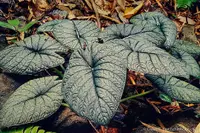
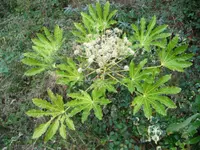
Alocasia melo is native to Borneo, where it grows on the forest floor in humid tropical habitat. Its thick, textured leaves are adapted to filtered light rather than open, all-day sun.

In cultivation, this means strong ambient light is useful, but harsh direct rays can mark the leaves. It may tolerate partial shade, especially outdoors under cover. Preferred light is bright, indirect or filtered light.

  • Ideal exposure:

    Alocasia melo needs about 6–8 hours of bright, indirect or filtered light daily, including up to 1–2 hours of gentle morning sun.

  • Direct sun limit:

    Soft early sun is usually tolerated, but midday and afternoon sun can scorch or bleach the leaf surface.

  • Lower light:

    Partial shade is tolerated, though growth may slow and new leaves may emerge smaller when light stays dim.

  • Best timing:

    Morning light is safer than west-facing afternoon light because it is cooler and less intense.

Indoors, place it where daylight is strong but the leaves are protected from hot direct sun.

NConditional
North-facing window:

A bright, unobstructed north window can work, but growth may slow if the room stays dim.

EBest
East-facing window:

An east-facing window is usually ideal when it gives gentle morning sun and bright light for much of the day.

SConditional
South-facing window:

A south-facing window is suitable only with a sheer curtain or a position 3–5 ft back from the glass.

WConditional
West-facing window:

A west-facing window can be too intense unless filtered or placed 4–6 ft from the glass.

Check leaf response after moving the plant, since glass, seasons, and nearby buildings change light strength.

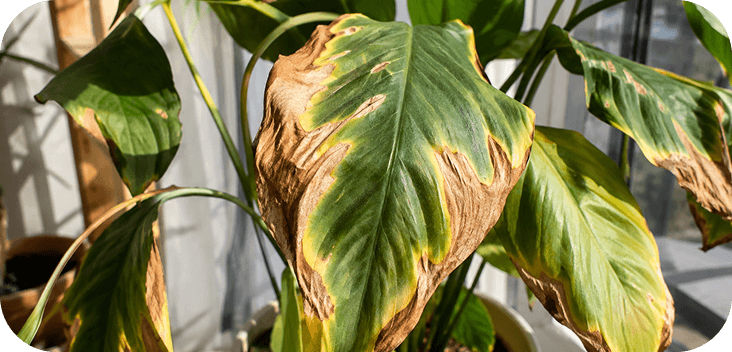
Excess light usually appears after direct sun becomes stronger or lasts too long.

Bleached patches:

Pale tan or silvery areas may form on the upper leaf surface facing the window.

Crisp sun spots:

Dry, flat brown marks can appear where rays hit the leaf, often with a sharp edge.

Faded color:

Leaves may look washed out instead of deep green when light is intense for several days.

Heat-facing lean:

A leaf may angle away from the glass during the brightest part of the day.

Move the plant out of direct afternoon sun, or add a sheer curtain. Damaged marks will not turn green again, so judge the change by the next new leaf.

Low light often shows gradually during the growing season. Alocasia melo may survive shade, but it will not use very dim corners well.

  • Longer stems:

    Leaf stalks may stretch upward or sideways as the plant reaches toward the brightest area.

  • Leaning growth:

    New leaves may face one direction instead of holding a more balanced shape.

  • Smaller leaves:

    Fresh leaves may open smaller than older leaves when light remains weak.

  • Slow new growth:

    Little or no new growth during spring or summer can point to insufficient usable light.

Move it closer to a brighter window, avoiding sudden harsh sun. Increase exposure in small steps over 1–2 weeks.

If ideal brightness is not available, choose the brightest spot that does not receive hot afternoon rays. A sheer curtain is the safest compromise when direct sun reaches the leaves.

Rotate the pot a quarter turn every 1–2 weeks to keep new growth even.

A dim room several feet from any window is a poor setup because new leaves are likely to shrink or stretch.

Get Personalized Care Plan

Scan your plant to receive care tips personalized for your specific plant

FAQ

The best light for Alocasia melo is bright, indirect or filtered light for about 6–8 hours daily. A little gentle morning sun is fine, but strong afternoon sun is risky.

More Plant Light Guides

Get the Botan App

Discover how to care for your plants with Botan.

Botan app identifying a plant with a phone camera
20 Most Popular Fruits Around the World

7 min read · 22 Jul 2026

20 Most Popular Fruits Around the World

Curious which fruits the world actually eats the most? Here's the top-20 by production volume, an overview of what people choose in each region, and a few figures that defy common assumptions.

Plant Recommendations
20 Most Popular Fruits Around the World
Best Fertilizer for Vegetable Gardens – What to Use for Each Plant

11 min read · 20 Jul 2026

Best Fertilizer for Vegetable Gardens – What to Use for Each Plant

Here, you’ll find the right fertilizer formula for vegetables in your garden. Learn how to adjust feeding correctly throughout the growing cycle, spot nutrient deficiencies by their symptoms, and keep your plants healthy and prolific.

Plant Recommendations
Best Fertilizer for Vegetable Gardens – What to Use for Each Plant
Dill Companion Plants – What to Grow Next to Dill

9 min read · 17 Jul 2026

Dill Companion Plants – What to Grow Next to Dill

Dill is an easy-to-grow plant that gets along well with many vegetables. This guide describes 15 plants that can be planted alongside it, a few to avoid, and mistakes that can quietly sabotage the entire process.

Plant Recommendations
Dill Companion Plants – What to Grow Next to Dill