snowflake aloe Care (Aloe rauhii)

snowflake aloe

About snowflake aloe

Snowflake aloe, Aloe rauhii, is a compact succulent from Madagascar, valued for its patterned leaves and tidy rosette shape. It typically stays small, which makes it suitable for windowsills and desks.

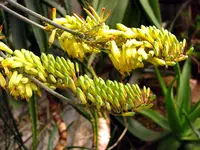
The leaves are green to gray-green with dense white spots and small teeth along the edges, giving a textured, snow-dusted look. Mature plants may produce short flower spikes with tubular blooms.

This species grows naturally in rocky, well-drained habitats, so it prefers bright light, low to moderate watering, and gritty soil in cultivation. Its drought tolerance and relatively slow growth make it forgiving, so learning how to care for snowflake aloe is manageable even for beginners.

Main Plant Requirements

Care Difficulty

Easy Care

Light Preference

Partial Sun

Water Requirements

Low Water

Temperature Preference

Tropical / Frost Sensitive

Hardiness Zone

10–11

Soil Texture

Sandy, Loamy, Rocky

Soil pH

Acidic (5.5–6.5), Slightly acidic (6.5–7.0)

Soil Drainage

Well-drained

Fertilization

Minimal (feed rarely)

Get Personalized Care Plan

Scan your plant to receive care tips personalized for your specific plant

Available on iOS and Android

How to Care for the snowflake aloe

This compact aloe prefers bright light with some protection from harsh midday sun.

  • Provide 4–6 hours of direct morning sun or late-afternoon sun, plus bright indirect light for the rest of the day.
  • Tolerates light partial shade, but long-term low light causes stretched, pale leaves and weak growth in snowflake aloe.
  • In very strong summer sun, use filtered light or light shade from 12–3 pm to prevent leaf scorch and brown, dry patches.

This succulent stores water in its leaves and needs infrequent, careful watering.

  • Water only when the top 3–5 cm of soil are completely dry; leaves should feel firm, not soft or wrinkled.
  • In spring–summer, expect more frequent watering; in fall–winter, reduce strongly, especially in cool conditions for Aloe rauhii.
  • Use fast-draining, gritty soil; watch for yellowing, mushy leaves as a sign of overwatering and thin, curling leaves as a sign of underwatering.

This species prefers warm, dry conditions and is sensitive to frost and prolonged cold.

  • Aim for 65–80°F (18–27°C) for active growth, with short peaks to 85°F (29°C) if airflow is good.
  • Protect from temperatures below 40°F (4°C); tissue damage starts near freezing and plants may die with repeated frost.
  • In hot spells above 90°F (32°C), provide shade during the hottest hours and avoid wet soil overnight to limit root stress.

This species handles typical indoor humidity well and rarely needs adjustments.

  • Keep humidity around 30–50%, similar to most heated or air-conditioned homes.
  • Dry air is usually tolerated; issues arise more from overwatering than from low humidity.
  • If leaf tips brown while soil stays wet, reduce watering and improve air movement rather than increasing humidity.

Aloe rauhii needs a very fast-draining, mineral-rich substrate to prevent root rot.

  • Use a gritty, sandy mix such as 50–70% inorganic material (pumice, coarse perlite, or small gravel) blended with cactus potting mix.
  • Aim for slightly acidic to neutral pH, roughly 6.0–7.0, which supports nutrient availability without encouraging rot.
  • Increase aeration by using large particles (3–6 mm) and avoiding fine peat that compacts and holds excessive moisture.
  • Avoid dense, water-retentive garden soil or mixes high in compost alone, which stay wet and suffocate roots.

This compact succulent is very suitable for container growing.

  • Choose a wide, shallow pot to match its spreading rosette and fibrous, shallow roots, which helps the mix dry evenly.
  • Select a porous material such as unglazed terracotta if the environment is cool or humid, to allow faster evaporation from the root zone.
  • Elevate the pot slightly on feet or spacers so drainage holes stay clear and water cannot pool under the container.

Aloe rauhii has modest nutrient needs but responds well to light feeding during active growth.

  • Use a balanced liquid cactus or succulent fertilizer (around 10-10-10) diluted to 25–50% strength.
  • Feed once every 4–6 weeks in spring and summer while snowflake aloe is actively growing.
  • Skip feeding in late fall and winter when growth slows or stops.
  • Avoid compost-rich mixes or high-nitrogen products that can cause soft, weak growth.

Pruning Aloe rauhii is mainly hygienic, helping the rosette stay compact and healthy.

  • Best time is late winter to early spring, before strong new growth begins.
  • Remove dead, yellowing, or damaged leaves at the base with clean, sharp scissors or pruners.
  • Thin out crowded offsets only if they distort the clump or impede airflow.
  • Discard spent flower stalks at the base after blooming to maintain a tidy appearance.

Repotting Aloe rauhii focuses on preventing root crowding and maintaining a fast-draining substrate.

  • Check for roots circling the pot, slow growth, or soil that dries too slowly as signs it needs a larger container.
  • Plan to repot every 2–3 years in late spring, using a gritty cactus or succulent mix.
  • Choose a pot only 2–4 cm wider, then gently loosen circling roots without tearing them heavily.
  • Water lightly 3–5 days after repotting to limit root stress and allow cut surfaces to callus.

Propagation of Aloe rauhii is most reliable through offsets rather than seeds or leaf cuttings.

  • Detach offsets in spring or early summer when they have several leaves and visible roots.
  • Use a clean knife to separate pups, then let cut surfaces dry and callus for 1–2 days.
  • Plant pups in a small pot with dry, gritty succulent mix, then wait 3–5 days before the first light watering.
  • Keep in bright, indirect light and warm temperatures (70–80°F) to encourage steady rooting.

Winter care for Aloe rauhii centers on cold protection and controlled watering.

  • Treat as frost-sensitive; sustained exposure below 32°F can damage leaves and roots.
  • Move container plants indoors or into a bright, cool room before nights drop near freezing.
  • Reduce watering sharply in winter, allowing the mix to dry almost completely between light drinks.
  • In mild climates, grow in pots so plants can be relocated during short cold spells.

Care Tips

Offset management

Remove and replant offsets only when they have at least 3–4 true leaves and visible roots, using a clean knife and allowing cut surfaces to dry 2–3 days before potting to reduce rot risk.

Compact rosette shaping

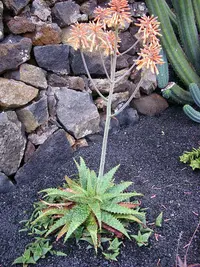
Rotate the pot 1/4 turn every 1–2 weeks during the growing season so the rosette stays symmetrical and does not lean or elongate toward the light source.

Winter rest adjustment

From late fall to early spring, keep the plant slightly cooler and cut back on watering and fertilizer so the tissues harden and the rosette stays dense rather than soft and stretched.

Preventing salt buildup

Every 2–3 months, take the pot to a sink and slowly run room‑temperature water through the soil for 1–2 minutes to flush out accumulated fertilizer salts that can burn succulent roots.

Targeted pest checks

Inspect the tight leaf axils and the base of the rosette every few weeks for mealybugs or scale, using a cotton swab with 70% isopropyl alcohol to spot‑treat pests before they move into the dense center when caring for snowflake aloe.

Common Pests and Diseases

Aloe mite

This pest causes distorted, bumpy, or cauliflower-like growths, especially on young leaves and around the rosette center. Symptoms include thickened, corky, or blistered patches that do not rub off.

Solution

Remove and discard all visibly deformed tissue using sterilized tools and isolate the plant from other aloes. If new galls appear, discard the entire plant to protect nearby succulents, and in future keep new Aloe rauhii isolated for several weeks to monitor for early gall formation.

Aloe rust

This disease shows as small yellow spots on leaves that turn into raised orange to brown pustules, often on the underside. Symptoms include weakened leaves that may yellow and dry from the tips.

Solution

Cut off and discard affected leaves, keep foliage dry, and improve air movement around the plant. Avoid overhead watering, space plants so leaves do not touch, and in persistent cases use a sulfur-based fungicide labeled for succulents according to instructions.

Aloe scale

This pest appears as small, hard, tan to brown bumps on leaves and stems that can cause yellowing, slow growth, and patchy chlorosis. These insects feed on plant sap and excrete sticky honeydew that can attract sooty mold.

Solution

Gently scrape or wipe off visible scale with a cotton swab dipped in 70% isopropyl alcohol, then rinse the plant with a strong but gentle stream of water. For heavier infestations, repeat alcohol spot-treatments weekly and consider applying a horticultural oil spray suitable for succulents, ensuring the plant is in bright, indirect light while treated.

Fungal leaf spots

This disease produces small, water-soaked or brown spots on leaves that may develop pale centers and dark margins under humid or poorly ventilated conditions. Symptoms include localized lesions that can merge into larger dead patches.

Solution

Remove affected leaves or trim damaged sections, allow the plant to dry thoroughly between waterings, and increase air circulation. Keep water off the foliage, and if spotting continues, apply a copper-based fungicide at label rates and reduce crowding with other succulents as part of Aloe rauhii care.

Interesting Facts

Miniature rosette clusters

This species naturally forms many small, tightly packed rosettes that slowly clump into a mound, which is one reason it is often used in rock gardens and dish gardens rather than as a single specimen plant.

Distinct white banding

Its leaves show sharp, transverse white bands that are genetically stable, meaning the pattern is consistent from leaf to leaf and not just a response to light or stress, unlike many other variegated succulents.

Cooler habitat origin

In habitat, it occurs in relatively cool, elevated areas of Madagascar compared with many other aloes, which helps explain its tolerance of slightly lower night temperatures than typical desert succulents.

Botan icon

Did you know?

In cultivation, Aloe rauhii has been widely used in breeding to create compact, heavily patterned hybrid aloes, so many popular small ornamental aloes on the market today trace part of their parentage back to this species.

FAQs about snowflake aloe

Lack of blooms usually comes from insufficient light, a pot that is too small, or the plant being too young. Cooler, drier winter conditions and strong light in spring often trigger flowering when overall Aloe rauhii care is correct.

Grow Healthy Plants with Botan Care

Keep your plants happy and healthy with plant identification, disease detection, and easy care guidance.

Botan plant care app — identify plants on mobile

Explore More Plants