Encourage Rosette Firmness
Rotate the pot 1–2 times per month so light reaches all sides evenly, which keeps the rosette compact and prevents lopsided, stretched growth.

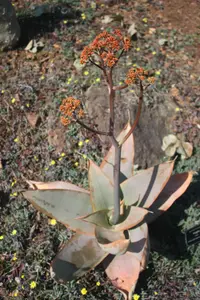
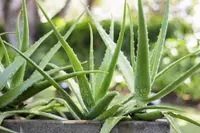
Coral aloe, Aloe striata, is a compact, stemless succulent from South Africa’s arid regions. It forms flat, smooth, blue-green rosettes with broad leaves and coral-pink flowers. The leaves lack sharp teeth along the edges, which gives the plant a cleaner, softer look compared to many other aloes.
This species grows slowly and stays relatively low, which makes it suitable for containers, rock gardens, and small outdoor spaces in mild climates. It adapts well to bright, dry conditions and is considered forgiving, so it is usually easy to care for Coral aloe if given strong light, infrequent watering, and sharply drained soil.

Care Difficulty
Easy Care

Light Preference
Full Sun

Water Requirements
Low Water

Temperature Preference
Warm Climate

Hardiness Zone
9–11

Soil Texture
Sandy, Loamy, Rocky

Soil pH
Slightly acidic (6.5–7.0), Neutral (7.0)

Soil Drainage
Well-drained

Fertilization
Minimal (feed rarely)
Scan your plant to receive care tips personalized for your specific plant
Available on iOS and Android
Aloe striata grows best in bright light with some protection from the harshest sun.
Aloe striata prefers deep, infrequent watering that allows the soil to dry between soakings.
This species prefers warm, dry conditions and is sensitive to hard frost.
This species prefers relatively dry air and usually stays healthy in typical indoor humidity.
This succulent needs fast-draining, mineral-rich soil to prevent root and crown rot.
This species grows very well in containers when drainage and stability are managed carefully.
Aloe striata has modest nutrient needs, so focus on light, controlled feeding during its active season.
Aloe striata benefits from light, hygienic pruning to keep the rosette tidy and disease-free.
Container-grown Aloe striata prefers infrequent repotting that keeps roots slightly snug rather than cramped.
New Aloe striata plants are most reliable from offsets, with seeds used mainly by more advanced growers.
Aloe striata is not frost hardy and needs controlled, dry conditions through winter, especially in cold climates.

Plant Health Check
Not sure what's wrong with your plant? Check your plant's health inside the app.
Mature plants develop a smooth, translucent pink to coral margin around each leaf, which intensifies in strong sun and is a key feature distinguishing it from many toothed aloes.
The plant forms flat, stemless rosettes that can reach 30–45 cm across, with leaves that broaden toward the tip and often show fine, irregular grey banding across the surface.
It is native to coastal and near-coastal areas of the Eastern and Western Cape in South Africa, where it typically flowers in late winter to spring with salmon to coral-pink tubular blooms that attract sunbirds and other nectar feeders.

Molecular and morphological studies have shown that this species belongs to a small group closely allied to Aloe cooperi and Aloe karasbergensis, and it has sometimes been placed in the separate genus Kumara, reflecting its distinct evolutionary position within the aloe relatives.
Lack of flowers often comes from insufficient light, a pot that is too small, or the rosette being still immature. Cool, dry winter rest and regular, light feeding in the growing season usually improve blooming over time.
Keep your plants happy and healthy with plant identification, disease detection, and easy care guidance.