Ceropegia dichotoma Care

Ceropegia dichotoma

About Ceropegia dichotoma

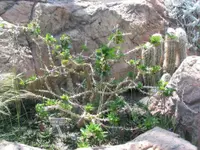
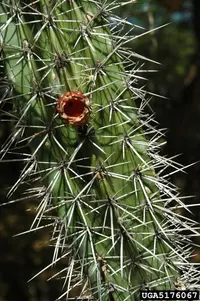
Ceropegia dichotoma is a succulent shrub from the Canary Islands, adapted to hot, dry, rocky habitats. It has smooth, green, almost leafless stems and a strongly upright, branching form. Unusual tubular flowers appear along the stems and are typically pollinated by small insects. The plant stores water in its fleshy tissues, which makes it drought tolerant and suitable for low-maintenance collections. It grows slowly and stays relatively compact in containers, which suits indoor or patio use in warm climates. Understanding how to care for Ceropegia dichotoma mainly involves providing strong light, excellent drainage, and avoiding excess moisture around the roots.

Main Plant Requirements

Care Difficulty

Moderate Care

Light Preference

Full Sun

Water Requirements

Low Water

Temperature Preference

Tropical / Frost Sensitive

Hardiness Zone

10–12

Soil Texture

Sandy, Rocky, Loamy

Soil pH

Slightly acidic (6.5–7.0), Neutral (7.0)

Soil Drainage

Well-drained

Fertilization

Minimal (feed rarely)

Get Personalized Care Plan

Scan your plant to receive care tips personalized for your specific plant

Available on iOS and Android

How to Care for the Ceropegia dichotoma

This succulent shrub prefers bright, strong light similar to arid coastal or desert habitats.

  • Provide 6–8 hours of direct sun daily, ideally full morning sun plus bright afternoon light; in very hot regions, give Ceropegia dichotoma light afternoon shade to prevent scorching.
  • Outdoors, plant in an open, unshaded spot; indoors or on patios, place at a south- or west-facing exposure with no large obstructions blocking light.
  • Watch stems: elongated, pale growth indicates insufficient light, while brown, crispy patches on the sun-facing side suggest intense, unfiltered afternoon sun.

This drought-adapted species stores moisture in its thick stems and needs infrequent, careful watering.

  • Allow the soil to dry at least in the top 5–8 cm before watering; in fast-draining, sandy soil this often means long dry intervals, especially for established plants.
  • During active growth in warmer months, water thoroughly until excess drains away, then wait for the soil to dry again; reduce watering sharply in cooler seasons when growth slows.
  • Ensure very sharp drainage to prevent rot; soft, yellowing, or splitting stems suggest overwatering, while wrinkling, slight shriveling, and slow recovery after watering point to underwatering.

This species prefers warm, arid conditions and reacts poorly to cold and sudden temperature swings.

  • Aim for daytime temperatures around 70–85°F (21–29°C) with slightly cooler nights; these ranges support steady growth and reduce stress on the fleshy stems.
  • Protect the plant from temperatures below 40°F (4°C); it is not frost-hardy, and brief exposure near freezing can damage tissue or kill young growth.
  • In hot climates, it tolerates 95–100°F (35–38°C) if soil is very free-draining and air is moving; avoid reflected heat from walls that can push local temperatures even higher.

This species tolerates a wide humidity range and rarely needs special humidity management indoors.

  • Aim for 30–50% humidity, similar to typical heated or air-conditioned rooms.
  • Dry air is usually tolerated; issues arise more from overwatering than from low humidity.
  • Leaves or stems that shrivel while soil is moist usually indicate root or watering problems rather than humidity stress.

Ceropegia dichotoma prefers very fast-draining, mineral-rich soil that mimics rocky, arid habitats.

  • Use a cactus or succulent mix amended with 30–50% extra coarse material such as pumice, perlite, or 3–5 mm gravel for sharper drainage.
  • Aim for a sandy or gritty texture with low to moderate organic matter to keep the root zone airy and prevent moisture retention around the tuberous roots.
  • Keep pH slightly acidic to neutral, around 6.0–7.2, which supports nutrient availability without encouraging salt buildup.
  • Avoid dense peat-heavy mixes, water-retentive potting composts, or any soil that stays wet for more than 2–3 days.

This species is well suited to container growing, especially in cooler or wetter climates.

  • Choose a deep, narrow pot that anchors the upright, branching stems and prevents the plant from toppling in wind or when tall.
  • Select unglazed terra cotta if extra evaporation is needed, but use plastic or glazed clay in very hot, dry regions to slow moisture loss.
  • Place a layer of coarse stone or gravel at the pot’s base to add weight and stabilize tall growth without blocking the drainage holes.

This drought-adapted succulent needs light feeding only during active growth for balanced Ceropegia dichotoma care.

  • Use a balanced liquid fertilizer (for example 10-10-10 or 20-20-20) diluted to 25–50% strength for container plants.
  • Feed every 4–6 weeks in spring and summer when growth is active; skip applications if growth is stalled.
  • Stop fertilizing in fall and winter to respect the plant’s semi-dormant phase and prevent weak, elongated growth.
  • Avoid rich compost-heavy mixes; use a very lean, gritty substrate and low-dose fertilizer to reduce root rot risk.

Pruning Ceropegia dichotoma is mainly corrective, helping maintain a clean, stable framework of stems.

  • Carry out any pruning at the end of winter or very early spring before strong new growth starts.
  • Remove dead, shriveled, storm-damaged, or crossing stems back to a healthy branching point.
  • Shorten overly tall or unbalanced stems to improve stability and encourage a more compact outline.
  • Use clean, sharp pruning shears and allow cuts to dry and callus naturally in good airflow.

Container-grown Ceropegia dichotoma prefers infrequent repotting, as it adapts well to slightly tight conditions.

  • Check for roots circling the pot, emerging from drainage holes, or unexplained slow growth as signs it needs more space.
  • Plan repotting or transplanting for late spring to early summer, once temperatures are consistently warm.
  • Move up only 1 pot size every 3–4 years, using a very gritty, fast-draining mix to limit moisture around the roots.
  • Handle the root ball gently, keep roots as intact as possible, and water lightly after repotting to reduce stress.

Propagation of Ceropegia dichotoma is usually done from stem cuttings rather than seed in home settings.

  • Take firm, non-flowering stem cuttings in late spring or early summer, 8–12 cm long with several nodes.
  • Let cut surfaces dry and callus for several days in a shaded, airy place before planting.
  • Insert cuttings into a sterile, very gritty mix, keeping temperatures around 70–80°F and moisture barely damp.
  • Seed propagation is possible but slower; use fresh seed, warmth, and bright light, and keep the medium just slightly moist.

Winter care focuses on keeping this succulent above freezing and the root zone dry.

  • Ceropegia dichotoma is frost sensitive; aim to keep temperatures above 40°F, especially at night.
  • In the ground, use a light, dry mineral mulch around the base to insulate the root zone without trapping moisture.
  • For containers in cold regions, move plants indoors or into a frost-free greenhouse before the first freeze.
  • Reduce watering sharply in winter so the soil stays almost dry, which lowers the risk of cold-related root damage.

Care Tips

Stabilize top-heavy stems

Use a narrow, heavy pot or add a layer of gravel at the bottom of the container to prevent the plant from tipping as the tall, succulent stems elongate.

Rotate for even form

Turn the pot 90° every 2–3 weeks during active growth so the upright stems receive light from all sides and do not lean permanently toward one direction.

Protect from sudden rain

If grown outdoors in a warm climate, place the container under an overhang or move it under cover before forecasted heavy rain to prevent waterlogging of the very shallow, fibrous root system.

Use porous top-dressing

Apply a thin layer of coarse grit, pumice, or small stones on the soil surface to keep the stem base dry and reduce the risk of rot while still allowing gas exchange.

Inspect stems after heatwaves

After very hot, bright days, check the green stems for soft, discolored patches and remove any damaged sections promptly with a sterile blade to stop rot spreading when caring for Ceropegia dichotoma.

Common Pests and Diseases

Mealybugs

This pest often hides in stem joints and along the angular green stems, sucking sap and causing yellowing, stunting, and sticky honeydew deposits. Symptoms include cottony white clusters that are easy to overlook on the ridged surfaces.

Solution

Isolate the plant, then dab visible insects with cotton swabs dipped in 70% isopropyl alcohol and repeat weekly until no new clusters appear. For larger infestations on plants grown in containers, use a systemic insecticide labeled for succulent use or a horticultural soap spray, and maintain bright, airy conditions to reduce reinfestation when caring for Ceropegia dichotoma.

Soft scale

These insects attach tightly to the smooth or slightly ridged stems and look like small, tan or brown bumps that do not move. This pest removes sap, causing dull, weakened stems and sticky honeydew that can attract sooty mold.

Solution

Gently scrape or wipe off visible scales with a soft cloth or toothbrush, then treat remaining insects with repeated applications of horticultural oil or insecticidal soap, carefully coating all stem surfaces. Improve airflow and avoid excessive nitrogen fertilization, which can encourage soft new growth that is more attractive to scale.

Spider mites

These insects thrive in hot, very dry conditions and often appear on Ceropegia stems grown in full sun or in indoor windows. Symptoms include fine webbing in branch junctions, stippled or roughened stem surfaces, and overall loss of vigor.

Solution

Rinse the plant thoroughly under a gentle stream of water, focusing on stem joints, then apply a miticidal horticultural soap or neem oil and repeat every 5–7 days until new growth is clean. Maintain moderate humidity, avoid hot stagnant air, and, for outdoor plants, hose off plants periodically during dry spells to keep populations low.

Stem rot (fungal)

This disease affects water-stressed or poorly ventilated plants and causes soft, discolored, collapsing stem sections, often starting at the base. Symptoms include mushy tissue, brown or black streaks, and a foul odor in advanced stages.

Solution

Cut out all affected stem parts back to firm, green tissue using sterilized tools, and discard infected material rather than composting it. Allow the soil to dry well between waterings, ensure fast-draining gritty substrate, improve airflow around the plant, and, if rot appears repeatedly, drench with a fungicide labeled for succulent stem rot and repot into fresh, dry mix.

Sooty mold

This disease develops on the sticky honeydew produced by sap-feeding pests like mealybugs and scale, forming a black, powdery or velvety layer on stems. Symptoms include dark coating that blocks light and makes stems appear dirty or dull.

Solution

First control the underlying honeydew-producing insects, then gently wipe stems with a damp cloth or rinse under lukewarm water to remove the fungus. Improve light and airflow to help surfaces dry quickly, and avoid overhead watering that keeps stems wet for long periods.

Interesting Facts

Moroccan island endemic

This species is naturally restricted to the Canary Islands, especially Fuerteventura and Lanzarote, where it grows in arid coastal and sub‑desert zones on rocky, volcanic soils.

Specialized fly pollination

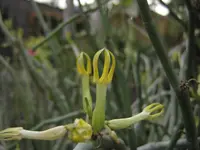
The tubular lantern‑like flowers trap visiting flies briefly, using downward‑pointing hairs, then release them once pollen has been transferred, a pollination strategy typical of the genus but with a flower shape and coloring adapted to its local fly fauna.

Succulent stem storage

Instead of storing water in leaves, this plant has leafless, cactus‑like succulent stems that carry out photosynthesis and store water, an adaptation to intense sun, wind, and low rainfall in its native habitat.

Botan icon

Did you know?

In its native range, this species often forms small, sparse stands on exposed lava fields and eroded slopes, where its upright, broom‑like stems can function as modest perches and shelter for invertebrates and small reptiles despite the almost complete absence of leaves.

FAQs about Ceropegia dichotoma

Growth is generally slow to moderate. In good light, warmth, and a suitably gritty mix, new segments extend mainly in the warmer months. Container size, root health, and watering frequency strongly influence how quickly this succulent branches and elongates.

Grow Healthy Plants with Botan Care

Keep your plants happy and healthy with plant identification, disease detection, and easy care guidance.

Botan plant care app — identify plants on mobile

Explore More Plants