Aloinopsis schooneesii Care

Aloinopsis schooneesii

About Aloinopsis schooneesii

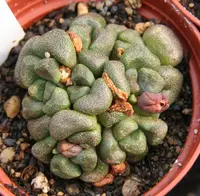
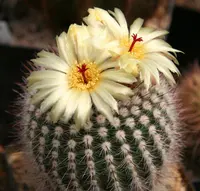
Aloinopsis schooneesii is a small, clumping succulent from arid regions of South Africa. It forms low rosettes of thick, rough, pebble-like leaves that blend into gravelly soil. In good light it produces daisy-like yellow to orange flowers in winter, often larger than the leaf rosette itself.

This species stays very compact and grows slowly, making it suitable for windowsills and small indoor collections. It prefers bright light, cool dry winters, and very fast-draining, sandy soil. Once the seasonal rhythm is understood, it is not difficult to manage. Learning how to care for Aloinopsis schooneesii mainly involves avoiding excess water and respecting its natural rest periods.

Main Plant Requirements

Care Difficulty

Moderate Care

Light Preference

Full Sun

Water Requirements

Low Water

Temperature Preference

Warm Climate

Hardiness Zone

9–11

Soil Texture

Sandy, Rocky, Loamy

Soil pH

Slightly acidic (6.5–7.0), Neutral (7.0)

Soil Drainage

Well-drained

Fertilization

Minimal (feed rarely)

Get Personalized Care Plan

Scan your plant to receive care tips personalized for your specific plant

Available on iOS and Android

How to Care for the Aloinopsis schooneesii

This compact succulent prefers bright, cool sun that mimics its open, rocky habitat.

  • Provide 4–6 hours of direct morning sun with bright light or light shade for the rest of the day; avoid harsh, exposed afternoon sun in very hot climates.
  • Allow light, shifting shade in summer; in winter, give as much bright sun as possible to prevent weak, stretched growth and dull leaf color.
  • Watch the leaves: firm, compact, and low to the soil indicate enough light, while elongated, pale, or leaning rosettes signal insufficient sun and potential etiolation.

This species is a drought-adapted succulent that needs infrequent, deep watering in fast-draining soil.

  • Water only when the top 3–5 cm of soil are completely dry, then soak thoroughly and let excess drain away, especially during active growth in cooler seasons.
  • Reduce watering sharply in the hottest part of summer and during cold spells, giving just enough to prevent shriveling, since Aloinopsis schooneesii rests at these times.
  • Check for early signs of overwatering such as soft, translucent, or splitting leaves, and of underwatering as persistent wrinkling that does not improve after a careful drink.

This plant prefers cool to mild conditions with good airflow, avoiding both hard frost and extreme heat.

  • Aim for active growth around 50–70°F (10–21°C), with short exposures up to about 80°F (27°C) if the soil is dry and the plant is shaded from strong afternoon sun.
  • Protect from frost; brief dips to 28–32°F (-2–0°C) may be survived if the soil is very dry, but repeated or prolonged freezing damages roots and leaves.
  • In hot summers above 85°F (29°C), keep the root zone dryish, provide bright but filtered light, and avoid heat buildup around the pot or planting site.

This succulent prefers dry indoor air and does not need added humidity.

  • Target 30–40% relative humidity, similar to most heated homes, to match its arid habitat.
  • Plant tolerates very dry air; problems usually arise only if combined with overwatering and cold.
  • Humidity stress appears as soft, swollen, splitting leaves in overly humid rooms; improve air movement and reduce nearby water trays.

This species needs very fast-draining, mineral-rich soil that prevents water from lingering around the roots.

  • Use a gritty, sandy mix with about 70–80% mineral content such as pumice, coarse sand, and small gravel, plus 20–30% cactus potting mix.
  • Aim for slightly acidic to neutral pH around 6.0–7.0, which suits most commercial cactus substrates.
  • Increase aeration by using large particle sizes (3–6 mm) and avoiding fine peat that compacts and stays wet.
  • Avoid heavy, clay-based, or peat-heavy soils that hold water, as these quickly lead to root rot and stem collapse in Aloinopsis schooneesii.

This compact species is very suitable for growing in small containers.

  • Choose a shallow, wide pot so the fibrous, compact roots spread laterally without deep, wet pockets forming.
  • Select unglazed terracotta if extra evaporation is needed, especially in cooler or lower-light positions.
  • Elevate the pot on feet or a stand so drainage holes stay clear and excess water leaves the container rapidly.

This compact succulent needs very light feeding to avoid weak, over-soft growth.

  • During active growth in late winter–spring, apply a balanced liquid fertilizer at 1/4 strength every 4–6 weeks.
  • Use a low-nitrogen, balanced NPK or cactus formula to match Aloinopsis schooneesii nutrient needs.
  • Always water lightly before feeding to reduce root burn risk in the small, fibrous root system.
  • Stop fertilizing in hot summer dormancy and over winter, when the plant is largely resting.

Pruning needs are minimal and focus on keeping the rosette clean and healthy.

  • Best time is after flowering, when old leaves and spent flower stalks are easy to see.
  • Gently remove dried, dead, or damaged leaves at the base to reduce rot and fungus risk.
  • Pinch or cut spent blooms to keep the plant compact and encourage neat, clustered growth.
  • Use clean fingers or small sterilized scissors, avoiding cuts into firm, living tissue.

This species prefers to stay tight in a shallow pot and is repotted only when necessary.

  • Check for roots circling drainage holes, soil that dries almost instantly, or stalled growth as signs to repot.
  • Plan repotting every 3–4 years in late winter or early spring, just before strong new growth.
  • Use a shallow container with excellent drainage and a very gritty cactus mix to reduce rot risk.
  • Gently tease roots free, remove old soil, let any broken roots dry briefly, then water sparingly for 1–2 weeks.

Propagation is usually done from seed, with divisions only when natural clumps form.

  • Sow fresh seed in late winter–spring on a fast-draining, gritty mix and barely cover with sand or fine grit.
  • Maintain bright, indirect light, 65–75°F, and slightly moist but never wet substrate until germination.
  • Provide good air circulation to limit damping-off, a fungal disease that kills seedlings at soil level.
  • Separate and replant small offsets only when well rooted, handling the fleshy taproot very gently.

This succulent prefers cool, dry winters and is not tolerant of hard frost.

  • Keep plants around 40–50°F in winter, with maximum light and almost dry soil.
  • In regions below 30°F, move containers indoors to a bright, cool windowsill or greenhouse.
  • Avoid overhead watering in cold weather, which increases rot risk on dense leaf clusters.
  • Ensure the potting mix drains freely so roots do not sit in cold, saturated media.

Care Tips

Seasonal rest timing

Reduce water sharply and give the plant its longest dry stretch during the hottest part of summer, as this species often slows growth or goes semi-dormant in high heat and stays healthier when not pushed to grow then.

Top-dress with grit

Apply a 0.5–1 cm layer of coarse quartz grit or small pumice around the leaf clusters to keep the crown dry, reduce fungal risk, and stabilize the plant against accidental knocks.

Deep pot selection

Use a pot slightly deeper than it is wide, with broad drainage holes, so the strong taproot can develop fully and the root system stays cooler and less stressed.

Rotate for compact growth

Turn the pot 90° every 2–3 weeks during active growth to prevent leaning toward the light and to help keep the leaf rosettes compact and evenly shaped when growing Aloinopsis schooneesii.

Cooler winter placement

If safe in your climate, overwinter the plant in the coolest bright indoor spot, such as a lightly heated room or enclosed porch, to encourage tighter growth and more reliable flowering in late winter.

Common Pests and Diseases

Mealybugs

This pest feeds on sap in leaf crevices and at the stem base, causing slowed growth, shriveling, and sticky residue. Symptoms include cottony white clusters around the neck of the plant and between the leaf pairs.

Solution

Isolate the plant, then remove visible insects with a cotton swab dipped in 70% isopropyl alcohol, focusing on tight leaf joints. Improve air movement, avoid overfertilizing, and repeat spot treatment weekly until no new insects appear; a light application of a systemic insecticide labeled for succulents can be used in severe cases.

Root mealybugs

These insects live in the potting mix and on roots, causing poor growth, unexplained shriveling, and white cottony patches on roots or around drainage holes. This pest is common in clump-forming mesembs grown in the same soil for several years.

Solution

Unpot the plant, gently shake or wash off all soil, and trim heavily infested roots. Rinse the root zone in a dilute 70% isopropyl alcohol solution, let it dry for a day, then repot into fresh, very gritty mix; a systemic insecticide drench labeled for container succulents can help control hidden populations.

Aphids

These insects occasionally attack new growth and flower stalks, sucking sap and causing distortion or yellowing of the small leaves and buds. Sticky honeydew and sooty mold may appear on and around the plant.

Solution

Move the plant to good ventilation and wash the affected areas with a firm stream of water or a mild insecticidal soap solution, keeping soap off the dry mineral soil as much as possible. Repeat every few days until clear, and avoid high-nitrogen fertilizer that encourages soft, aphid-prone growth.

Fungal stem base rot

This disease affects the neck of the plant where leaves join the stem, leading to soft, discolored tissue at or just below the soil line. Symptoms include sudden collapse of individual leaf pairs after periods of cool, wet conditions or heavy watering.

Solution

At first signs, withhold water and increase light and airflow, then unpot and remove all soft, dark tissue with a sterile blade. Dust cuts with a dry fungicidal powder or sulfur, allow the plant to dry for several days, and replant in a shallower, faster-draining mineral mix while adjusting watering to a lighter, seasonal schedule appropriate for Aloinopsis schooneesii care instructions.

Edema

Symptoms include translucent blisters or corky spots on the fleshy leaves after sudden overwatering or sharp swings from cool to warm, especially in low light. This physiological disorder occurs when roots take up water faster than the leaves can transpire it.

Solution

Allow the mix to dry thoroughly before watering again and provide brighter light with good air movement. Adjust the schedule to smaller, infrequent waterings in the plant’s active season and keep the soil almost dry in summer heat, as existing spots will not heal but new growth should form normally under corrected conditions.

Interesting Facts

Windowed leaf tips

The thick, tubercled leaves have translucent window-like areas at their tips that allow light to penetrate deeper into the leaf tissue, helping photosynthesis while most of the leaf stays buried and protected from intense sun.

Winter-growing rhythm

This species grows mainly in the cooler months and slows or nearly stops in summer, reflecting its adaptation to the winter rainfall climate of its native South African habitat.

Cryptic rock mimicry

In habitat, its small, rough, gray-green to brownish leaves closely resemble surrounding stones and gravel, a form of camouflage that helps reduce herbivory and water loss in exposed, arid sites.

Botan icon

Did you know?

In the wild, this species often flowers in mid to late winter with relatively large, daisy-like yellow to orange blooms that can be disproportionate to the small body of the plant, a strategy that makes the flowers highly visible to pollinators even though the vegetative parts remain inconspicuous among stones.

FAQs about Aloinopsis schooneesii

Lack of flowers usually comes from insufficient cool rest in winter, too little light in autumn–winter, or frequent watering during its dormant summer period. Mildly root-bound plants in a gritty mix tend to flower more reliably.

Grow Healthy Plants with Botan Care

Keep your plants happy and healthy with plant identification, disease detection, and easy care guidance.

Botan plant care app — identify plants on mobile

Explore More Plants