


Horizontal bed setup
Grow this species in a wide, shallow, very fast-draining bed or trough so the stem can safely lie on its side and creep, rather than forcing it upright in a deep pot where it is prone to rot and mechanical damage.

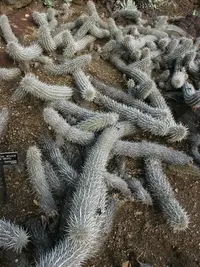
Creeping devil, Stenocereus eruca, is a highly unusual ground-dwelling cactus known for its prostrate, crawling stems. As it grows, the front of the stem advances while the older portion slowly dies back, creating a moving, serpentine effect over sandy soil.
This species is native to coastal deserts of Baja California Sur in Mexico, adapted to very dry, sunny, and harsh conditions. It has dense spines and a slow, specialized growth habit, which makes it more challenging than common house cacti.
Those who want to care for Creeping Devil need very bright light, excellent drainage, and minimal watering to keep it healthy in cultivation.

Care Difficulty
Hard Care

Light Preference
Full Sun

Water Requirements
Low Water

Temperature Preference
Tropical / Frost Sensitive

Hardiness Zone
10–11

Soil Texture
Sandy, Rocky, Loamy

Soil pH
Slightly acidic (6.5–7.0), Neutral (7.0)

Soil Drainage
Well-drained

Fertilization
Minimal (feed rarely)
Scan your plant to receive care tips personalized for your specific plant
Available on iOS and Android
This coastal cactus needs high light and thrives in strong, direct sun with some protection from extremes.
This desert species is highly drought-tolerant and must dry well between waterings to avoid root rot.
This species prefers warm, arid conditions and is sensitive to prolonged cold and frost.
This desert cactus prefers very dry air and rarely suffers from low indoor humidity.
This species needs extremely fast-draining, mineral-heavy soil to prevent root rot.
This species can be grown in containers if the pot is set up to mimic its arid, free-draining habitat.
This desert cactus needs only light feeding to support slow, steady growth in cultivation.
Stenocereus eruca needs minimal pruning because its natural creeping habit is the main feature.
This species is rarely kept in containers long term, so focus on careful transplanting rather than frequent repotting.
Propagation of this cactus is usually done by stem cuttings in controlled conditions rather than by seed at home.
This warmth-loving cactus needs careful winter management in most climates to avoid cold and excess moisture damage.

Plant Health Check
Not sure what's wrong with your plant? Check your plant's health inside the app.
This cactus grows almost entirely prostrate along the ground, with the stem creeping forward while older segments die off behind, creating a slow-moving growth front over time.
As the stem advances, newer parts may partially bury themselves in coastal sand, which helps protect the plant from extreme heat and stabilizes it in shifting dune environments.
It is native to the Pacific coastal desert of Baja California Sur, where it relies on maritime fog and very sparse rainfall, making it highly adapted to hyper-arid, sandy habitats.

The species is thought to reproduce mainly through vegetative fragmentation, as pieces of the creeping stem can break off and root to form new individuals, while sexual reproduction from seed appears to be rare in the wild.
This species performs best outdoors in hot, arid conditions with excellent drainage and maximum sun. Indoors it usually becomes weak and prone to rot, so long-term Creeping Devil indoor care is considered challenging and not recommended except as a short-term display.
Keep your plants happy and healthy with plant identification, disease detection, and easy care guidance.

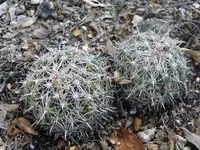
Coryphantha delicata
Coryphantha delicata
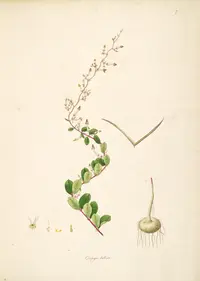
Bulbous Ceropegia
Ceropegia bulbosa
 POPULAR
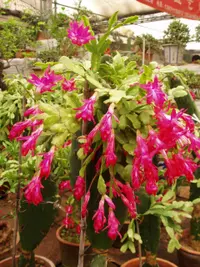
Thanksgiving Cactus
Schlumbergera truncata
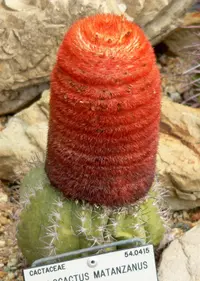
Dwarf turk's cap cactus
Melocactus matanzanus
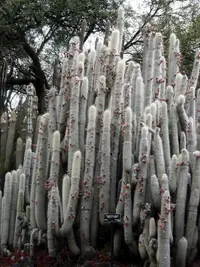
Silver torch cactus
Cleistocactus strausii
Rhipsalis teres
Rhipsalis teres
Kudu lily
Pachypodium saundersii
Aloinopsis schooneesii
Aloinopsis schooneesii