Kudu lily Care (Pachypodium saundersii)

Kudu lily

About Kudu lily

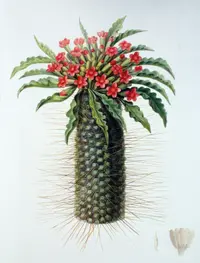
Pachypodium saundersii, commonly called kudu lily, is a small succulent shrub with a swollen, bottle-shaped stem and sparse branches. It belongs to the dogbane family, which includes many drought-tolerant species.

The plant forms a thick, spiny caudex that stores water, with narrow leaves clustered near the tips and showy white, star-shaped flowers in season. It grows naturally in rocky, dry habitats of southern Africa.

Its strong drought tolerance and slow growth make it suitable for container culture, but spines and sensitivity to overwatering require some care and attention. Bright light, very well-drained soil, and careful watering help owners learn how to care for Kudu lily with confidence.

Main Plant Requirements

Care Difficulty

Moderate Care

Light Preference

Full Sun

Water Requirements

Low Water

Temperature Preference

Tropical / Frost Sensitive

Hardiness Zone

10–11

Soil Texture

Sandy, Loamy, Rocky

Soil pH

Slightly acidic (6.5–7.0), Neutral (7.0)

Soil Drainage

Well-drained

Fertilization

Minimal (feed rarely)

Get Personalized Care Plan

Scan your plant to receive care tips personalized for your specific plant

Available on iOS and Android

How to Care for the Kudu lily

Pachypodium saundersii needs strong light that mimics its bright native habitat to grow compact and healthy.

  • Provide 6–8 hours of direct sun daily; morning and late-afternoon sun are ideal, with light midday shade in very hot, dry climates.
  • Plant Kudu lily in an open spot or bright patio where it receives unfiltered sun but is protected from reflected heat off walls or stone.
  • Watch for signs of stress: weak, stretched growth indicates too little light, while scorched, brown patches on leaves suggest excessive midday sun.

This species stores water in its swollen stem, so watering must be restrained to avoid root problems.

  • Water only when the top 3–5 cm of soil are completely dry; in warm growth periods this may mean deep watering every 7–21 days depending on climate and soil.
  • Use very fast-draining, gritty soil on a slope or raised mound so water runs through quickly and roots are never left in a soggy pocket.
  • During cool or dormant months, reduce watering sharply; shriveling stems signal mild underwatering, while yellowing, soft bases point to overwatering in Pachypodium saundersii.

This dryland succulent prefers warm, stable conditions with protection from cold and sudden chills.

  • Aim for active growing temperatures around 70–90°F (21–32°C), as consistent warmth supports leaf and root development.
  • Protect from cold; growth slows below 60°F (16°C) and prolonged exposure below 40°F (4°C) can cause tissue damage.
  • Never allow frost; brief light frosts or freezing winds can kill growing tips, while extreme heat above 100°F (38°C) is tolerated only with strong airflow and dry soil.

Humidity is a minor factor, as Pachypodium saundersii is adapted to dry air.

  • Target 30–50% humidity, similar to most heated indoor homes, without using a humidifier.
  • Dry air is usually tolerated; issues arise more from overwatering than from low humidity.
  • Leaf yellowing with soft, rotting tissue signals excess moisture in the air-substrate combination rather than low humidity.

Pachypodium saundersii needs a very fast-draining, mineral-based substrate to prevent root rot.

  • Use a gritty mix such as 50–60% inorganic materials (pumice, coarse sand, small gravel, or perlite) with 40–50% cactus potting mix.
  • Aim for a loose, open structure that allows water to pass through in seconds while leaving air pockets around the roots.
  • Keep pH slightly acidic to neutral, around 6.0–7.0, avoiding heavy additions of peat that stay wet and compacted.
  • Avoid dense, clay-heavy or water-retentive substrates and remove fine particles that clog drainage and reduce aeration.

This species is very suitable for container growing due to its compact, caudiciform habit.

  • Choose a pot only 2–3 cm wider than the caudex to limit excess wet substrate around the roots.
  • Select unglazed terracotta or similarly porous material to help excess moisture evaporate quickly.
  • Use a low, wide pot shape to improve stability and reduce tipping as the top growth becomes heavier.

This drought-adapted succulent needs modest feeding to support steady growth in pots.

  • Use a balanced liquid cactus fertilizer at 1/4–1/2 strength during active growth, supporting healthy Kudu lily development.
  • Apply every 4–6 weeks in spring and summer, always onto already moist soil to avoid root burn.
  • Stop feeding in autumn and winter when growth slows or leaves drop, as the plant is semi-dormant.
  • Avoid rich compost; use a lean, gritty mix and low-salt formulations to prevent soft, weak growth.

Pruning Pachypodium saundersii is minimal and mainly focused on safety and plant health.

  • Best time is late winter to early spring, just before active growth resumes.
  • Use clean, sharp bypass pruners to remove dead, diseased, or damaged branches only.
  • Lightly thin crowded or rubbing stems to maintain an open, balanced shape without heavy cutting.
  • Wear sturdy gloves and handle carefully to avoid injury from sharp spines and sticky sap.

This species prefers to stay slightly root-bound and needs infrequent repotting.

  • Repot every 3–5 years, or when roots circle the pot, emerge from drainage holes, or growth slows noticeably.
  • Choose late spring, when temperatures are stable and new growth begins, to reduce stress.
  • Move into a pot only 2–3 cm wider, using a very free-draining cactus or succulent mix.
  • Handle the caudex and roots gently, keep the root ball mostly intact, and water lightly after repotting to limit shock.

New Pachypodium saundersii plants are most reliably produced from seed, while cuttings are uncommon and tricky.

  • Sow fresh seeds in late spring to early summer in a sterile, gritty seed mix.
  • Keep temperatures around 70–80°F with bright, indirect light and evenly slightly moist substrate.
  • Provide good air movement and avoid waterlogging to limit damping-off, a fatal seedling disease.
  • Allow seedlings to develop a firm caudex and several true leaves before potting on individually.

This succulent is frost-sensitive and needs thoughtful winter management, especially in containers.

  • Keep above 40°F; sustained exposure near freezing can scar or kill tissues.
  • Move potted plants indoors or into a bright, cool greenhouse before nights drop below 45°F.
  • Maintain very fast-draining soil and water sparingly in winter to prevent root rot.
  • In mild climates, use a gravel mulch around the base to keep the root zone slightly drier and more stable.

Care Tips

Pot weight check

Use the pot’s weight as a watering guide; lift it regularly so you learn the “dry” feel, which helps prevent overwatering in this heavy caudiciform species.


Root-safe repotting

When repotting, disturb the thick storage roots as little as possible and keep the new pot only 2–3 cm wider to avoid excess wet soil around the caudex.

Winter rest management

In winter dormancy, keep the plant in a bright, cool, very dry location and remove any remaining dead leaves so they do not trap moisture against the stem.

Sun acclimation steps

After indoor growth or low light, increase sun exposure in stages over 10–14 days to avoid stem and leaf scorch while growing Kudu lily outdoors for summer.

Spine-safe handling

Use folded newspaper, foam blocks, or thick gloves to grip the spines when moving or repotting, which protects both your hands and the plant’s delicate epidermis from damage.

Common Pests and Diseases

Mealybugs

This pest feeds on sap and often hides in leaf axils, spines, and along the caudex, leaving white cottony masses. Symptoms include stunted new growth, sticky honeydew, and sooty mold on nearby surfaces.

Solution

Isolate the plant, then dab visible insects with cotton swabs dipped in 70% isopropyl alcohol and repeat weekly until no new clusters appear. For heavier infestations, use a systemic insecticide labeled for succulents, and keep the plant in bright, dry, well-ventilated conditions to reduce reinfestation when caring for Kudu lily.

Scale insects

These insects attach tightly to stems and the woody caudex, appearing as small brown, gray, or tan bumps that are hard to remove with fingers. Symptoms include yellowing leaves, weakened growth, and a dull, stressed appearance over time.

Solution

Gently scrape or rub off individual scales with a soft brush or cloth, then treat the plant with a horticultural oil spray, coating stems and branch junctions thoroughly. Repeat treatment after 7–10 days and avoid overfertilizing, which can encourage soft, vulnerable growth.

Spider mites

This pest thrives on Pachypodium in hot, dry indoor air, causing fine webbing between spines and leaves. Symptoms include tiny pale stippling on foliage and gradual leaf drop, especially during winter indoors.

Solution

Rinse the plant thoroughly with a firm stream of lukewarm water, focusing on the undersides of leaves and branch tips, then allow it to dry in bright light. If mites persist, apply an insecticidal soap or miticide labeled for indoor succulents and keep humidity slightly higher with good air movement, without leaving the soil wet.

Corky stem canker

This disease produces sunken, corky, or scab-like lesions on the caudex or stems, often following mechanical damage or overwatering in cool conditions. Symptoms include localized cracking, rough brown patches, and in severe cases dieback above the affected area.

Solution

Cut out soft or actively spreading tissue with a sterile blade, leaving only firm, dry, corky areas, and let the wound dry in bright, airy conditions. Reduce watering, avoid wetting the caudex, and use a well-draining gritty mix; in advanced cases, a fungicide drench labeled for succulent stem diseases may help limit further spread.

Leaf spot

This disease causes small brown, tan, or dark spots on the narrow leaves, sometimes with yellow halos, usually in warm, humid, or poorly ventilated positions. Symptoms include spotting that can merge into larger patches, leading to premature leaf drop during the growing season.

Solution

Remove and discard affected leaves, then improve airflow and avoid overhead watering so foliage dries quickly. If spotting continues, treat with a broad-spectrum fungicide suitable for ornamental succulents and keep the plant in bright light with soil allowed to dry well between waterings.

Interesting Facts

Natural cliff specialist

In the wild, this species often grows on rocky outcrops and cliff faces in South Africa and Eswatini, anchoring its roots into shallow crevices where few other shrubs can survive.

Spiny water storage trunk

Its swollen, grey-white stem functions as a water-storing caudex, protected by sharp spines that reduce herbivory and help limit water loss in its seasonally dry habitat.

Seasonal leaf strategy

The plant is deciduous and drops its narrow leaves during the dry or cool season, an adaptation that reduces transpiration and allows the caudex to conserve stored water.

Botan icon

Did you know?

This species produces fragrant white, star-like flowers that often appear on bare, leafless branches at the end of winter or early spring, creating a striking contrast between the thorny, swollen stem and the delicate blooms.

FAQs about Kudu lily

Lack of flowers usually comes from insufficient light, too much nitrogen fertilizer, or no cool, dry winter rest. Provide bright conditions, avoid heavy feeding, and keep it slightly cooler and drier in winter to set buds.

Grow Healthy Plants with Botan Care

Keep your plants happy and healthy with plant identification, disease detection, and easy care guidance.

Botan plant care app — identify plants on mobile

Explore More Plants