Porcelain Berry Care (Ampelopsis glandulosa)

Porcelain Berry

About Porcelain Berry

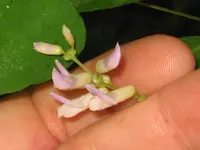
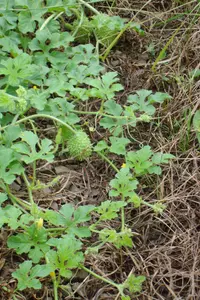
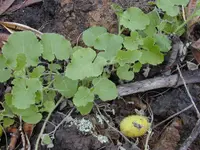
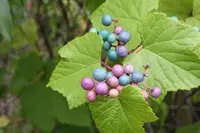
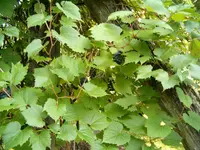
Porcelain berry, Ampelopsis glandulosa, is a woody, deciduous climbing vine grown mainly for its colorful, bead-like berries and dense foliage. It uses tendrils to scramble over fences, trellises, and shrubs, forming a thick screen. Leaves are usually lobed and grape-like, with small clusters of flowers that develop into berries shifting from pale green to speckled shades of blue, purple, and turquoise. The species is native to East Asia but has naturalized in parts of North America and Europe, where it can become invasive in mild climates. It is generally vigorous and tolerant of a range of soils, which makes it easy to establish but sometimes hard to control. Those who want to care for Porcelain Berry should know it prefers sun to light shade and consistent, well-drained moisture.

Main Plant Requirements

Care Difficulty

Moderate Care

Light Preference

Full Sun

Water Requirements

Moderate Water

Temperature Preference

Cold Hardy

Hardiness Zone

5–9

Soil Texture

Sandy, Loamy, Clay

Soil pH

Acidic (5.5–6.5), Slightly acidic (6.5–7.0)

Soil Drainage

Moist but well-drained

Fertilization

Minimal (feed rarely)

Get Personalized Care Plan

Scan your plant to receive care tips personalized for your specific plant

Available on iOS and Android

How to Care for the Porcelain Berry

This vigorous vine prefers bright outdoor light with some protection from intense afternoon sun.

  • Provide 4–6 hours of morning sun or light midday sun, with partial shade after 2–3 p.m., especially in hotter regions.
  • Porcelain Berry tolerates light to medium shade but foliage becomes sparser and fruiting decreases if it gets under 3–4 hours of direct sun.
  • In hot summers, use trellises, nearby shrubs, or fences to give dappled shade, reducing leaf scorch and moisture stress during heatwaves.

This climbing vine prefers evenly moist, well-drained soil rather than constant wetness.

  • Water when the top 3–5 cm of soil feels dry, aiming for soil that is moist but not soggy during active growth in spring and summer.
  • Reduce watering in fall and winter, allowing the surface to dry more deeply while ensuring Ampelopsis glandulosa does not stay bone-dry for long periods.
  • Watch for yellowing, soft leaves as a sign of overwatering and crisp, browning leaf edges or wilting as a sign of underwatering or drought stress.

This hardy vine tolerates a wide temperature range but grows best in moderate conditions.

  • Active growth is strongest around 65–80°F (18–27°C), with warm days and cooler nights supporting sturdy stems and foliage.
  • Mature plants typically survive winter lows near 0–5°F (-18 to -15°C) when root zones are mulched, but young plants benefit from extra protection.
  • In hot climates, sustained periods above 90°F (32°C) can stress the plant, so provide extra water and partial shade to limit heat damage.

This vine tolerates a broad humidity range and usually does not need special humidity management outdoors.

Ampelopsis glandulosa prefers moderately fertile, well-drained, structurally stable ground.

  • Use a loamy soil with some organic matter, such as garden loam mixed with compost, to support steady growth.
  • Ensure drainage is free by avoiding compacted or clay-heavy spots; raised beds or berms help where water lingers.
  • Aim for slightly acidic to neutral conditions, around pH 6.0–7.0, and avoid strongly alkaline or salty sites.
  • Improve aeration and drainage by working in coarse sand or fine gravel where soil is dense or prone to waterlogging.

This vigorous climber can grow in containers if the setup is stable and allows enough root volume.

  • Choose a large, heavy container so the vine and its support structure do not tip in wind or when wet.
  • Use a deep pot that allows a wide, spreading root system, preventing the plant from drying out too quickly between waterings.
  • Select a pot material with moderate moisture retention, such as thick-walled clay or heavy resin, to buffer rapid temperature and moisture swings.

This vigorous vine usually needs only modest feeding, especially when planted in reasonably fertile soil.

  • Use a balanced, slow-release fertilizer (for example 10-10-10) or compost once in early spring as growth of Porcelain Berry begins.
  • In containers, apply a diluted balanced liquid feed at 1/2 strength every 4–6 weeks during the growing season.
  • Avoid high-nitrogen products, which encourage excessive leafy growth over fruiting and can cause weak, sprawling stems.
  • Stop feeding in late summer so shoots harden before winter, and do not apply fertilizer during winter dormancy.

Pruning helps control the vigorous growth of Ampelopsis glandulosa and keeps the vine structurally safe.

  • Carry out main pruning in late winter or very early spring before buds break, when stems are easy to see.
  • Remove dead, damaged, or crossing stems first, then thin congested growth to improve light and air movement.
  • Shorten overly long shoots to maintain the desired size and to direct growth along supports or away from structures.
  • Use sharp bypass pruners, making clean angled cuts just above a bud or side shoot to reduce dieback and disease entry.

This species is more often planted in the ground, but young or container-grown plants may need occasional transplanting.

  • Check for roots circling the pot, pushing through drainage holes, or for slow, weak top growth as signs it needs a larger space.
  • Plan transplanting or up-potting for early spring or early fall, when temperatures are mild and the plant handles disturbance better.
  • Expect to move container plants into a 1–2 in wider pot every 2–3 years, using a free-draining, fertile mix.
  • Water thoroughly before and after moving, handle the root ball gently, and shade the plant for a few days to limit transplant shock.

Ampelopsis glandulosa is commonly propagated for ornamental use, but in some regions it is invasive, so check local guidance first.

  • Take semi-ripe stem cuttings in late spring or early summer, 10–15 cm long, with 2–3 nodes.
  • Remove lower leaves, dip the base in rooting hormone, and place in a moist, free-draining medium under bright, indirect light.
  • Maintain high humidity and stable warmth around 70–75°F until roots form, then gradually adapt plants to lower humidity.
  • Sow fresh seeds in autumn outdoors or use cold stratification in a fridge for 2–3 months before spring sowing.

This vine is generally cold hardy in much of its range and usually needs only light winter care once established.

  • In the ground, apply a 5–8 cm mulch layer over the root zone in late fall, keeping it slightly away from the main stem.
  • Allow top growth to die back naturally; remove weak, winter-killed stems in late winter rather than autumn.
  • For container plants in colder zones, move pots to a sheltered, unheated space or group and wrap containers to insulate roots.

Care Tips

Regular root confinement

In-ground plants spread aggressively, so install a 30–45 cm deep root barrier or plant in a large, heavy container to limit spread and make long-term management easier when growing Porcelain Berry.

Early vine training

As new shoots emerge in spring, tie them loosely to trellises or wires with soft garden tape, spacing ties every 30–40 cm to create a flat, layered coverage and prevent a tangled, bulky mass later.

Seasonal cutback strategy

In late winter, remove 20–30% of the oldest, thickest canes at ground level to stimulate fresh growth while keeping the plant structurally open and easier to inspect for problems.

Structural support checks

Inspect arbors, fences, and wires at least once a year and reinforce or replace weak sections before the vine becomes very heavy with wood and fruit, reducing the risk of collapse.

Fruit and seed control

If spread is a concern, shear or hand-remove flower clusters before they set fruit, or cut and dispose of fruiting stems before berries fully color to reduce unwanted self-seeding into nearby areas.

Common Pests and Diseases

Grape leafhopper

This pest feeds on the undersides of leaves, causing pale stippling, reduced vigor, and in heavy infestations a dry, bleached look to foliage.

Solution

Monitor leaf undersides regularly, then spray foliage with a strong stream of water to knock insects off and apply insecticidal soap or a ready-to-use neem oil product, repeating every 7–10 days as needed while protecting beneficial insects by treating in early morning or late evening.

Grape phylloxera

This pest causes galls or blister-like swellings on leaves and can weaken vines when populations are high.

Solution

Prune and destroy heavily galled leaves, keep vines healthy with proper watering and mulching, and, where infestations are persistent, use a labeled systemic insecticide applied to soil or stems according to local regulations and label directions.

Powdery mildew

This disease appears as white, powdery growth on leaf surfaces, which can lead to leaf distortion, yellowing, and premature leaf drop in humid, shaded conditions.

Solution

Improve air circulation by thinning dense growth, avoid overhead watering, promptly remove and discard infected leaves, and apply a sulfur, potassium bicarbonate, or neem-based fungicide at the first sign of infection, repeating per label directions until conditions dry out.

Anthracnose

This disease causes tan to dark brown leaf spots with irregular edges and may lead to shot-hole appearance, distorted leaves, and dieback of young shoots during cool, wet weather.

Solution

Remove and dispose of infected leaves and twigs, avoid wetting foliage when irrigating, and apply a copper- or chlorothalonil-based fungicide at bud break and during prolonged wet periods if the plant has a history of infection.

Japanese beetle

These insects skeletonize leaves by eating the soft tissue between veins, often gathering in large groups on sunlit portions of the vine in mid-summer.

Solution

Hand-pick beetles in the early morning into soapy water, protect valued vines with fine mesh netting during peak feeding, and where damage is severe consider using targeted traps placed away from the plant or a labeled contact insecticide, focusing only on high-pressure periods to limit impact on non-target insects.

Interesting Facts

Color-shifting berries

The berries start green, then turn turquoise, sky blue, and violet as they mature, due to different anthocyanin pigment compositions at each ripening stage.

Bird-dispersed invader

In parts of the US, birds spread its seeds widely after eating the berries, helping this species escape cultivation and naturalize in woodlands and forest edges.

Tendril climbing strategy

This vine uses branched tendrils that coil around supports, allowing it to climb over shrubs and trees and form dense, light-blocking canopies in suitable climates.

Botan icon

Did you know?

Several US states list this species as invasive or a noxious weed, and in some regions it is legally restricted because its vigorous growth can smother native vegetation and interfere with forest regeneration.

FAQs about Porcelain Berry

This species spreads quickly by vigorous stems and abundant seed. In many regions it is considered invasive, smothering nearby plants and natural areas, so it requires strict containment, regular pruning, and removal of unwanted seedlings.

Grow Healthy Plants with Botan Care

Keep your plants happy and healthy with plant identification, disease detection, and easy care guidance.

Botan plant care app — identify plants on mobile

Explore More Plants