Clustered potting
Plant several offsets together in a shallow, wide pot to create a dense mat that shades its own roots and reduces heat stress on the root zone.

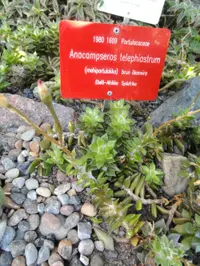
Anacampseros telephiastrum is a small, clustering succulent from arid regions of South Africa and neighboring areas. It forms low mats or tight rosettes with fleshy, overlapping leaves.
Leaf colors range from green to pinkish or purple tones, often more intense in brighter light. Short stems may tangle together, creating a dense cushion that suits shallow pots or dish gardens.
This species prefers strong light, sharply drained soil, and dry conditions between waterings, which makes it well suited to bright windowsills. Once its needs are understood, it is relatively straightforward to care for Anacampseros telephiastrum, but consistent overwatering quickly causes problems.

Care Difficulty
Moderate Care

Light Preference
Full Sun

Water Requirements
Low Water

Temperature Preference
Tropical / Frost Sensitive

Hardiness Zone
10–11

Soil Texture
Sandy, Loamy, Rocky

Soil pH
Slightly acidic (6.5–7.0), Neutral (7.0)

Soil Drainage
Well-drained

Fertilization
Minimal (feed rarely)
Scan your plant to receive care tips personalized for your specific plant
Available on iOS and Android
This compact succulent prefers bright, dry conditions with several hours of direct light each day.
This drought-tolerant succulent stores moisture in its leaves and needs infrequent, careful watering.
This species prefers warm, dry conditions and does not tolerate frost.
This succulent tolerates low ambient humidity and rarely needs special humidity management indoors.
This species needs a very fast-draining, mineral-rich substrate to prevent root rot.
This compact succulent is very suitable for container growing.
This compact succulent needs light feeding to support healthy growth without stretching.
Pruning is minimal and mainly used to maintain shape and remove weak tissue.
This species prefers slightly tight pots and only needs occasional repotting.
Anacampseros telephiastrum is commonly propagated from offsets and leaf cuttings.
Winter care focuses on avoiding cold damage and excess moisture in the root zone.

Plant Health Check
Not sure what's wrong with your plant? Check your plant's health inside the app.
The leaf rosettes of this species shift from mostly green to vivid pink and purple tones when grown in very bright light, due to increased production of protective pigments called anthocyanins that help shield tissues from intense sun.
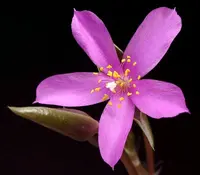
Its star-shaped white to pale pink flowers usually open in the late afternoon or evening and may close again by the next morning, an adaptation thought to favor pollinators that are active in low light.
The plant forms small fleshy underground tubers that store water and carbohydrates, allowing it to survive prolonged dry periods in its native South African habitats and resprout when conditions improve.

Anacampseros telephiastrum often forms dense, mat-like colonies in crevices and shallow, rocky soils, where overlapping rosettes create a living mulch that reduces water loss from the substrate and stabilizes the thin soil layer against erosion.
Growth is relatively slow to moderate. In good conditions, clumps usually reach 5–10 cm tall and gradually spread over several years. Limited root space, low light, cool temperatures, or irregular watering slow growth noticeably.
Keep your plants happy and healthy with plant identification, disease detection, and easy care guidance.